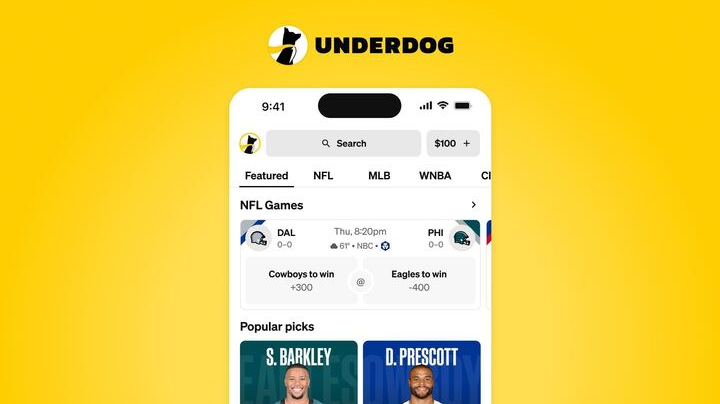
Underdog is wasting no time diving further into prediction markets after laying off just over 20% of its employees less than two weeks ago, announcing an acquisition Monday that will allow it to list and settle its own event contracts.
The sports gaming company said it’s picking up Aristotle Exchange DCM and Aristotle Exchange DCO, according to a statement. Those entities are both registered with the Commodity Futures Trading Commission (CFTC), the federal regulator that oversees prediction markets.
When Underdog first got into prediction markets in September, it did so through an agreement with Crypto.com, under which Underdog began listing event contracts from Crypto.com’s exchange. The Underdog platform launched in 16 initial states, with event contracts across the NFL, NBA, MLB, college football, and more.
The acquisition announced Monday allows for Underdog to become a more independent prediction-market player by giving it the regulatory infrastructure necessary to list and settle event contracts. Representatives for Underdog and Crypto.com declined to comment on what the deal means for their talks partnership.
Jeremy Levine, CEO and cofounder of Underdog, said in Monday’s press release that “we’re in the early innings of what prediction markets can be, especially for sports fans.”
“The reality is, prediction markets are primarily about sports and no company knows how to engage with sports fans and create products for sports fans better than Underdog,” he added.
Aristotle was approved by the CFTC in September—it’s the same exchange that powers PredictIt, another prediction-market platform focused on political event contracts and does not offer sports.
The deal comes only 10 days after Underdog underwent a workforce reduction, laying off at least 125 people, including cuts in the fraud operations department, as well as areas like customer support, graphics, marketing, and “drafts”—a product offering daily and season-long draft-based games.
In a statement addressing the layoffs, Levine attributed the cuts to the company’s transition from a business focused on a “state-by-state framework to a national prediction-markets platform with seamless offerings across the country.”
Competition in the prediction markets continues to grow. Kalshi and Polymarket received much of the public attention last year as the industry rose in prominence, but Crypto.com and Robinhood are among other players pouring resources into platforms.
Traditional sports betting companies are also getting in on the game: DraftKings, FanDuel, and Fanatics all launched their own platforms toward the end of 2025.
Sports event contracts have garnered controversy, and resulted in numerous lawsuits, as state gaming regulators and tribal authorities argue prediction-market platforms are offering illegal gambling disguised as futures contracts. The current administration has signaled support for the industry, and experts expect the issue of sports event contracts will ultimately reach the Supreme Court.





![[Subscription Customers Only] Jun 18, 2025; Philadelphia, Pennsylvania, USA; Fan with a Morocco flag inside the stadium before a group stage match of the 2025 FIFA Club World Cup at Lincoln Financial Field.](https://frontofficesports.com/wp-content/uploads/2026/03/USATSI_26482439_168420755_lowres-scaled-e1773852693149.jpg?quality=100&w=1024)