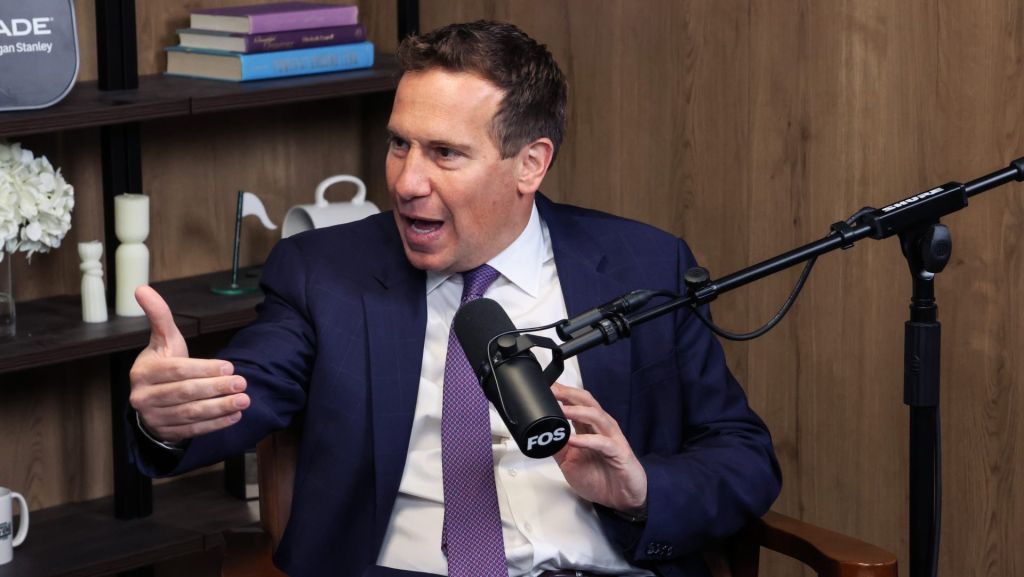
White Sox Co-Owner Mat Ishbia Endorses MLB Salary Cap—and Floor
Want more from Front Office Sports
in your search results?
American owners have been a familiar sight in the English Premier League for years, ever since the Glazer family bought Manchester United in 2005. Of the division’s 20 clubs, nine are currently solely or majority-owned by U.S. individuals or entities. However, even with struggling Premier League clubs now costing $500 million or more, clubs further down the English soccer pyramid are attracting more attention from U.S. investors.
Currently, 11 of the 48 clubs in Leagues One and Two—the third and fourth tiers—have some level of U.S. ownership. Five of these clubs occupy the top nine spots in League One, and the top two at the end of the season guaranteed promotion into the second-tier Championship next season.
More American cash could be coming—on a staggering scale.
“It wouldn’t surprise me if 80% of third- and fourth-tier clubs are bought by Americans in the next two years,” argues Adam Sommerfeld of Certus Capital, a firm that brokers the sales of English sports teams. Lawyers and existing club owners who spoke to Front Office Sports agree that figure is reasonable. “And once you are at that level, there is no reason why the whole house won’t fall,” says Sommerfeld.
Recent U.S. success with smaller clubs, such as Wrexham, has caught investors’ imaginations. Ryan Reynolds and Rob McElhenney bought the club in 2020 when it was a member of the fifth-tier National League; after back-to-back promotions, it is now one of the top League One sides.
The ultimate dream is to replicate the Ipswich model. Gamechanger 20, a joint venture between an Arizona pension fund and a small group of sports investors, bought Ipswich Town for $37.6 million (£30 million) in 2021 when the club was in League One. The club was at a low ebb, so the price was discounted. Some smart player transfers and the hiring of a talented coach meant the club was soon promoted into the Championship.
In early 2024, a U.S. private equity firm, Bright Path Sports, bought 40% for $131.6 million (£105 million), already implying a steep rise in value. Then, at the end of the 2023–2024 season, the club was promoted to the promised land of the Premier League. Even if Ipswich is immediately relegated from the top division, its single-year stay will earn the club more than $125.4 million (£100 million) in broadcasting rights revenue.
Aside from the romanticism, there are other attractive features. The amount required to buy a controlling stake in the clubs is “small fry,” according to Sommerfeld, at least relative to that required to buy a U.S. sports team or a Premier League side. “Investors can afford to have a go without it being significant for them and their capital.” A recent deal under negotiation valued a League Two club, Tranmere Rovers, at $22.6 million (£18 million).
Darragh MacAnthony, an Irish entrepreneur, has owned third-tier Peterborough United for 18 years. He bought the club (and took on its substantial debts) for £1. He told FOS that he receives several approaches a month from potential buyers. “There has been some serious money thrown at me,” he says.
The club is not a glamorous proposition. Although the team is situated in a city less than an hour from London, crowds rarely fill the stadium’s 15,000-seat capacity, and it has never had a sustained spell in the second tier, never mind the Premier League. MacAnthony’s business model relies on buying unproven players from further down the pyramid and selling those that excel for a profit.
For investors who already own teams in the U.S.’s big five leagues, adding an English football club to their portfolio offers the chance to leverage the support of their existing fans and sponsors. Similarly, existing relationships with American celebrities can be a powerful tool.
“Potential investors will be trying to figure out ‘How do we get to be Kim Kardashian or The Rock’s English football team?’” Sommerfeld says. Driving some of a celebrity’s tens of millions of social media followers to a soccer team can suddenly give it a profile in America. This was the strategy for Burnley owner Alan Pace, when he brought on former NFL star J.J. Watt and his wife, Kealia, as minority owners in 2023. And even if the team struggles on the pitch, ownership of the team also includes the land value of the stadium, which can act as a hedge against some of the unpredictability of sporting performance.
Nonetheless, there are risks. By necessity, the number of clubs that can win back-to-back promotions and quickly climb the ladder in the manner of Wrexham and Ipswich is limited. That could test the patience of some new investors.
These teams are also institutions. Many are more than 100 years old. They matter to their local communities, which means fans can be vociferous if they disagree with the owners’ decisions. “There are lots of investors who fail to understand the passion involved in these clubs,” says Sommerfeld. “If fans are unhappy, they will turn up at your front door to remonstrate. I know of a couple of investors who have had fans protest at their hotels when they are over from the U.S.”
MacAnthony believes the new wave of U.S. owners has been respectful of the institutions they are looking after. “I don’t think any of the people that have arrived in Leagues One and Two in the last couple of years have put a foot wrong. They have been respectful of the fans. They have tried to do things in the right manner. They have tried to pay their bills.” He argues that a greater American presence in the leagues is unlikely to alter the fabric of English football culture.
Meanwhile, Sommerfeld argues if U.S. influence percolates into the game, it will be felt through an improvement in the match-day experience. “When you watch an NBA game or an NFL game and you compare the product to a League One match, [the American leagues] do it better. It is more entertaining; there is more going on. Ultimately football fans just want to be entertained, and that is what the Americans bring.”
Download the FOS App
The business of sports, in your pocket.



Scan the QR code to get the app now.