By: Austin Weaver, @AustinTWeaver

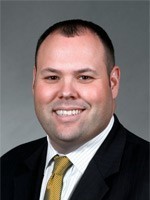
Tucked away in the southeastern corner of Oklahoma, one would find the towns of Idabel and Broken Bow. However, those places are not where this story begins. A 20-minute drive west would land you in Valliant and, much like the definition of his hometown’s name, Wren Baker and his determination to help athletic departments find success has led him from high school principal to his current role as Deputy Athletic Director at the University of Missouri.
A first-generation college student, Baker didn’t stray too far from home and enrolled at Southeastern Oklahoma State University. Like many others in the industry, Baker changed majors during his college years.
“The first three years, I was computer sciences major. This was around the time of Y2K and the thinking was that a degree in computer science and you could write your ticket out. I figured out pretty quickly that I didn’t want to sit behind a computer all day. I changed my major to education, thinking that I would teach, coach and one day work in administration. It wasn’t long after changing my major that I got on with the basketball program as a student assistant. There wasn’t a job that I didn’t do, I remember studying for tests in the Bloomer Sullivan Gymnasium laundry room because the dryer didn’t shut itself off; it was either on or off.”
After graduating with his Bachelor’s degree, Baker decided to pursue a Master’s degree and started searching for a place to continue growing as a leader.
“When I graduated, I felt like I had a lot more to learn before I was ready to lead young people. I applied all over and got a letter back from Eddie Sutton at Oklahoma State University. His letter said that although he didn’t have any positions open at the time, if I ended up at OSU he would meet with me. Around the time I went to meet with Coach Sutton, a job opened up, unexpectedly, and I was able to join the staff as a graduate assistant.”
Baker worked two years as a graduate assistant and then moved into a full-time operations role for the legendary Cowboys basketball coach.
“Coach Sutton was a grinder, he taught me a lot what it takes to gain success in this industry. He was not going to be outworked and he taught me the value of making sure everyone has a role and knows what that role is. One of the key things I took away from my time was that you can’t be afraid to communicate roles to people and tell them what exactly it is you want them to do. Coach Sutton was the best at getting other coaches and players to buy into their roles. If he wanted you to be a rebounder instead of a shooter, he was the best at selling you on the importance of you being a rebounder.”
Baker’s next role would take him back home, but away from the sports industry.
“After leaving Oklahoma State, I went back to Valliant as a principal in the public school. My student council advisor, from school, had worked her way up to superintendent and she brought me back. My wife and I were both from southeastern Oklahoma, so it was a chance to get back closer to home. I thought, at that point, my career was going to be in public school administration and I was willing to move on from college athletics.”
While Baker may have been willing to move on from college athletics, it wasn’t but a year later that he got the call to come back to college basketball.
“I got a call from the president at Rogers State University and had a chance to interview and was eventually offered the job to be the first athletic director and basketball coach in school history. When the president called me, he told me that he didn’t have a lot of money and was looking for a young guy to help build a college athletic program. He said he had called around and multiple people had told him that I was who he should talk to.”
It isn’t every day that a 26-year-old is offered the opportunity to build a college athletic department from scratch.
“I was at Rogers for five years, two as the basketball coach and all five as the athletic director. I learned quickly that being straightforward with everyone was the best way to lead. I was having to have uncomfortable conversations with people twice my age. It forced me to be more mature and taught me how to face difficult conversations and situations. Since I was there from the beginning, I hired everyone in the department. Things went really smoothly and we experienced success quickly.”
“The one thing you have to have is passion. Time after time I talk to young people who think they want a career in the sports industry, but they don’t know exactly what that entails. I have two little girls that mean the world to me, but there are times that my work gets in the way of things going on with them. Working in athletics is a lifestyle and you, and anyone in your life, have to understand that.”
— Wren Baker
After five years of success at Rogers State, Baker sought out a new challenge and the opportunity to continue growing as an athletic administrator.
“The first job I ever really went after was the Northwest Missouri State University job. I really wanted to work with football and Northwest has one of the best division II programs. I applied blindly and went through the interview process and was eventually offered the job. I learned a lot going into a place that had already been successful and had to recruit people to buy into my vision for the program moving forward.”
While Baker learned a lot through the success he was a part of during his time at Northwest, he also had to fight through tragedy.
“In 2011 we lost our head football coach. The meetings with other coaches and the kids were incredibly difficult. We had to work through some dark and difficult days. I learned that it is ok to show vulnerability and allow others in the university community to see that you feel the same emotions they do. You don’t always have to be the one showing strength, it is ok to rely on others.
Much like the opportunity at Rogers State, an unexpected phone call led to a new challenge.
“I got a call from the athletic director at Memphis, who asked if I would come and talk to him about a position coming open. They flew me down to Memphis and I eventually took that job. Making the jump from the division II level to division I was a learning process. At the division I level, there is a lot more money involved, which leads to higher expectations and pressure. I learned pretty quickly that you have to insulate yourself from the things you hear. You have to be aware of what is being said in the media and by the fans, but you have to block those things out when making decisions. At Memphis, the basketball program was emphasized. You have to filter out some of the things that are said by people outside of the organization, but still understand that the fan base pays the bills and you have to keep them excited about the program and the product.”
Baker now serves as the Deputy Athletic Director at the University of Missouri and offered the following advice on what traits he sees as a must for someone pursuing a career in athletic administration.
“The one thing you have to have is passion. Time after time I talk to young people who think they want a career in the sports industry, but they don’t know exactly what that entails. I have two little girls that mean the world to me, but there are times that my work gets in the way of things going on with them. Working in athletics is a lifestyle and you, and anyone in your life, have to understand that. This is not an easy profession. My wife and I have been married for 10 years and have lived in five different houses and two apartments. Only once have I wanted to move for a job, the rest have been out of nowhere. If you want to advance, mobility is a big part of that. This is just one of the reasons you need to have a burning passion for the work. You can make a lot more money working in a different industry, and have more time on your hands. This isn’t just a job to me, it is also my hobby. I have always loved what I do and have never regretted choosing to pursue this as a career.”
“The other thing someone needs is the ability to persevere. In this industry, you are going to get knocked down. If you look at Mizzou in the last year, we had our first losing football season in a while, we had a boycott, we had a coach retire, an NCAA infractions case, postseason ban and a 10-win basketball season. This has all happened since last fall and it wears on you. You have to learn that, as an administrator, you can’t necessarily judge yourself on today’s results. You have to focus on your role and your process. You aren’t coming up with the coaching strategies, out recruiting players, or shooting the basketball.
When it comes to networking, Baker preaches building meaningful connections.
“I am not someone who has a large network or that will go to a conference and know everyone there. What I have done is, once or twice a year, I will take another athletic administrator and go spend time talking and learning from them. I’ve built a network of three to four people a year over a ten year career. I was fortunate early in my career at Rogers, where we were in the Oklahoma Board of Regents system to meet [Univ. of Oklahoma AD] Joe Castiglione, who continues to be a great resource for me.”
“In this industry, productivity is important. If you are doing your job well, people will recognize that and you will be valued. Having a network is important, but I am still a believer that working hard and being productive outweighs everything else.”
Coming from a small undergraduate school, Baker remembered the challenges he faced making the transition from the small school to the college athletics industry.
“When I got to OSU, I had no idea what I was doing. I still keep a team picture from my first year as a GA. I was the only person not in a suit. I had on a polo, some slacks and a jacket I bought for that picture. I ended up looking like a student trainer. I keep it as a reminder of how far I’ve come. I remember sitting in meetings with Coach Sutton where he would ask a question and no one would answer but I would not realizing there was a reason no one else was answering. These are challenges that anyone that will exist for anyone that hasn’t grown up around the industry.”
So what is the one piece of advice that Baker would offer to himself as a graduating senior?
“I would tell myself to focus on being the best you can at whatever job you have at that moment. You can’t judge yourself based on anyone else’s career path or successes. For me, all but one of my career opportunities have come when I was content with where I was. I had closed my college athletics career when I got the call from Rogers State. It wasn’t until the end of my time at Rogers that I started to figure this out. Once I accepted that there was no right path, it took a lot of pressure off that I had put on myself for no reason. Once I stopped putting that extra pressure on myself on and focused on being the best I could be where I was at the moment, I became a better administrator, boss, leader, father and husband.”