Shares of sportswear and retail companies including Adidas, Nike, and Deckers shot up Friday morning after the U.S. Supreme Court struck down President Donald Trump’s sweeping tariffs.
Voting 6–3 in the case brought by a company called Learning Resources, Inc. against the president, the court said Trump exceeded his authority by invoking a federal emergency-powers law to impose “reciprocal” tariffs as well as import taxes the administration says is meant to prevent fentanyl trafficking.
On Friday morning, shares of Adidas jumped more than 2%; Deckers Outdoor, which owns the Hoka brand, was up 2.3%; Under Armour rose more than 2%; On climbed 1.5%; and shares of Puma and Nike increased less than 1%. The broad market S&P 500 index was up 0.6%.
In a press conference Friday afternoon at the White House Trump told reporters he would impose an additional across-the-board global 10% tariff and said he has “great alternatives” for implementing more duties on imports.
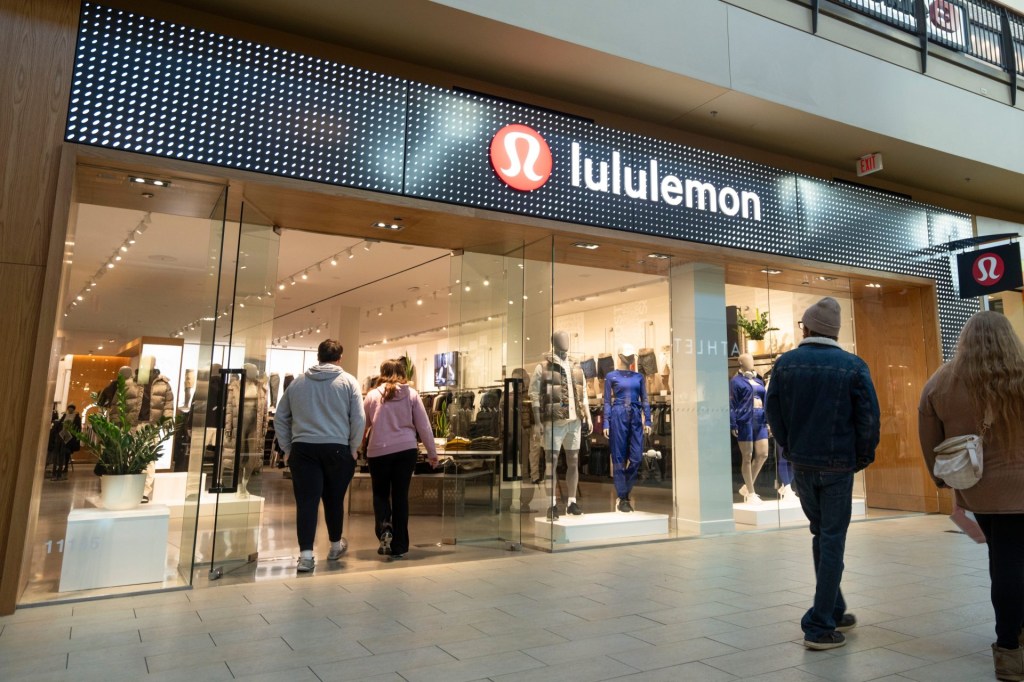
Countries including Vietnam, Cambodia, and Bangladesh are vital manufacturing centers for global retail companies. For example, for fiscal 2024, factories in Vietnam, Indonesia, and China manufactured approximately 50%, 27%, and 18% of total Nike footwear, respectively. Lululemon also counts Vietnam as its top supplier. As of 2023, 42% of its products were made there, with 16% manufactured in Cambodia, 11% in Sri Lanka, 10% in Indonesia, and 8% in Bangladesh, and the remainder in other regions. All of Under Armour’s footwear products were manufactured by “nine primary contract manufacturers, operating primarily in Vietnam, Indonesia, and China,” in 2024.
Vietnam is also the top supplier for Amer Sports, which owns several outdoor brands including Salomon, Arc’teryx, and tennis racket and ball maker Wilson. China accounts for nearly 30% of Amer’s global sourcing, while Vietnam makes up 39% (Canada and Mexico account for less than 1%).
Nike, On, Under Armour, and Callaway, like many other companies importing goods into the U.S., have raised prices on their products in response to tariffs and/or absorbed some of the higher costs. And a report this month by the Federal Reserve Bank of New York found that in 2025, the average tariff rate on U.S. imports increased from 2.6% to 13%, and that nearly 90% of the tariffs’ economic burden fell on U.S. businesses and consumers.
Tariffs Beyond Trump’s ‘Legitimate Reach’
In 2025 the Trump Administration imposed tariffs on trading partners using the International Emergency Economic Powers Act (IEEPA) as justification. The White House’s executive order declared a “national emergency arising from conditions reflected in large and persistent annual U.S. goods trade deficit.” On April 2, 2025, Trump announced a baseline 10% minimum tariff on U.S. imports from all countries, as well as “reciprocal tariffs” on goods from 29 trading partners, including major manufacturing hubs for multinational retail companies.
Shares of retail companies—many of which predominantly source their manufacturing of apparel, shoes, and other products in Asia—sank following the news.
Before reaching the high court, the tariffs were ruled unlawful by three different lower courts, including a specialized federal appeals court of national jurisdiction that said IEEPA didn’t authorize tariffs of the scale Trump imposed.
In its ruling the court wrote that “the Government reads IEEPA to give the President power to unilaterally impose unbounded tariffs and change them at will. That view would represent a transformative expansion of the President’s authority over tariff policy. It is also telling that in IEEPA’s half century of existence, no President has invoked the statute to impose any tariffs, let alone tariffs of this magnitude and scope. That ‘lack of historical precedent,’ coupled with the ‘breadth of authority’ that the President now claims, suggests that the tariffs extend beyond the President’s ‘legitimate reach.’”
In Friday’s decision, Justices Clarence Thomas, Samuel Alito, and Brett Kavanaugh dissented.
The court did not address the extent to which importers were now entitled to refunds. This will be a matter of lower courts again. “The US Court of International Trade will ultimately manage that process, and refunds won’t come automatically, as any importer that wants its money back must sue individually. This process has already kicked off, with over 1,000 corporate entities now involved in a legal fight,” ING analysts wrote in a note after the decision.
Trump has said the money the U.S. brings in from tariffs is “so enormous that you’re not going to have income tax to pay. Whether you get rid of it or just keep it around for fun or have it really low, much lower than it is now, but you won’t be paying income tax.”
“While tariffs are tax increases that raise more revenue for the federal government, the revenue coming in is not enough to cover all the spending the President envisions,” Erica York of the Tax Foundation has said.
In a statement posted on its website, the National Retail Federation lauded the Supreme Court’s decision, saying it provides “much-needed certainty for U.S. businesses and manufacturers, enabling global supply chains to operate without ambiguity.” The trade group said it urges “the lower court to ensure a seamless process to refund the tariffs to U.S. importers.”