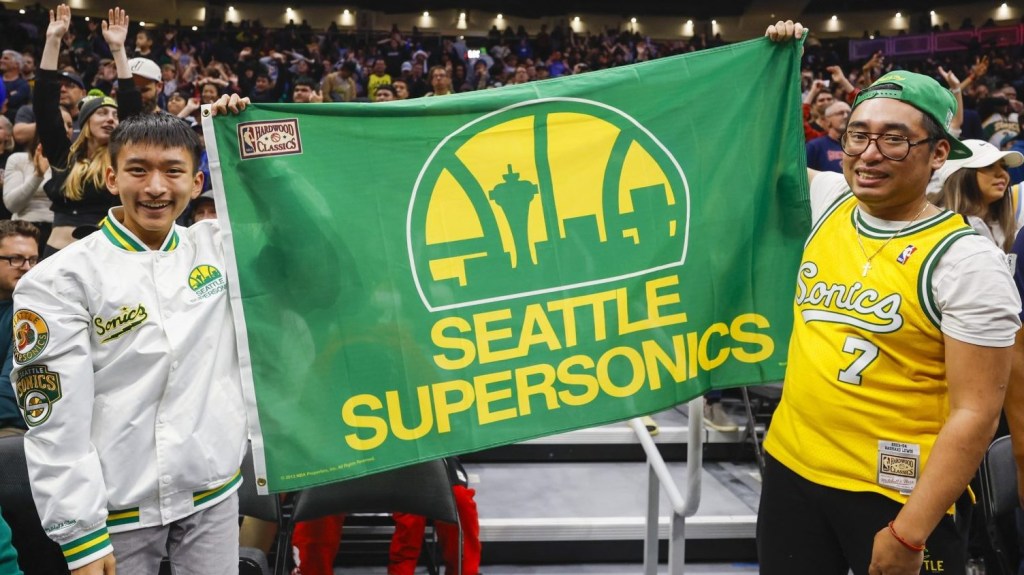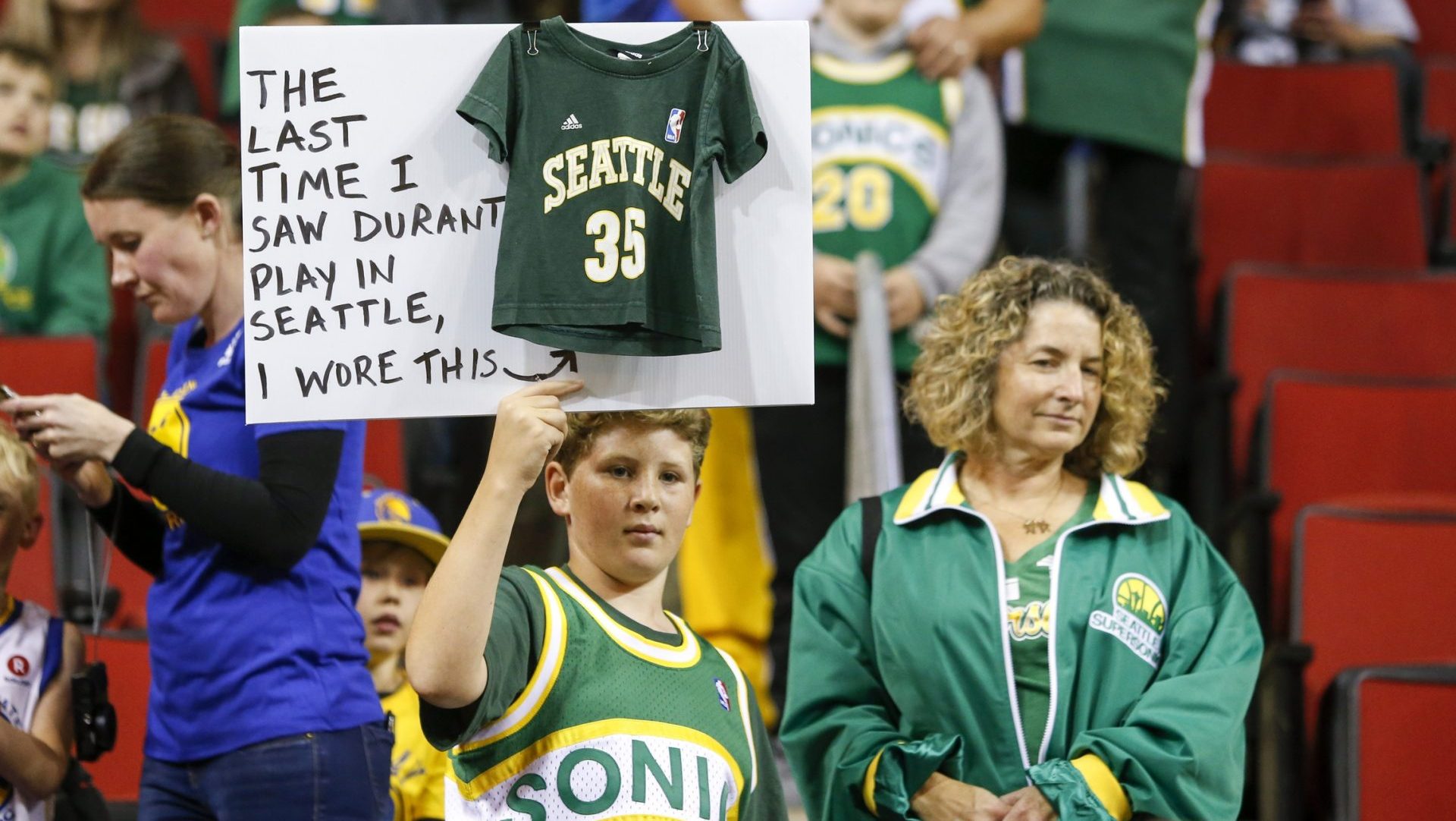
Seattle has been without a men’s professional basketball team since 2008, when the SuperSonics officially left and became the Oklahoma City Thunder.
Now, as the NBA is on the brink of expansion, bringing the Sonics back to Seattle appears to be closer than ever—and it may not be so difficult to revive the beloved brand.
That’s thanks to an agreement the city made with the Thunder’s ownership group that has held the name and all related intellectual property, including registered trademarks, in a state of status quo for 18 years.
History of SuperSonics in Seattle
In 1967, the Seattle SuperSonics became the first major-league franchise in the city. Business partners Sam Schulman and Gene Klein, who had owned the San Diego Chargers at the time, led a group of investors to bring the NBA to Seattle.
Under Schulman and the original ownership group, the Sonics won one division title, two conference titles, and one NBA title, which long remained Seattle’s sole world championship. By the 1980s, the franchise was lagging, and Schulman sold the team for $21 million to Barry Ackerley, who would spend the majority of his ownership tenure trying to build a new arena.
Why the Sonics Left Seattle
The Sonics won only one more conference title under Ackerley, who eventually sold the team and the newly launched Seattle Storm WNBA franchise to Starbucks CEO Howard Schultz for $200 million in 2001. Schultz’s time as owner was short and controversial. In February 2006, he said KeyArena would need to be replaced entirely or renovated, for which he would seek $220 million in public funding. By July of that year, Schultz had sold the team for $350 million to Clay Bennett, an Oklahoma City businessman who created Professional Basketball Club LLC, the holding company that now owns the Thunder.
The sale stipulated that Bennett and the new ownership group would make a good-faith effort to keep the team in Seattle, which included securing arena plans, either a renovation or a new build. Bennett, like Schultz, could not secure the funding he claimed was needed—now $500 million—and instead moved the Sonics to Oklahoma City starting in the 2008–09 season.
Schultz, in his autobiography, later lamented his decision to sell the team: “Selling the Sonics as I did is one of the biggest regrets of my professional life. I should have been willing to lose money until a local buyer emerged. I am forever sorry.”
How Seattle Can Bring the Sonics Home
When Bennett announced plans to move the team to Oklahoma City, the city of Seattle acted to force him to keep the Sonics in Seattle through 2010, when the team’s KeyArena lease ended. Instead, Bennett bought out the remainder of the lease for $45 million.
The settlement agreement also stipulated Bennett’s holding company pay an additional $30 million to Seattle if the city did not get a replacement team within five years.
The new team in Oklahoma City was also barred from using the Sonics’ team colors, despite PBC owning all the related trademarks and intellectual property. The agreement says:
“PBC agrees that it will not use the “Seattle Sonics/Supersonics” team name or any logos, symbols, designs, trade dress (including, but not limited to, team colors) or other indicia associated with the Seattle Sonics/Supersonics (the “Intellectual Property”) for purposes of identifying its NBA team in game competition, marketing, promotional or other similar purposes following relocation of the team to Oklahoma City.”
As part of the agreement, PBC agreed to “transfer at no cost all right, title and interest” in the Sonics’ IP to a new NBA team owner in Seattle.
With that agreement in place, the assumption is that if an NBA team does return to Seattle it will revive the SuperSonics name. Washington Gov. Bob Ferguson has met at least twice recently with NBA commissioner Adam Silver, and has made public comments about bringing the Sonics back to Seattle.
Seattle Mayor Katie Wilson has also reinforced the notion that the Sonics would return to the city, rather than a new brand being created. “Seattle is ready to welcome the Sonics home. We never stopped being a basketball city, and the fans have never given up,” Wilson said prior to the NBA expansion vote.
Since the relocation of the team in 2008, more than 5,000 pieces of Sonics team history have been stowed away at a museum in Seattle.
Now, nearly 20 years later, it may finally be time to dust off that memorabilia.