Adam Ottavino Joins Revamped ESPN MLB Lineup
INDIAN WELLS, Calif. — Coco Gauff thought nobody could see her.
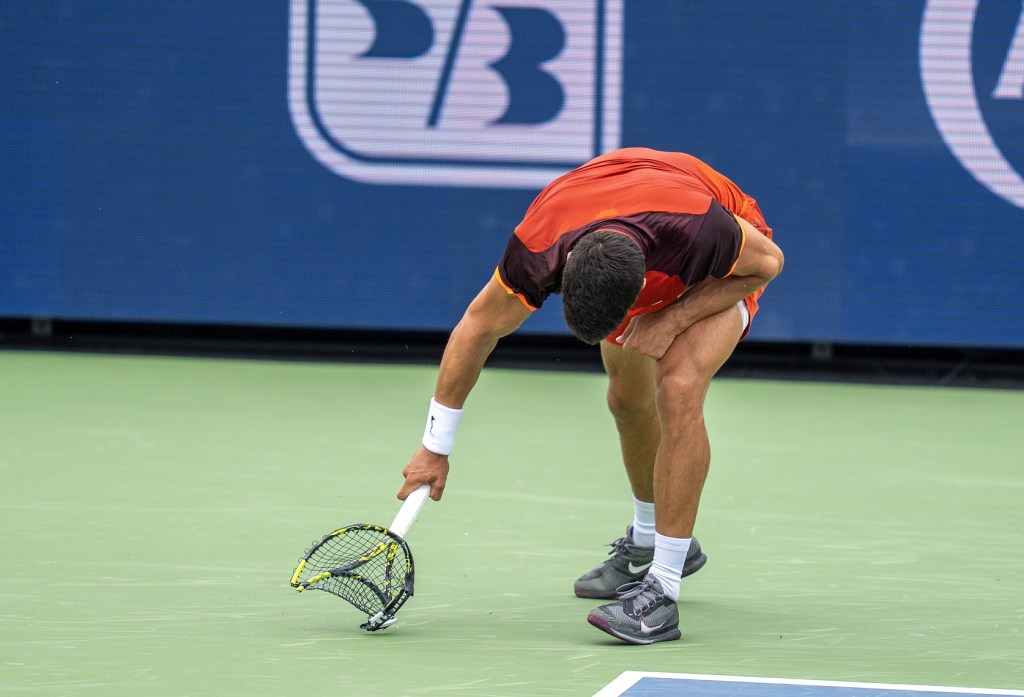
The 21-year-old star had just lost in straight sets at the Australian Open, and she had some frustrations to unload. The target was a classic: her racket, which she smashed against a ramp repeatedly until it was gnarled and unusable. But the entire thing was broadcast on ESPN seconds later, taking Gauff aback.
“Certain moments … I feel like they don’t need to broadcast,” Gauff said after the incident. “I tried to go somewhere where I thought there wasn’t a camera because I don’t necessarily like breaking rackets.”
Shortly afterward, U.S. tennis players Jessica Pegula, Madison Keys, Jennifer Brady, and Desirae Krawczyk discussed the backstage cameras at the Australian Open on their podcast, The Player’s Box.
“They should just set up a room, like a rage room, and you just hit stuff,” Pegula said with a laugh. Keys, the 2025 Australian Open champion, advocated for additional private areas. “Maybe we can talk to tournaments about it: secluded, private, post-match loss meltdown rooms.” Keys said on the Feb. 3 episode.
At least one tennis tournament was listening, and the idea is catching on.
The WTA 250 event in Austin launched the “Rage Room” last week, a designated area without cameras where they said players are free to “privately express frustration or emotion in a safe, camera-free environment.” In other words, a place to throw a temper tantrum without risk of judgment.
Front Office Sports asked several players about the concept at Indian Wells this week; they were unanimously in favor of it.
“I should book one of those and actually like break plates and stuff, that would be probably more fun than a racket,” Gauff said.
Women’s world No. 1 Aryna Sabalenka called it a “cool” idea, and joked that “there will be nothing to destroy” after she uses the room. “I would be there the whole day.” (Sabalenka had her own infamous racket smash caught on a backstage camera following a loss at the 2023 US Open final.)
Men’s world No. 8 Ben Shelton had not heard of the Rage Room when asked about it at Indian Wells, but he said he’d “probably” use the room if it was available. “Yeah, I’ve got some anger, for sure,” he told FOS.
And Pegula confirmed the ATX Open got the idea from her directly.
“The tournament director emailed me and was like, ‘Hey, we have this Rage Room idea from your podcast. Are you interested?’” Pegula told FOS in an interview. Pegula, a member of the WTA Players’ Council who was recently named chair of the Tour Architecture Council, said this somewhat shows that tournament officials are “listening to the players.”
The women’s world No. 5 player was a last-minute withdrawal from the ATX Open, which she won last year, after winning the Dubai Tennis Championships, a WTA 1000 event, days before the Texas tournament.
“Unfortunately, I pulled out of Austin, so I didn’t really experience [the Rage Room], which is probably a good thing,” Pegula said while laughing.
The tournament’s Instagram post of the room appeared to be from inside a tent and showed a poster that read “DON’T SMILE” with a broken racket. It’s unclear whether anyone took advantage of it.
The tournament did not immediately respond to a request for comment.
When Gauff first heard that Austin had a “Rage Room,” she assumed it was fake. “My mom sent it to me, and I told her it was AI. She believes so many AI things.”
Upon finding out the room was the real deal, Gauff said she’d “definitely” use it.
“They have ones, I think here,” Gauff said in response to a question by FOS. A BNP Paribas Open representative told FOS the tournament does not have an official “Rage Room.” But because the event is not broadcast by ESPN, there are fewer cameras and more quiet areas for players.
Former women’s world No. 3 Maria Sakkari told FOS she’s never broken a racket after a match, but she has other emotions she prefers not to be televised. “You always want to have a little space to maybe either cry or just sit on your own or have a chat with your team. You’re always worried to have cameras around.”
Dr. Teresa Fletcher, program director at Adler University’s Sport and Human Performance program, says the concept would be a welcome addition to the tour.
“Rage is not the only strong emotion they have to use that room,” Fletcher said. “It might be just extreme sadness, and they just break down and cry.”
Though regardless of the room’s name or primary purpose, Fletcher said it’s “healthy” for athletes to have a place away from the spotlight to immediately release their intense emotions.
“Every reaction is kind of normal, right? We feel what we feel when we feel it,” Fletcher said. “These young athletes are trying to be healthy in an environment that’s not conducive to wellness. The last thing we need to do is judge somebody for taking care of themselves.”