In The News
It’s been a wild week for crypto. Millions were lost in market cap, and Bitcoin prices crashed below $16,000 for the first time in two years due to the collapse of centralized crypto exchange FTX.
It’s still a developing story, but in case you missed it, here’s a quick, simple rundown of what has happened so far:
- Coindesk uncovered some documents showing alarming numbers on the balance sheets of crypto exchange FTX and Alameda Research — both founded and operated by Samuel Bankman-Fried (SBF).
- The news triggered a bank run, and the sell-off then decreased the value of some FTX tokens, further decreasing their collateral value and starting a death spiral.
- FTX, FTX group (130 affiliated companies), and Alameda Research began filing for bankruptcy.
- Bankman-Fried resigned, and while the company is currently figuring out how to safeguard whatever remains, some estimates suggest FTX could have 1 million creditors and over $9 billion in debt.
Saying the whole thing is ‘a mess’ would be an understatement. The dramatic downfall has shaken people from the world of business, finance, the media, and even the sports industry — and with good reason.
FTX in Sports
Despite being a 3-year-old company, FTX raised a lot of capital and grew quickly to a massive valuation of $32 billion earlier this year. On some of its best days, the company was making eight-figure revenues per day. And due to the line of business and type of customer they serve — namely, retail investors — FTX leveraged the potential of the sports industry to expand its user base:
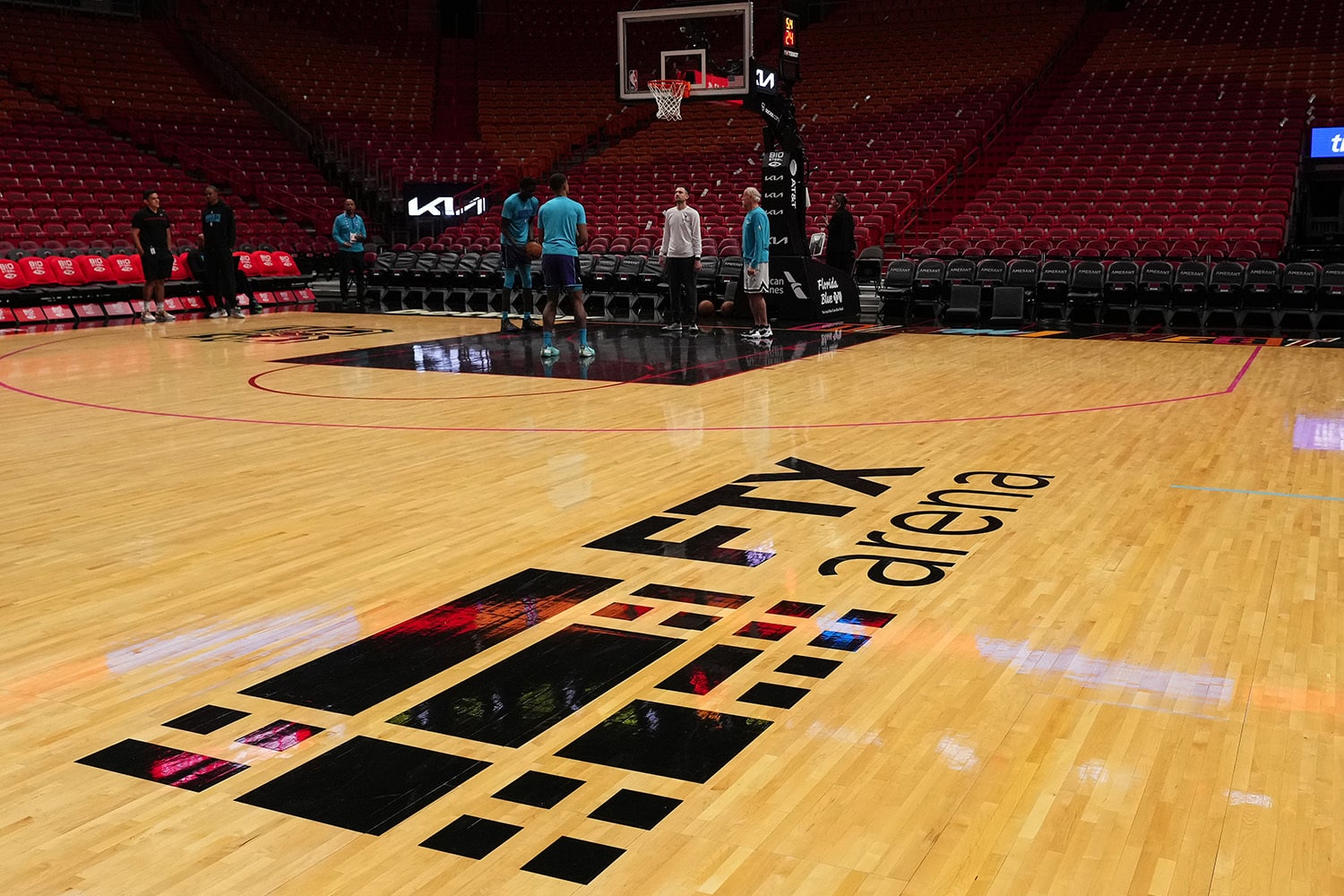
- FTX was the official rights holder to the name of the Miami Heat Arena, a deal that was worth around $135 million.
- Earlier this year, FTX spent over $7 million in Super Bowl airtime for a commercial featuring Larry David.
- Last year, the MLB signed a five-year deal with FTX to become the official crypto-exchange partner of the league.
- FTX also held deals with the Mercedes F1 team, esports giant TSM, UC Berkeley, and many others.
Companies started backing out of these deals after realizing that they’ll never see most of what FTX owes them. But FTX hasn’t been the only crypto company involved with sports.
Crypto and Sports
The pandemic created negative financial ramifications for the entertainment business, and sports organizations scrambled to find new and diverse sponsors and partners with the resources to counteract the losses.
Simultaneously, crypto became a booming industry, and like FTX, many of the players allocated heavy marketing budgets to exploit the growth — something sports properties welcomed with open arms:
- According to Nielsen, crypto deals across sports grew over 100% from 2020 to 2021 and were set to reach $5 billion by 2026.
- The overall amount spent on cryptocurrency advertising in February 2022 was $73 million, and four crypto companies— Coinbase, Crypto.com, eToro, and FTX — were the most prominent during the Super Bowl.
- Last season, cryptocurrency brands spent over $130 million on NBA sponsorships, up from just under $2 million the year before (now 92% of NBA sponsorship spending).
- Many collectibles, fan token projects, and platforms like Dapper Labs, Sorare, and Socios have closed multimillion-dollar agreements with dozens of brands in sports.
Everything goes according to plan in bull markets, business is booming, and graphs move up and to the right — but what happens when the party is over?
FTX’s collapse is now framed as a Ponzi scheme and is associated with various financial scandals like Enron, Bernie Madoff, and other frauds and scams — all devastating and reputation-ruining events. What’s the blowback for sports properties?
Value Disparity, Risk, and Accountability Management
As billionaire investor Warren Buffet once said, “Only when the tide goes out do you discover who’s been swimming naked.”
Besides revealing sports’ exposure, vulnerability, and relationship with crypto, FTX’s meltdown, in some ways, tarnishes the reputation of the sports industry and questions its accountability and integrity.
Due to the level of emotional attachment and loyalty to the game, product, and experiences, the sports consumer shouldn’t be treated as a regular consumer, and sports organizations should do a better job protecting it.
Sporting properties have a huge responsibility to their fan base, explains Samir Ceric, COO of Blocksport. “Even if sports properties are in a bad financial position, they must ensure and protect fans by avoiding partnerships that could jeopardize their reputation.”
The traits that develop relationships between fans and sports brands — i.e., engagement, trust, loyalty, commitment, etc. — create a sense and value of community, not a commodity.
Sports companies should hold a higher standard and avoid partners vulnerable to fraud or inherent risks.
Similarly, sports properties must be held accountable for endorsing, promoting, and partnering with verified scams — it is a foundation of corporate social responsibility.
Similar to the SEC fining celebrities for shilling useless cryptocurrencies and misleading their followers into a failing project, sports properties that endorsed and likely caused fans to pour money into crypto should also face the consequences.
But what if they couldn’t know? Ultimately, the due diligence of professional VC firms should feel like a safety net for these companies looking for these partners.
The Benefit of the Doubt
A tweet I posted earlier this week about FTX’s airtime during the Super Bowl sparked an interesting discussion.
Adam Seaborn, Head of Partnerships at Playmaker Capital, replied, “It’s hard to hold a broadcaster responsible when the government and the World Economic Forum (WEF) were openly endorsing FTX as a safe, well-run, and regulated company. Who are they [sports properties] to turn away money from a seemingly legit operation?”
Objectively, a three-year-old company running legit operations in a new industry, managing unregulated assets, should at least raise a flag or two. Overlooking risk — even minimal — has negative public optics when you serve fans who trust you and are loyal to your product.
Dan Tunna, a veteran sports marketing expert, told FOS that “it was impossible to know FTX would fail, but that doesn’t mean sports properties shouldn’t be accountable and try to help any fans affected. Sport is often too quick to take the money without properly assessing the risks involved for its reputation and its fanbase.”
If any company, individual, or investment firm can be tricked into the wrong partnership — what can sports properties do to minimize that risk?
Fan Loyalty Protection
If the goal is to ensure fans won’t be vulnerable to misleading partnerships and sponsors within sports, properties can follow diverse self-regulating protocols to manage the risk:
- Establish new and more strict due diligence standards ahead of closing deals.
- Find and leverage risk management techniques to diminish the probability of landing with the wrong partner.
- Designate an emergency fund and formulate a plan to restore consumer confidence if the partnership ends abruptly.
- Establish clear limits and partnership boundaries before accepting terms.
The road to success may require rejecting enticing deals, suspending existing partnerships, or spending more time and resources to find the right partner.
Even within the short history of crypto and sports, some organizations have already acted in favor of their fans:
- Motor racing team McLaren and European soccer teams Sporting Lisbon and Spezia canceled their sponsorship deals with Turkish-based crypto group Bitci.com after the latter failed to prove financial stability.
- Manchester City suspended a sponsorship deal with mysterious cryptocurrency startup 3Key.
- FC Barcelona canceled its partnership with NFT marketplace Ownix for demonstrated fraud ties.
Ultimately, new partnerships will always involve risk — the goal is to take the actions needed to protect fans and their loyalty at all costs. “Bad deals will always happen. It’s important to establish systems that minimize the failure probability and overall damage in the case of default,” said Ceric.
FTX’s collapse should be a warning sign for sports organizations to realign their values and a reminder to play a long game — regardless of who can bid the highest price to partner with them.


![[Subscription Customers Only] Jul 13, 2025; East Rutherford, New Jersey, USA; Chelsea FC midfielder Cole Palmer (10) celebrates winning the final of the 2025 FIFA Club World Cup at MetLife Stadium](https://frontofficesports.com/wp-content/uploads/2026/02/USATSI_26636703-scaled-e1770932227605.jpg?quality=100&w=1024)