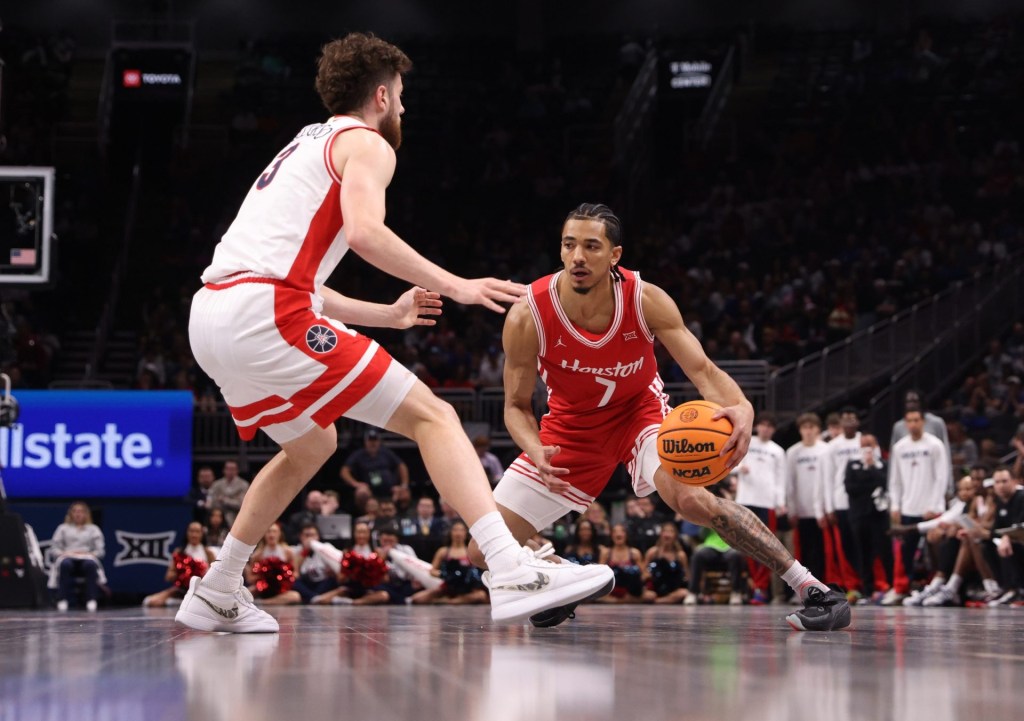
Senators Adam Schiff (D., Calif.) and John Curtis (R., Utah) are targeting sports event contracts with the country’s first bipartisan piece of legislation aimed at restricting prediction-market platforms from offering wagers on sporting events.
The bill—called the Prediction Markets Are Gambling Act—was introduced Monday morning after first being reported by The Wall Street Journal. It would block platforms regulated by the Commodity Futures Trading Commission from offering sports event contracts by amending the Commodity Exchange Act to “prohibit certain event contracts involving sports and casino-style games.”
That includes Kalshi and Polymarket, as well as platforms from companies like DraftKings, FanDuel, Underdog, Robinhood, Crypto.com, Coinbase, and more.
Kalshi has argued in court that the CEA supersedes state betting laws with regard to sports-related event contracts.
The CFTC under chairman Michael Selig has signaled support for prediction markets, including sports offerings, and recently issued guidance outlining that certain sports event contracts are more susceptible to manipulation than others (for instance, markets on what team will win a game are less risky than markets on whether an individual player will score less than a certain amount of points).
“Rather than enforce the law, the CFTC is greenlighting these markets and even promoting their growth,” Sen. Schiff said in a press release. “It’s time for Congress to step in and eliminate this backdoor which violates state consumer protections, intrudes upon tribal sovereignty, and offers no public revenue.
Kalshi spokesperson Elisabeth Diana said in a statement that sports event contracts on federally regulated prediction-market platforms “offer a fairer choice to consumers, with no house that restricts winners and hooks people the more they lose.”
“Banning sports on regulated prediction markets would just push this behavior offshore, where no regulation exists,” she said. “It’s clear this bill is motivated by casino interests that are threatened by competition. They’re more worried about protecting their monopolies than protecting consumers.”
The legislation would also bar platforms from listing markets on “casino-style games” like video poker and blackjack, the WSJ reported.
“Clearly something needs to be done,” Mick Mulvaney, the former White House chief of staff under President Donald Trump during his first administration, said in a statement to Front Office Sports.
Mulvaney, who is now the executive director of a coalition called Gambling Is Not Investing, said prediction-market platforms “have unilaterally made sports gambling available on every phone in the country, regardless of local laws and in disregard for consumer protections and safeguards that legal sportsbooks implement.”
“The CFTC is attempting to sow confusion about who regulates sports gambling in this country, but the law is clear: sports betting is a state issue,” he added.
Indian Gaming Association chairman David Bean said in a statement that the bill will “quiet the chaos and federal overreach that the CFTC is fostering” while also reaffirming existing tribal and state government authority to oversee sports betting.
Analysts at J.P. Morgan said in a research note that “while still early, we view this as a positive development” for both brick and mortar casinos and online sports betting providers, because it “adds another track, and potential accelerant, to gaining regulatory clarity on prediction markets.”
The bill follows a crazy week in prediction markets that included the most significant deal between a platform and a pro league yet; Polymarket will be the exclusive prediction-market partner of MLB under a multiyear agreement that could be worth up to $300 million over four years, sources told FOS.
That announcement drew attention from Rep. Alexandria Ocasio-Cortez (D., N.Y.), who posted on social media that “pervasive gambling is not good for society.”
Meanwhile, Kalshi is reportedly set to raise $1 billion at a $22 billion valuation from a group led by Coatue Management and is in talks about a significant partnership with Fox Corp.
That news came the same week the company was hit with criminal charges in Arizona and was forced to take down sports, political, and entertainment event contracts in Nevada for at least the next two weeks under court order. Separately, Kalshi and its two cofounders, Tarek Mansour and Luana Lopes Lara, were named as defendants in a proposed class action filed in Georgia federal court that claims they offered sports event contracts despite knowing they are illegal.






![[Subscription Customers Only] Jun 18, 2025; Philadelphia, Pennsylvania, USA; Fan with a Morocco flag inside the stadium before a group stage match of the 2025 FIFA Club World Cup at Lincoln Financial Field.](https://frontofficesports.com/wp-content/uploads/2026/03/USATSI_26482439_168420755_lowres-scaled-e1773852693149.jpg?quality=100&w=1024)