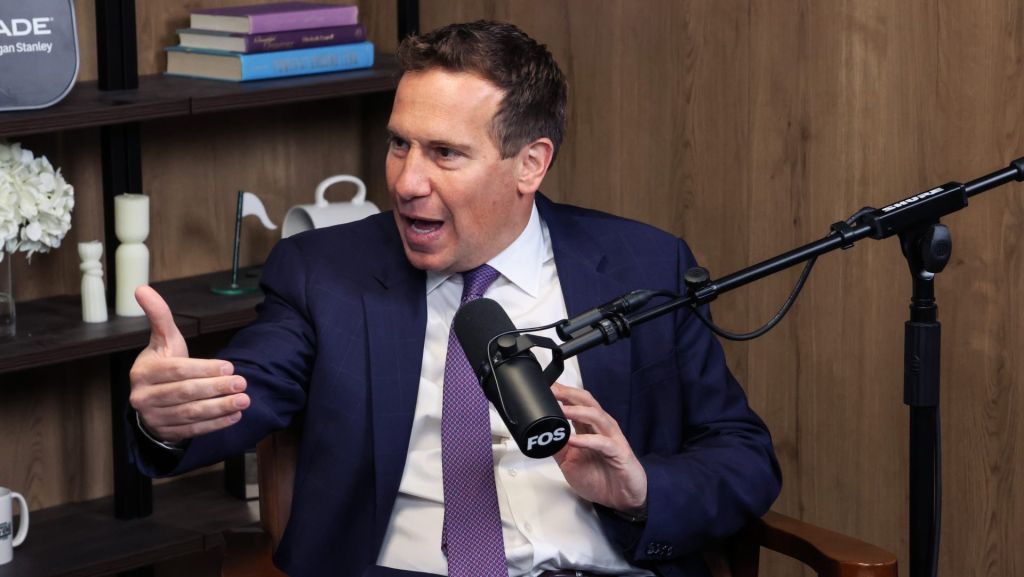
White Sox Co-Owner Mat Ishbia Endorses MLB Salary Cap—and Floor
Want more from Front Office Sports
in your search results?
Last week, Nico Iamaleava was the starting quarterback of the Tennessee Volunteers—a program he led to the College Football Playoff last season. He was in the midst of a multi-year NIL (name, image, and likeness) deal worth at least $8 million—a historic number when it was first reported in 2022.
But on Wednesday morning, Iamaleava entered the transfer portal after a weeklong saga in which a report suggested he was asking for more NIL money. He skipped the practice before the Vols’ spring game—which onlookers saw as a negotiating tactic. Over the weekend, the Vols parted ways with him.
Iamaleava is represented by his father, Nic Iamaleava, and by California-based coach Cordell Landers, as well as at least one lawyer. None are considered certified agents.
In a phone interview with Front Office Sports on Monday, a close family friend of Nic who has been heavily involved in his son’s NIL negotiations denied claims that Iamaleava pushed for more NIL money. “The narrative was bullshit,” says the friend, who declined to be identified by name. (Other FOS sources close to the talks dispute these claims.)
Regardless of what conversations went on behind closed doors, for Iamaleava, the damage is done. His situation is the latest example of how, in the era of unrestricted free agency, a player’s career can be damaged by bad representation, industry experts tell FOS.
Even still, Iamaleava’s camp refuses to relinquish control, blaming Tennessee and the school’s Spyre Sports NIL collective for his situation. “His representation hasn’t steered him wrong,” the family friend says. “At the end of the day, what did we do wrong to steer him and put him in a bad situation? We didn’t.”
The dispute dates all the way back to December of 2024, when the Vols got knocked out of the newly expanded College Football Playoff, FOS has learned. Iamaleava’s representatives had a conversation with head coach Josh Heupel and explained what they would need in order for Iamaleava to stay, the friend says. “Big Nic said, ‘We want you guys to reassure us that you’re going to recruit and get the O-line right, that you’re going to go out there and you’re going to get receivers,’” the friend said. (Iamaleava had suffered multiple concussions and two cracked helmets throughout the course of the 2024 season.) The family friend denies that these conversations had anything to do with money.
But a different source with knowledge of those conversations says that Iamaleava’s camp did ask Spyre Sports for a raise at the time—and that the collective made multiple counteroffers. Iamaleava’s camp became increasingly unresponsive and ultimately left the organization confused about whether he would, in fact, enter the transfer portal.
Last week, coaches called Iamaleava into multiple meetings to ask whether he intended to transfer, to which he replied that as long as they brought in the recruits he pushed for, he was all-in on the Vols, the friend says.
The questions mounted on Thursday, when On3 reported Iamaleava was in the midst of a contract renegotiation with Tennessee and the collective. Iamaleava’s father tweeted a denial of the claim, and called the reporter who published the story a “bi7ch.” The family friend reiterated Nic’s tweet to FOS: “Nico’s not asking for no money. He don’t even have those money conversations,” he says.
Iamaleava made headlines again Friday when he did not show up to practice. The family friend says his absence was because he had already decided to transfer before practice began; it was not because he was a “holdout” or part of a negotiating tactic. Iamaleava didn’t respond to any calls or texts Friday, however, or notify coaches of his decision until after practice concluded.
Reports surfaced the following day, during the spring game, that Tennessee decided to “move on” from Iamaleava.
“I want to thank him for everything he’s done since he’s gotten here, as a recruit and who he was as a player and how he competed inside the building,” Heupel said after the game. “Obviously, we’re moving forward as a program without him. I said it to the guys today. There’s no one that’s bigger than the Power T. That includes me.”
Iamaleava’s original plan was to declare for the NFL Draft after the 2025 season—after all, his NIL contract ran until Dec. 2025, the family friend said. But now, he’ll start over at another program. Iamaleava had not yet announced a commitment, though he reportedly entered the transfer portal Wednesday with a “do not contact” tag, suggesting he had made a decision.
Representatives for the Tennessee athletic department and the collective declined to comment.
None of the sources FOS spoke with for this story disparaged Iamaleava, though several raised questions about how much control he had in the decisions that led to his transferring. But they all agreed that Iamaleava’s camp appears to have led him astray.
“Oh boy,” said Florida-based NIL attorney Darren Heitner, who advises college athletes and their agents on legal matters related to NIL and college sports, said in response to what may have gone wrong. “Where do I begin?”
Heitner says the Iamaleavas’ mistakes include “overplaying their hand” and “failing to immediately engage in damage control and completely ignoring the positives of a strong PR strategy.” Finally, he noted that a major mistake was “putting a father with no relevant negotiation experience and a handler who got pushed out of the industry in charge of advising a player’s career and decision-making process.”
Craig Bohl, head of the American Football Coaches Association, calls situations like these “commonplace.” He noted other problematic scenarios as well, such as agents charging above-market-rate fees, going “rogue” by negotiating behind players’ backs and harming their reputation. “The fall victim,” he says, “is actually the student-athlete.”
From Bohl to NCAA President Charlie Baker and a bipartisan group of federal lawmakers, there’s an understanding that college sports must adopt a more formal registration and restriction system. The NCAA has created an agent registry, but has said it cannot enforce agent certification due to concerns over antitrust law. And while some state legislatures have implemented restrictions, the rules aren’t commonplace nationwide.
Bohl, in fact, has enlisted a lobbying firm to convince Congress to pass a law implementing agent regulations. Currently, members of Congress are debating legislation related to college sports, spearheaded by Sen. Ted Cruz (R., Texas), that includes agent restrictions. The framework, which is the same as a discussion draft proposed in 2023, would require agents who do not meet formal registration parameters to notify their athletes two Congressional aides confirmed to FOS.
This federal legislation wouldn’t have protected Iamaleava anyway, as immediate family members are allowed to sign off on uncertified agents. Players all over the country are facing similar situations, with no clear solution. Iamaleava is just the latest high-profile example.
Download the FOS App
The business of sports, in your pocket.



Scan the QR code to get the app now.