
Read in Browser

Front Office Sports - The Memo

Afternoon Edition

June 4, 2026

POWERED BY

The Protect College Sports Act, legislation introduced last week by Sens. Ted Cruz and Maria Cantwell and sponsored by Sens. Eric Schmitt and Chris Coons, has made for some strange political bedfellows. Lawmakers and stakeholders who had previously been aligned—including within the Power 4 itself—now find themselves on opposite sides.

—Amanda Christovich

First Up

  • The postseason push that landed the Knicks in the NBA Finals is expected to generate at least $145 million in revenue. Read the story.
  • The upcoming Duke-Michigan men’s basketball matchup—scheduled for Dec. 21 at MSG—is being moved to loanDepot park, home of the Marlins. Read the story.
  • Compared to other leagues, the PWHL is expanding at a breakneck pace. In just three years, the pro women’s hockey league has 12 teams. Read the story.
  • The U.S. has spent $250 million arming World Cup host cities against drone threats. Even so, the Trump Administration said it might not be enough. Read the story.

Senate Bill Causes Rifts in Longtime College Sports Alliances

REUTERS/Evan Vucci

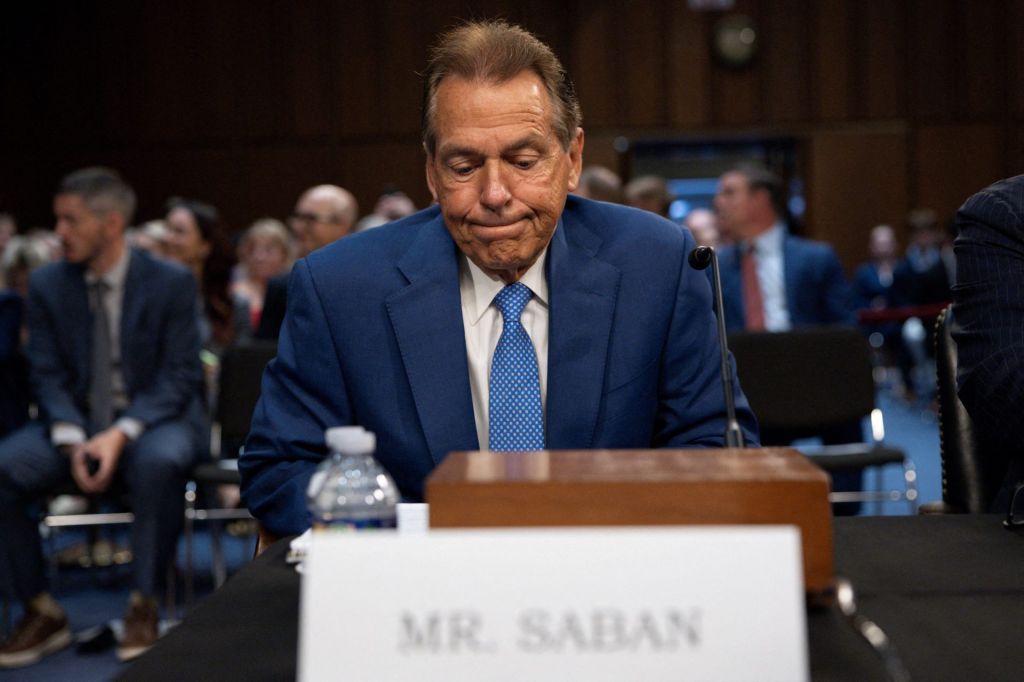
Former Alabama football coach Nick Saban wanted to make something clear to the group of senators he faced Wednesday on Capitol Hill. “I really want everybody to know I’m not here to represent a conference or a team,” he said, “but to preserve college athletics as a whole.”

Saban was testifying in favor of the Protect College Sports Act, a sweeping bipartisan bill introduced last week, and wanted to underscore his stance given that his old conference, the SEC, and therefore his old school of Alabama (that’s still paying him), has come out against it.

The moment—inconceivable even a few weeks ago—was emblematic of the new reality in college sports. Before, the alliances in college sports regarding federal legislation were relatively simple. But in response to the Protect College Sports Act, a group of new and unexpected fractures has emerged: The Power 4 has split, and athlete advocacy groups are aligning with conferences they were previously opposed to. The phenomenon was on display Wednesday in Washington, D.C. 

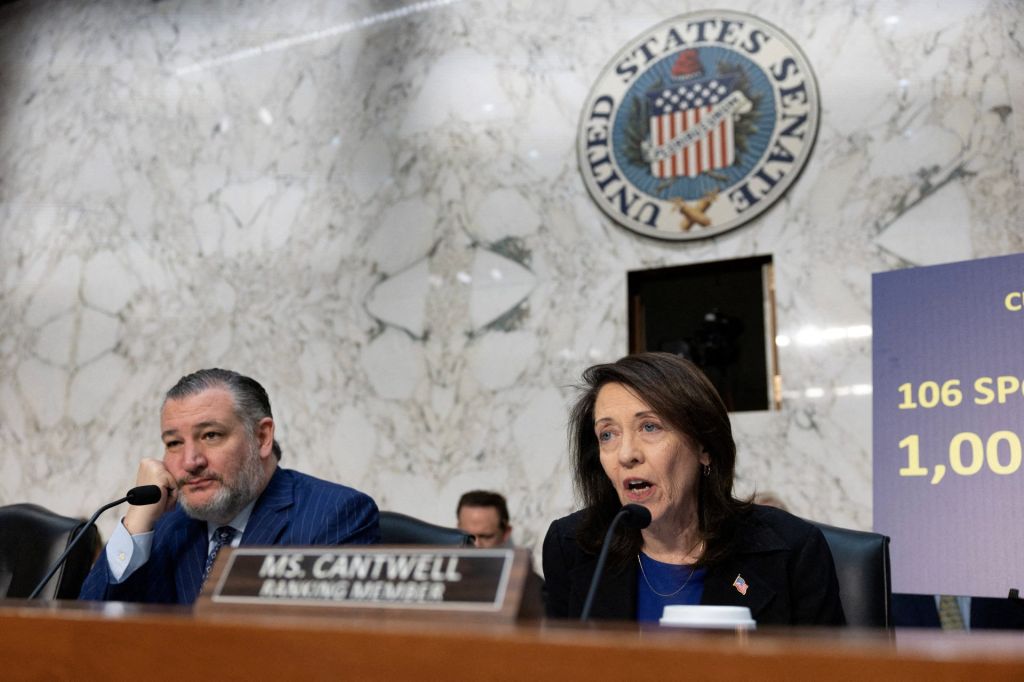
“My colleagues probably know that there are probably 25 things that Sen. Cruz and I don’t agree on, and that’s just in this committee,” Sen. Maria Cantwell (D., Wash.) said during the hearing. “So, saying that it is an accomplishment for him and I to agree on this is saying something.” 

But with this bipartisan compromise, they’ll have to overcome perhaps a new set of diverging factions.

For the past six years, the NCAA and Power 5 (and then, after the Pac-12, Power 4) conferences lobbied separately, but in lockstep, for three things: a no-athlete employee clause, antitrust protections to set and enforce rules, and a preemption of state laws that would conflict with these rules. Sen. Ted Cruz (R., Texas) at one point introduced draft legislation offering all of these things. 

But Cruz quickly learned he would have to enter bipartisan negotiations to get anything passed. He said Wednesday he spent “hundreds, if not thousands of hours” negotiating with Democrats. The result: Sens. Cruz and Eric Schmitt (R., Mo.) have signed onto the same bill as Sens. Cantwell and Chris Coons (D., Del.).
REUTERS/Evan Vucci

Big 12, ACC, Other FBS Leagues in Favor

Since the Protect College Sports Act was introduced, the Big 12 and ACC have sent letters of support (as have many of their schools). They are now aligned with the American, the Pac-12 (represented by commissioner Teresa Gould at the hearing), and Conference USA, which have supported the bill as well.

Central to this coalition has been Cody Campbell, the Texas Tech board chairman and Trump adviser who has led presidential committees on college sports policy. Campbell has been a major champion of the concept of pooling media rights, a core tenet of the bill; he has also been a frequent public critic of the Big Ten and SEC. 

“It seems that there is broad bipartisan agreement on the major issues, which speaks to the quality and thoughtfulness in how the bill was constructed,” Campbell told FOS after attending the hearing.

On Thursday, Trump released a formal endorsement of the bill. “University Presidents, Conference Commissioners, Student-Athletes, Coaches, and Athletic Directors have all complained to me that it has become a disaster, after years of no action, and that Schools were losing Hundreds of Millions of Dollars a year,” Trump wrote in a post on Truth Social. He said the Protect College Sports Act “resolves many of the most urgent issues challenging our universities and Student-Athletes, stops the chaos and, most importantly, it may be the last chance to save College Sports, and Colleges themselves, before it’s too late.”

Big Ten, SEC Oppose the Bill

But the bill has split up the Power 4. The Big Ten and SEC put out a joint statement Tuesday saying they could not support the bill “as written.” Their stated reasons: The bill didn’t “meaningfully” give antitrust protection or preemption of state laws, and it codified the House v. NCAA settlement in a way that “may result in fewer student-athletes receiving direct revenue-share payments.”

Those likely aren’t the only problems they see. The conferences have come out publicly against the concept of pooling and selling media rights. Plus, the bill calls out the two leagues by effectively preventing an SEC–Big Ten merger.

“I think the reason why Sen. Cruz and I have a letter from the Big 12 and the ACC is because they think [conference realignment is] going to happen to them next,” Cantwell said during the hearing. “That somebody is going to come in and rearrange the deck chairs of those conferences, steal the eyeball schools and then basically leave everybody with everything else.” Though she didn’t refer to the Big Ten and SEC by name, it was implied they would pick apart the ACC and Big 12.

There have been signs of that fracturing, of course, as the Big Ten and SEC sped ahead of everyone else on revenue: They formed the SEC-Big Ten Joint Advisory Committee and faced critiques from Campbell and others about the “Power 2.” But the fracture has never been more significant, especially as SEC administrators contemplate a “breakaway” of sorts—one where they would at least enforce their own rules, if not leave the NCAA altogether.

In another odd pairing, college athlete advocacy groups—as well as the Congressional Black Caucus—are standing alongside the Big Ten and SEC, perhaps for the first time. House minority leader and CBC member Hakeem Jeffries (D., N.Y.) said just last week: “If the SEC schools are for it, we are against it.” 

Sen. Chris Murphy (D., Conn.) and Sen. Bernie Moreno (R., Ohio), a pro-Trump Republican, have both voiced opposition to the bill. Also opposed to the bill: Trump ally Steve Scalise (R., La.), the House majority leader, who told Politico he favors the House-authored SCORE Act.

This ideologically diverse group, of course, doesn’t necessarily agree with each other on why they oppose the bill. Murphy, for example, thinks the bill goes too far in controlling athletes; House Republicans say it doesn’t go far enough. Moreno has vowed not to support the bill if it doesn’t include a provision preventing transgender athletes from playing women’s sports. 

Still, the fact that they’re on the same side in this situation is noteworthy in itself. 

Said one industry source opposed to the bill: “If the SEC and the CBC agree your bill sucks, it really sucks.”

The NCAA is taking a more diplomatic approach. “Based on our analysis and the initial feedback from schools, we believe the bill addresses many, but not all, of the priorities student-athlete leaders and institutions have been advocating for,” NCAA president Charlie Baker wrote in a letter to schools Wednesday.

EXCLUSIVE

AI Backlash

Mark J. Rebilas-Imagn Images

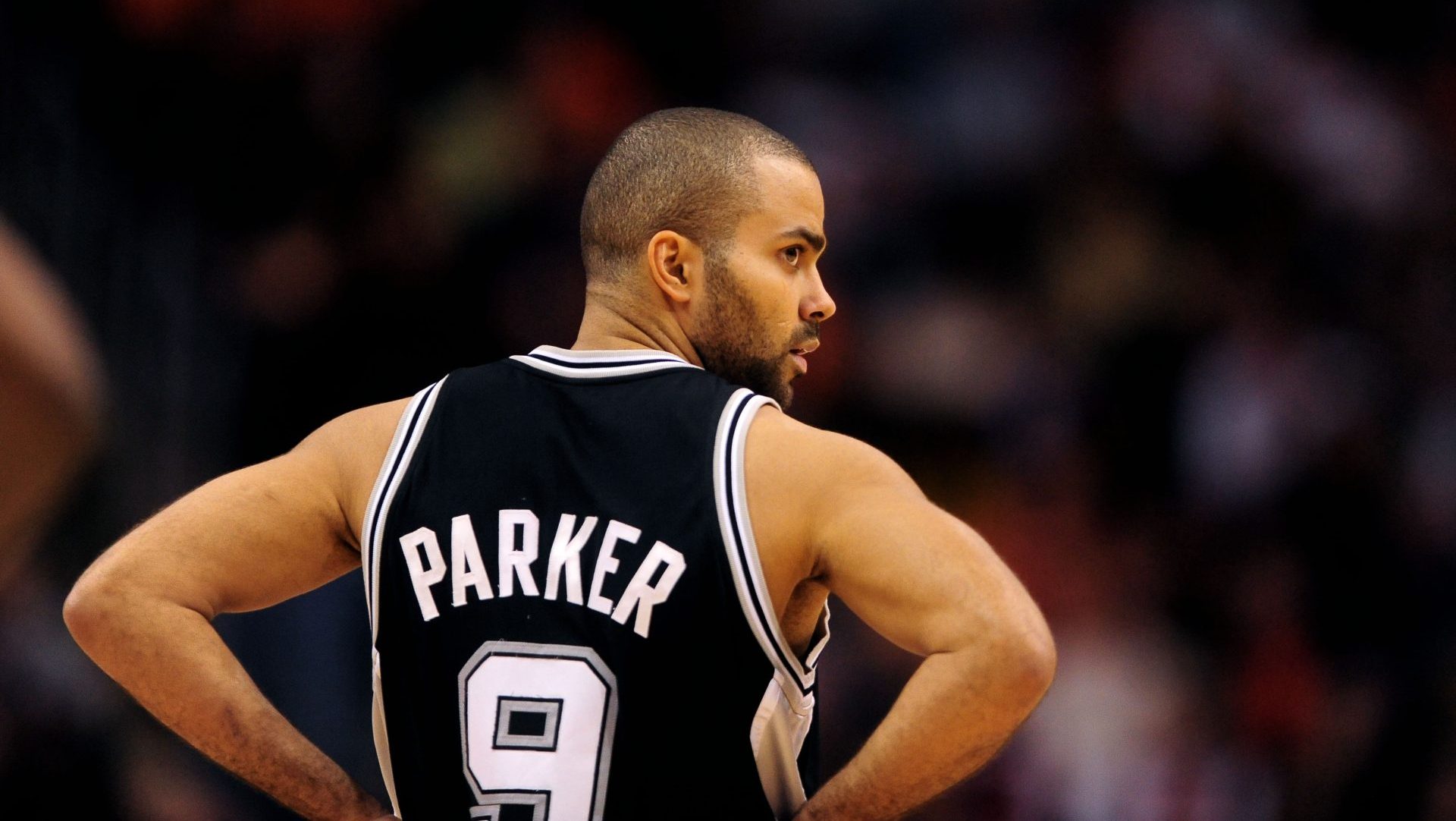
A portrait of Spurs legend Tony Parker during Wednesday’s ESPN broadcast of Game 1 of the NBA Finals went viral after it looked like AI was used to alter his appearance. An ESPN spokesperson confirmed to Front Office Sports that AI had been used to create the image—along with two other moving portraits during the broadcast—and the network is “evaluating” whether it will continue to use the technology in Game 2. The original picture of Parker that ESPN based its rendering on was from after his Spurs team won the 2003 NBA championship. Read the story.

SPONSORED BY STATE STREET INVESTMENT MANAGEMENT SPY

Building Endurance Beyond the Court

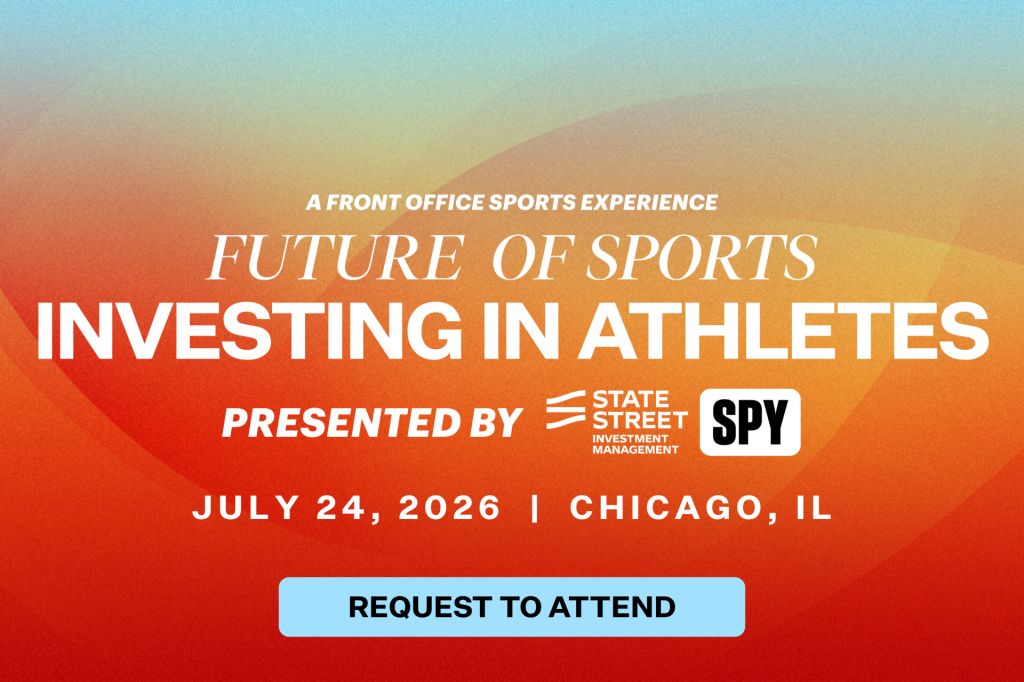
As the best of women’s basketball convene in Chicago for the 2026 WNBA All-Star weekend, Front Office Sports will gather executives, athletes, and changemakers for an afternoon of conversation and connection exploring the future of the game and the business behind it.

Join us July 24 for Future of Sports: Investing in Athletes, presented by State Street Investment Management SPY. 

This intimate event will feature thought-leadership discussions with league leaders, athletes, and financial decision-makers exploring the strategic moves fueling the growth of both major leagues and individual athletes—and how athletes are building long-term wealth, influence, and opportunity beyond the court through the support of financial advisers, investment partners, and others. 

Space is limited. Request to attend for a chance to be in the room.

ONE BIG FIG

Pickleball Popularity Persists

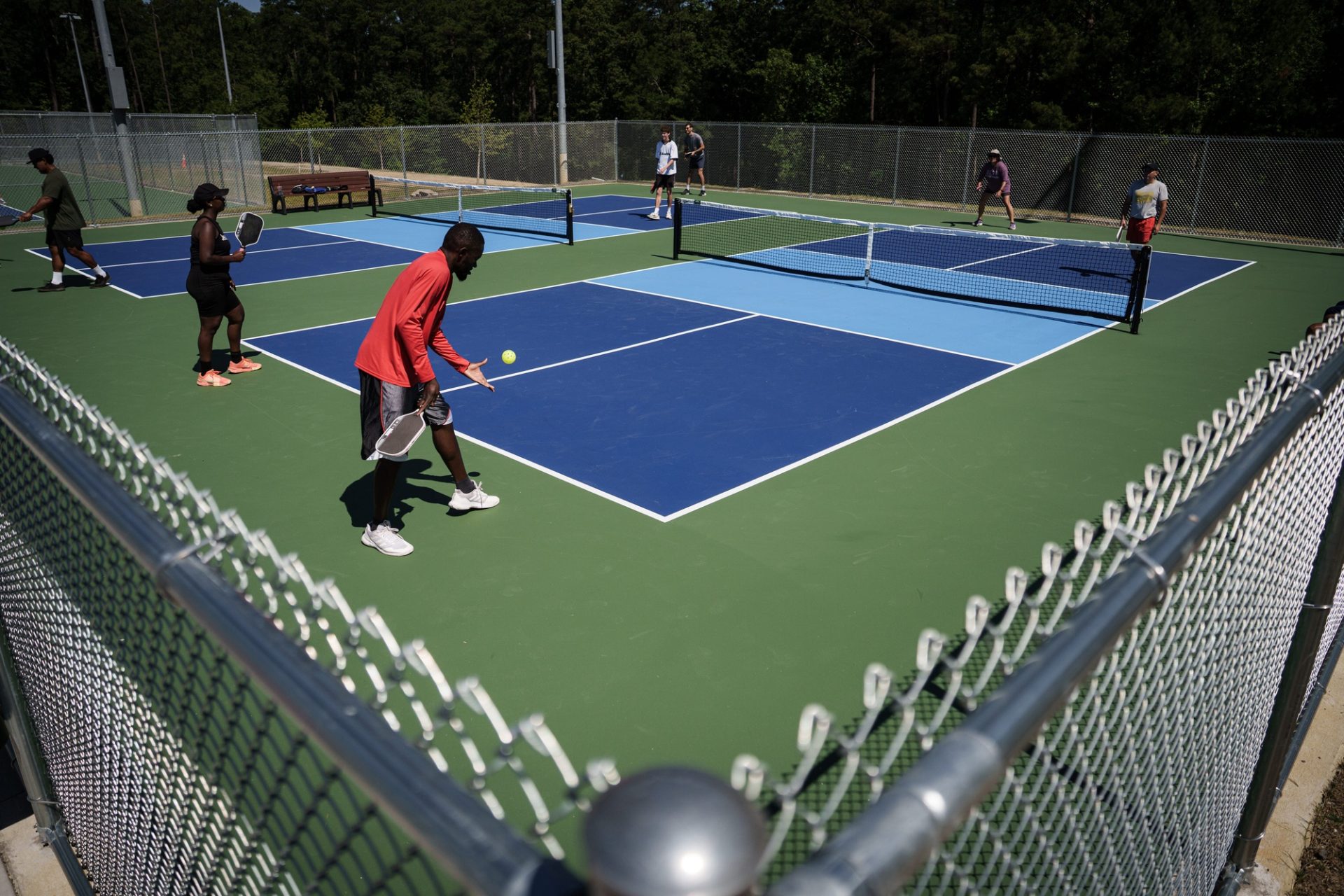
People play pickleball at the grand opening of The Courts at Glenville Lake on Wednesday, June 3, 2026. The facility features 11 tennis courts, including a championship competition court, four pickleball courts, locker rooms, a lounge, learning space and pro shop.

The Fayetteville Observer

24.3 million

That’s the number of Americans who played pickleball in 2025, up from 4.2 million participants in 2020—an increase of more than fivefold, according to a new report from the Sports & Fitness Industry Association. Five straight years as the country’s fastest growing sport have also reshaped who’s playing: Teens and young adults now lead all age groups in participation rates, and women account for 42.9% of all players, up from 38.6% in 2020. 

In a sign of pickleball’s rapid growth, Pickleball Inc., the parent company of Major League Pickleball and the PPA Tour, raised $225 million in new investment from Apollo Global Management and Dundon Capital Partners in May, bringing total investment in the company to $315 million and valuing it at $750 million.

STATUS REPORT

Two Up, One Down, One Push

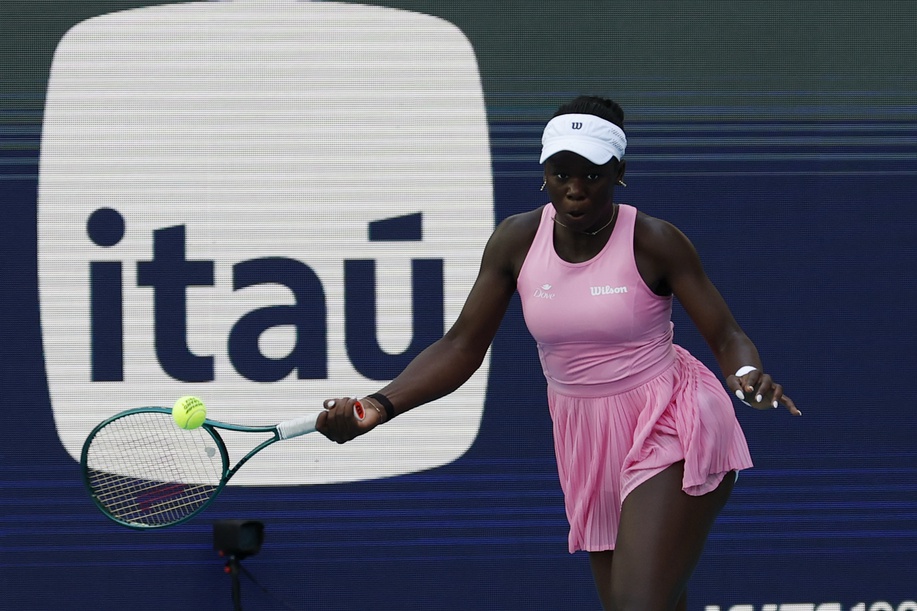
Mar 24, 2026; Miami Gardens, FL, USA; Victoria Mboko (CAN) hits a forehand against Karolina Muchova (CZE) (not pictured) on day eight of the 2026 Miami Open at Hard Rock Stadium.

Geoff Burke-Imagn Images

Victoria Mboko ⬆ The Canadian tennis player, the WTA’s world No. 9, made it official that she’d be Serena Williams’s doubles partner at the HSBC Championships. The tournament is Williams’s first competition since the 2022 US Open, as she previously said she’d be “evolving away from tennis” after the Grand Slam. Rumors of Mboko’s partnership with Williams first surfaced May 28, when US Open champion Andy Roddick mentioned it on his Served podcast.

AUSL ⬆ The Athletes Unlimited Softball League received investment from the Brewers and Ryan Sanders Baseball (a sports ownership company cofounded by Nolan Ryan), the league announced Thursday. Though the Kim Ng–run league already has MLB investment, Milwaukee becomes the league’s first individual team to invest directly in it. AUSL CEO Jon Patricof tells Front Office Sports that the Brewers’ investment as a single-market team will be especially helpful for the league, which is moving its teams to individual markets starting this season.

FIFA ⬇ The league reversed one of its stadium policies for the upcoming FIFA men’s World Cup on Wednesday, banning reusable water bottles from venues across North America just three weeks after explicitly allowing them. FIFA cited injury risk but offered no explanation for the sudden change, drawing backlash from fans and city officials concerned about heat safety at the matches. FIFA’s venues charged between $4 and $6 for bottled water at last summer’s Club World Cup.

Colorado ⬆⬇ Gov. Jared Polis signed Senate Bill 26-131 on Monday, making Colorado the first state to ban sportsbooks from sending push notifications and texts to solicit bets. The bill introduces new customer protections set to take effect Aug. 12, including a credit card deposit ban, a six-deposit-per-day limit, restrictions on language like “bonus bet” and “no sweat,” and a ban on marketing directed at anyone under age 21. The Colorado Gaming Control Commission can fine violators up to $25,000.

Editors’ Picks

MLB’s Long-Stalled Stadium Plans—Rays and A’s—Show Progress

by Eric Fisher
The A’s and Rays both are drawing closer to getting new ballparks.

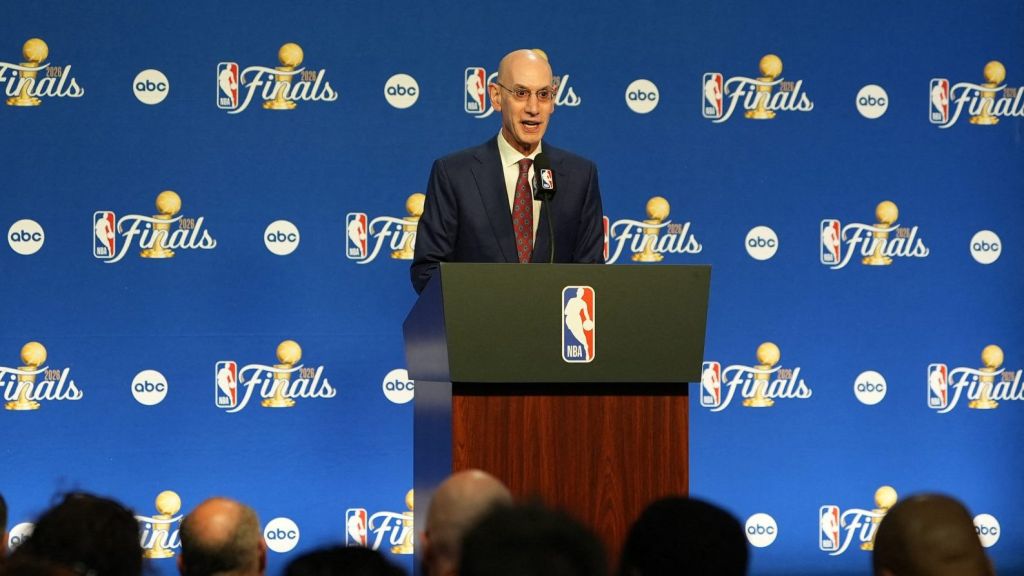
Adam Silver: NBA Europe ‘On Track’ to Launch Next Year

by Alex Schiffer
The commissioner also commented on the Aspiration investigation.

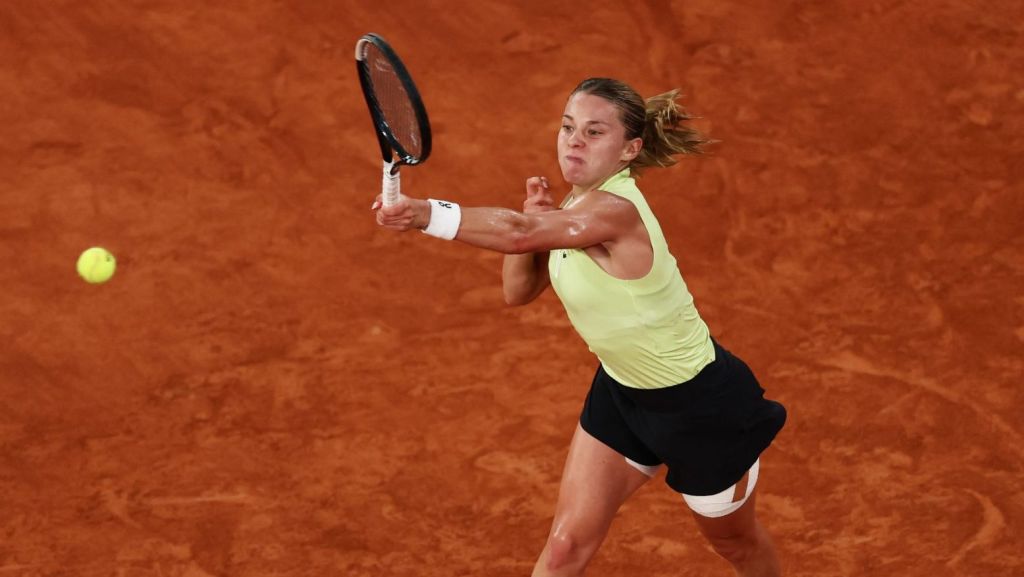
Maja Chwalińska Makes French Open Final, Nearly Triples Career Earnings

by Yanyan Li
Chwalińska was ranked No. 114 before the French Open began.
Events Video Games Shop
Written by Amanda Christovich
Edited by Lisa Scherzer, Catherine Chen

If this email was forwarded to you, you can subscribe here.

Update your preferences / Unsubscribe

Copyright © 2026 Front Office Sports. All rights reserved.
460 Park Avenue South, 7th Floor, New York NY, 10016

Subscribe To Our Daily Newsletters

  • This field is for validation purposes and should be left unchanged.