White Sox Co-Owner Mat Ishbia Endorses MLB Salary Cap—and Floor
Want more from Front Office Sports
in your search results?
Throughout the past year, the NCAA, conferences, and schools have been hit with three lawsuits attempting to ban transgender athletes from competing in women’s college sports. All target rare-but-high-profile instances of transgender athletes competing at the Division I NCAA level.
All three are being funded by the same organization: the Independent Council on Women’s Sports (ICONS), a little-known nonprofit that describes itself as “not political.”
ICONS’s cofounders, Marshi Smith and Kim Jones, have no professional political advocacy or media background, unlike many other activists working on the issue of transgender sports participation. The group has never reported more than six figures in revenue: In 2022, ICONS reported just about $100,000 in total revenues, according to publicly available nonprofit tax forms reviewed by Front Office Sports. The following year, the organization had jumped to $400,000. (Smith did not disclose how much the organization is earning now, asserting almost all donations are grassroots.)
“We believe that women and girls deserve respect, fair treatment, and equal opportunities in sports in their own sex-protected category,” Smith tells FOS of the company’s mission. She says there should be no exceptions for transgender athletes to participate in women’s sports at any level, and describes a person’s gender identity as “an immutable characteristic.” Smith did not use the term “transgender” when referring to transgender athletes playing women’s sports, instead calling them “biological males” and using “he” pronouns to describe them.
ICONS has become one of the most impactful organizations in the trans-sports-ban movement, regularly sharing a platform with a small, core group of highly visible advocates in the space, including former Kentucky swimmer Riley Gaines. Since about 2022, the issue has become one of the biggest cultural hot buttons of major political campaigns, and it was a mainstay in Donald Trump’s successful 2024 presidential run.
Since the lawsuits have been filed, Trump has signed an executive order banning transgender athletes from women’s sports—and the NCAA has followed suit by changing its own policy. But without a federal law, the litigation—and corresponding political campaign—continues.
Before founding ICONS, Smith worked in the medical sales industry then became a stay-at-home mom. She decided to found ICONS shortly after the 2022 Ivy League swimming season, which drew national headlines for allowing Penn swimmer Lia Thomas, who is a transgender woman, to compete as a member of the women’s swimming team.
Smith says she believes transgender athletes participating in women’s sports is the greatest threat to cisgender women in sports. “It was really this feeling of utter helplessness, devastation … looking at my daughter thinking, who was four at the time, is she going to have fewer opportunities?”

In June 2022, Smith launched the organization at the advice of Gaines and with help from former Stanford tennis player Kim Jones. The group began somewhat modestly, submitting amicus briefs in high-profile cases related to transgender athlete participation and creating social media content. ICONS then held a conference that year and a summit in 2023.
But ICONS took off in 2024, when it bankrolled a lawsuit filed by Gaines and more than a dozen others against the NCAA, arguing that its previous transgender participation policy, which allowed trans athletes to play women’s sports, violated Title IX. Then, in fall 2024, it paid for several women’s volleyball players to sue the Mountain West Conference and San Jose State because they allowed a purportedly transgender women’s volleyball player to compete in the conference tournament. (San Jose State volleyball player Brooke Slusser, the named plaintiff in the case, then joined Gaines’s lawsuit.) The day before President Trump signed his executive order, the group funded a lawsuit against the Ivy League, Harvard, and Penn for allowing Thomas to compete in the 2022 Ivy League swimming championships. All three groups of plaintiffs are being represented by the same attorney.
Over the summer, ICONS partnered with several other organizations to “Take Back Title IX,” a multicity bus tour with rallies protesting the participation of trans athletes in women’s sports. The group entered a coalition called “Our Bodies, Our Sports,” which includes organizations whose advocacy spans beyond sports issues. Concerned Women for America, for example, “protects and promotes Biblical values and Constitutional principles through prayer, education, and advocacy,” according to its website. Among its agenda items are reversing the U.S. Supreme Court decision legalizing gay marriage and banning abortion without exception.
Smith said ICONS doesn’t necessarily endorse the views of some of the groups it works with, and she said many of the groups in the coalition disagree on political questions beyond transgender participation in women’s sports. “We’re focused on this one thing, and we really need that to win,” she says. “We’re not a political organization.”
The group has endorsed Trump’s executive order called “Keeping Men Out of Women’s Sports” and has endorsed the “Protection of Women and Girls in Sports Act” in Congress. The organization has not registered any federal lobbying activity to date, according to publicly available disclosures reviewed by FOS.
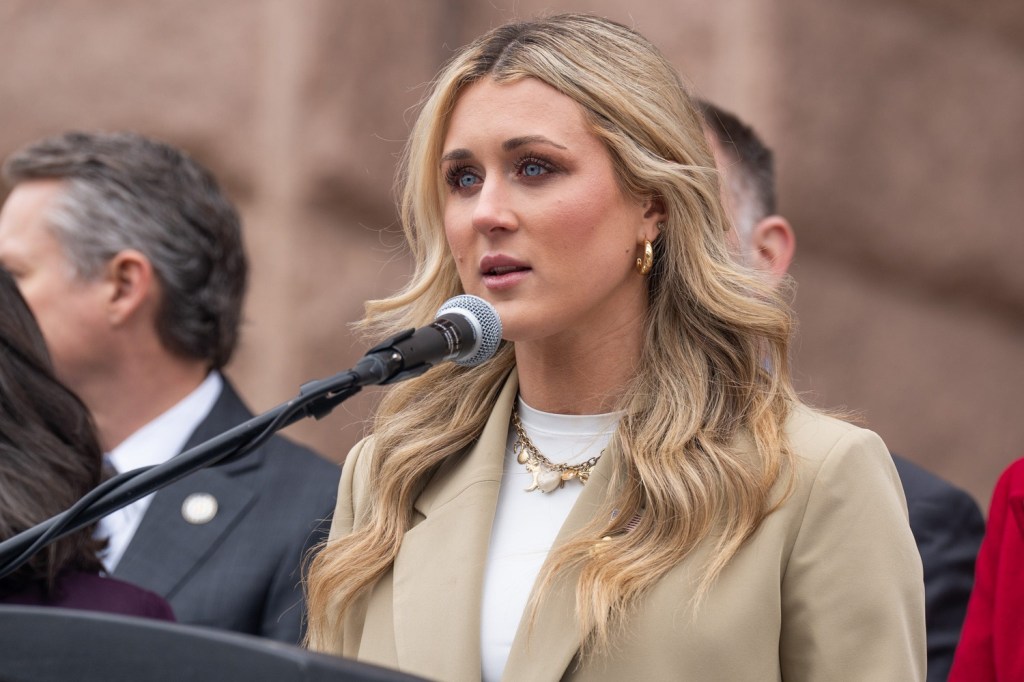
But at the same time, Smith did not appear concerned about her organization’s views being grouped with a number of other legislative actions and political positions that are seen by some LGBTQ+ advocates as taking away transgender people’s rights. She called sports a “gateway” issue for “how society is willing to treat women,” suggesting other anti-trans legislation was the result of the issue being brought to the fore in the sports arena.
Not all women’s sports organizations believe policy regarding transgender-athlete participation should be a priority. And experts cite a lack of consensus on the science.
A 2021 study by the Canadian Centre for Ethics in Sport showed a decade of research was “inconclusive” as to whether transgender women have significant biological advantages over cisgender women. It noted specifically that suppression of testosterone—the hormone often used as a benchmark for transgender athlete participation—has “little evidence” of the impact on sports performance.
Stef Strack, the founder of another women’s sports advocacy organization called Voice in Sport, suggests the scope of the problem has been overexaggerated by advocates like those at ICONS. She points out there are fewer than 10 transgender athletes currently participating in NCAA sports out of 510,000 total, according to NCAA president Charlie Baker. That’s 0.002% of the NCAA population. Meanwhile, a 2024 U.S. Government Accountability Office report found “93% percent of all colleges had athletic participation rates for women that were lower than their enrollment rate at the colleges.”
Strack calls Trump’s executive order and supplemental congressional legislation “a political distraction” that “does not increase opportunities for women and girls.”
“It’s an anti-trans piece of legislation that does nothing to address the real struggles that girls face,” she says. “The real issues that girls and women in sport face are institutions … that continue to discriminate against women athletes, the schools that fail to provide equal resources, and the policymakers who ignore the enforcement of Title IX.”
To that end, Strack has endorsed a bill called the Fair Play for Women Act, which attempts to strengthen existing Title IX reporting and enforcement. Among the groups that have endorsed the bill is Champion Women, also part of the “Our Bodies, Our Sports” coalition, despite the fact that the bill does not mention transgender athletes at all. “The way to protect [women and girls] is to ensure that they get equal opportunities to play, equal scholarship dollars, and equitable treatment.”
But Smith says she believes a trans athlete ban is the best policy for women’s sports writ large. “Don’t let people try to convince you that standing up for your own fair treatment is somehow, like, a hateful stance.”
Download the FOS App
The business of sports, in your pocket.



Scan the QR code to get the app now.