College and pro basketball are suddenly a two-way street, with prospects beginning to flow both ways.
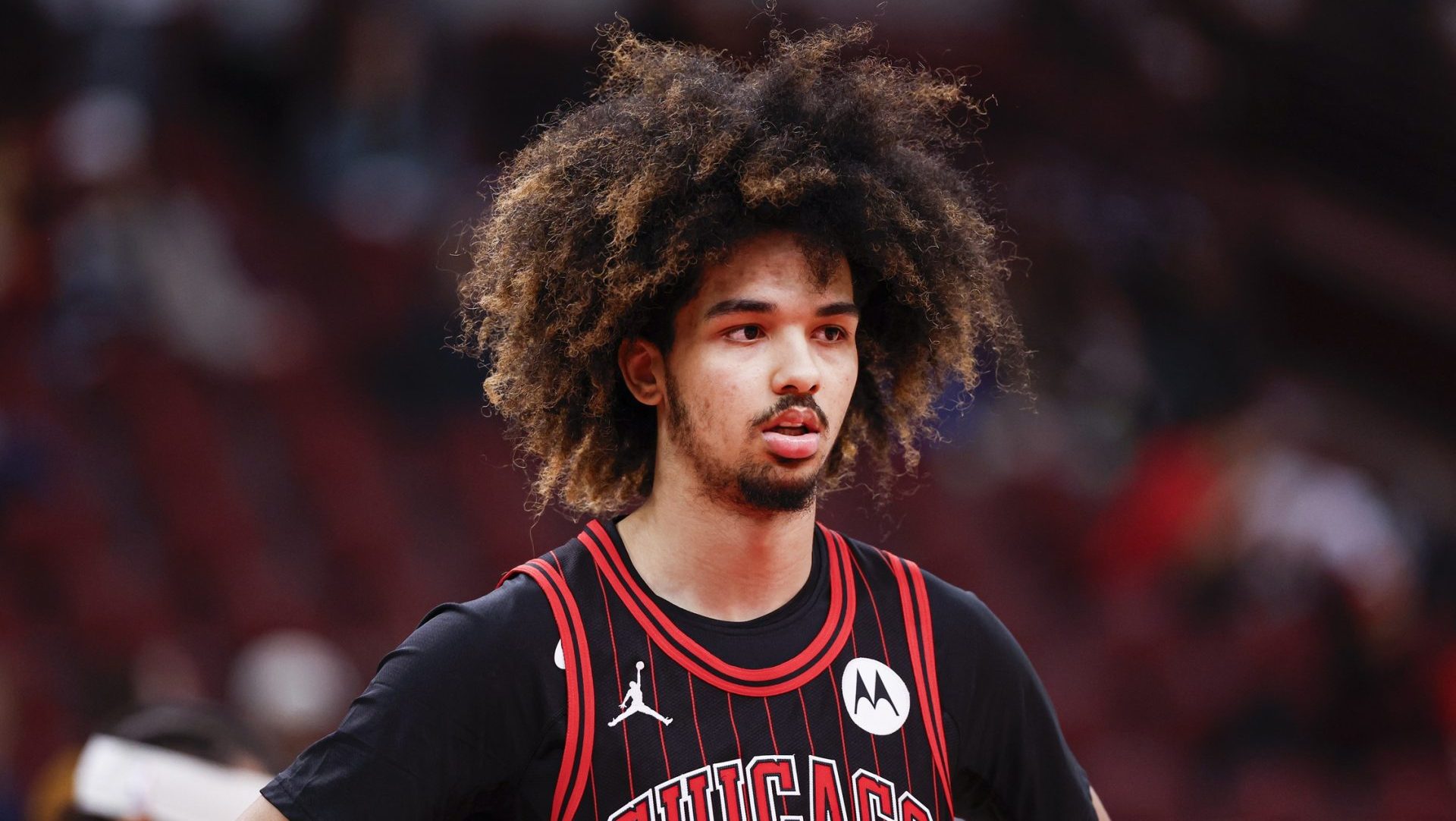
On Saturday, it was reported that Bulls two-way player Trentyn Flowers is interested in joining a college team despite having appeared in eight NBA games over the past two years.
That news came after Baylor landed James Nnaji, a former second-round pick who was part of the Knicks’ trade for Karl-Anthony Towns and is immediately eligible.
Nnaji’s case got the attention of Vanderbilt quarterback Diego Pavia and his attorney Ryan Downton, who quickly used it as part of their ongoing lawsuit against the NCAA. Pavia is arguing that the NCAA shouldn’t count time spent in junior college against his Division I eligibility.
“The hypocrisy of the NCAA granting four years of eligibility to a 21-year-old European professional basketball player with four years of professional experience who was drafted by an NBA team two years ago,” Downton wrote in a new filing.
“Meanwhile, the NCAA argues to this court that high school seniors are harmed if a 22- or 23-year-old former junior college player plays one more year of college football,” Downton added in his argument.
The two players join a growing list of pros going to college as the NCAA has loosened its eligibility rules.
Earlier this season, Theirry Darlan became the first former G League player to appear in a college game, for Santa Clara; fellow G League Ignite alum London Johnson committed to Louisville shortly after Darlan announced his plans.
The NCAA is treating each player as a case-by-case basis. Darlan and Johnson each got two years of eligibility based on the amount of G League games they played in.
The Nnaji and Flowers cases both create precedent and raise questions.
Nnaji, who could play for Baylor as early as Jan. 3, would be the first modern player to play college basketball after being an NBA draft pick. Flowers, should he commit and play for a school, would be the first to do so after having played in the NBA. Executives around the league told Front Office Sports that Nnaji and Flowers won’t be the last.
Here are some of the questions that NBA and college teams are seeking the answers to:
Nnaji
Nnaji, 21, hails from Nigeria and was drafted No. 31 overall by the Detroit Pistons in 2023 before being immediately traded to the Hornets. His draft rights were moved again in the Towns trade in October and are currently held by New York.
The 7-foot center has played in the NBA’s summer league the past two years, but has never signed an NBA or G League contract, which is why the NCAA granted him four years of eligibility, according to On3. He’s played professionally in Turkey and Spain since 2020.
Michigan State coach Tom Izzo was outspoken about Baylor’s decision to sign Nnaji after previously slamming the NCAA for allowing Johnson to sign with Louisville.
“Now we’re taking guys that were drafted in the NBA and everything?,” Izzo said on Saturday. He joked again that Michigan State NBA alums like Gary Harris and Magic Johson should suit up for the Spartans now. “Why not? I mean, if that’s what we’re going to, shame on the NCAA,” Izzo said. “Shame on the coaches, too. But shame on the NCAA, because coaches are gonna do what they gotta do, I guess. But the NCAA is the one. Those people on those committees that are making those decisions to allow something so ridiculous and not think of the kid.”
Baylor coach Scott Drew, who had a “great conversation” with Izzo over the phone this weekend, defended his decision to sign Nnaji on Sunday.
“Until we get to collective bargaining, I don’t think we can come up with rules that are agreeable or enforceable,” Drew said. “I think all of us have to be ready to adjust or adapt to what’s out there. Early on when it first came out with G League players, I wasn’t in favor with that either. But again, we don’t make the rules. As we find out about things, we’re always going to adapt to put our program in the best position to be successful because that’s what we get paid to do.”
NBA front office executives who spoke to FOS don’t expect Nnaji to be the last drafted player to appear in a college game. International players who are drafted have their draft rights held by teams in perpetuity; like Nnaji, they could go years before signing an NBA or G League contract, if ever. Team executives believe that international players are more ripe for plucking by college teams than American players.
Teams hold the draft rights to many players they never consider signing to an NBA contract, and the communication between NBA teams and their draft rights players varies by organization. Some regularly check in, while others don’t unless they’re getting a call-up or are part of a deal.
What if the Knicks wanted to check in on Nnaji while he was at Baylor? NBA scouts and executives are allowed to watch college games and practices, but direct interaction with players isn’t allowed. Would the NCAA make an exception for the Knicks? If Nnaji becomes a formidable prospect—again—at Baylor, some in the NBA believe the Knicks could lose his rights if he declares for the draft again.
Before this summer’s draft, the league sent a memo to teams about international draft prospects, warning that the status of some players was a gray area in the collective bargaining agreement.
The NBA told teams that it views all international players who get drafted but elect to play in college as no different than a draft-and-stash, a phrase used to describe draftees who stay with their international team instead of coming to play in the NBA.
However, the league added in its memo to teams that the National Basketball Players Association could challenge a team’s ability to retain draft rights for players that were automatically eligible for the draft but went on to play in college anyway.
If Nnaji becomes a hot prospect again, he could be the first test case.
The Knicks could always pass these questions onto another team if they wanted to by trading Nnaji’s rights while he’s playing at Baylor.
Flowers
Flowers’s situation is the one NBA executives are watching with more interest. Just 20, Flowers played for four different U.S. high schools before committing to Louisville. He then decided to forgo playing in college to play professionally in the NBL, Australia and New Zealand’s pro league.
The 6-foot-8 forward declared for the 2024 draft, participated in the combine, and ultimately went unselected. He has spent the past two years on two-way contracts with the Clippers and Bulls and has played in eight NBA games between the two teams.
It’s unknown how many years of eligibility Flowers would have in college—if any. But if he were cleared to play by the NCAA, it could encourage other NBA players to make the same leap.
There’s currently little the NBA can do about it, unless it changes its collective bargaining agreement.
In May 2018, former secretary of state Condoleezza Rice’s commission on college sports suggested undrafted players should have the ability to return to college. But the suggestion never became reality because to do so, the NBA would have to amend its CBA.
Executives told FOS that while it shouldn’t be on the NBA to fix the NCAA’s problems, it is a question worth exploring.
“Could we see a player make a demand to go play in college?” a Western Conference executive speculated to FOS. “NIL money is better than two-way money and Euroleague money.”
The Bulls did not respond to a request for comment on Flowers’s situation; coach Billy Donovan has not spoken about it publicly to date. Flowers is making $636,435 on a two-way deal this season. His salary doesn’t impact the Bulls cap sheet because he’s a two-way player, which means the team could simply waive him if he were to sign with a school.
Hypothetically, the Bulls aren’t obligated to honor Flowers’ wishes, but the Western Conference executive said “if he is asking to be waived, then he just isn’t good enough” to play for the Bulls.