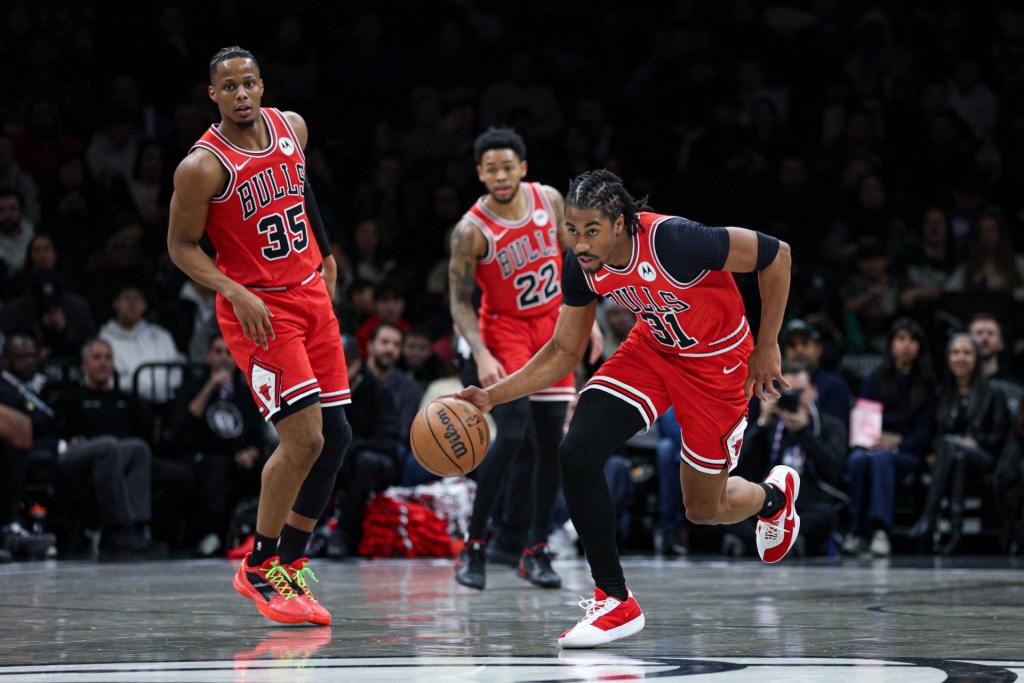
After tweaks to the All-Star Game helped result in the event’s highest viewership in 15 years, the NBA and media-rights partner NBC are now turning their attention toward All-Star Saturday.
NBC Sports executive producer Sam Flood told Front Office Sports that the network is already making pitches to improve the Saturday festivities, which suffered from yet another lackluster Slam Dunk Contest after the 3-Point Contest and Shooting Stars competition. Potential options include the addition of a fourth event, such as a 1-on-1 or 2-on-2 tournament.
“On the NBC side, we’re thinking if there’s another element that could be added that would make Saturday even more of a showcase for the players,” Flood told FOS.
As for the game itself, the league’s most recent adjustments to the All-Star weekend’s main event are already paying off.
Over the course of the past decade, the NBA has experimented with different formats to reignite flagging viewer interest in its All-Star Game. This year, the league and NBC Sports hit the jackpot by injecting an Olympic vibe into the coverage. They were rewarded with the highest viewership since 2011 for the league’s midseason showcase.
The NBA’s first USA vs. the World format divided All-Stars into three squads competing via a round-robin tournament: Team USA Stars, Team USA Stripes, and Team World. Coverage of the league’s 75th annual All-Star Game averaged 8.8 million viewers across NBC, Peacock, and Telemundo, peaking at 9.8 million viewers. That was up 87% from 4.7 million for last year’s telecast on TNT Sports, which ranked as the second lowest in the NBA’s All-Star Game history.
There are multiple reasons why this year’s All-Star Game was a success. The game aired on broadcast, not cable TV. It benefited from a massive television lead-in from NBC’s coverage of the Milan Cortina Winter Olympics, which averaged a cumulative 26.6 million viewers Sunday. The league and NBC scheduled the game’s tip-off for 5 p.m. ET—three hours before last year—sandwiching hoops action with Olympic coverage. The NBC lead-in was around 10 million viewers at the time the network switched from Olympics to the All-Star Game.
But don’t forget patriotism. Anybody who watches events such as the Olympics, golf’s biennial Ryder Cup, or the NHL’s popular 4 Nations Face-Off last year notes the difference when national pride’s on the line. Most of today’s filthy-rich NBA stars (average annual salary: $11.8 million) may not care about the $125,000 they get from winning the All-Star Game. But they do care about bragging rights on the world stage. Especially when American hoopers feel threatened by the success of European stars such as Victor Wembanyama, Nikola Jokić, and Luka Dončić.
The NBA’s top American and foreign-born stars slugged it out toe-to-toe in the Clippers’ Intuit Dome on Sunday. They played to win, instead of going through the motions for a meaningless exhibition game.
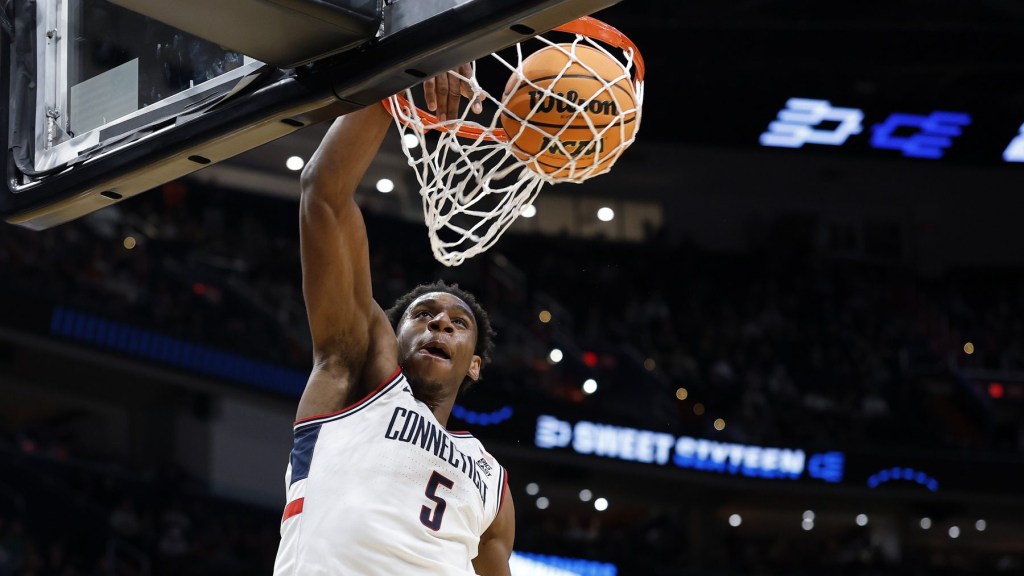
French superstar Victor Wembanyama of the Spurs set the tone, winning the opening tip-off before throwing down a dunk. He finished with 33 points, 8 rebounds, and 2 blocks for the World team. Meanwhile, game MVP Anthony Edwards of the Timberwolves notched 32 points, 9 rebounds, and 3 assists for the victorious USA Stars.
The new format delivered “exactly” what the NBA was hoping for, according to NBA president of league operations Byron Spruell.
“The level of competition increased, the intensity on the floor was elevated and the players embraced the opportunity to represent their home countries and regions,” he told FOS in a statement. “This year’s group of NBA All-Stars put on a show for fans around the world–and showcased the global talent that makes the NBA unique.”
Flood worked many All-Star Games during the network’s golden hardball era from 1990 to 2002. He was happy to see some of today’s younger All-Stars bring back some of the competitive fire that Michael Jordan and Larry Bird showcased back in the day. Sure enough, viewership steadily rose during the game telecast as viewers, alerted via word of mouth, tuned in for the back-and-forth action.
“We really loved the concept. And the league was all in on making it work,” Flood told FOS. “The star of the weekend? We had real basketball for 48 minutes of action, the way they formatted it with 12-minute games. It created 48 minutes of basketball just like you’d get on a normal game. Tying in the drama of USA vs. the World was a really perfect way to uplift the All-Star Game and give us a winning storyline coming out of the Olympics.”
Years in the Making
The NBA and NBC didn’t just throw the USA vs. the World format against the wall and hope it would stick. The idea was years in the making, according to executives involved in the process.
The NBA had long considered the America vs. international All-Star dynamic. But the league waited until there were enough legit foreign-born stars to make it a go. Some would argue it was overdue. After all, foreign-born players have won five of the NBA’s past seven MVP awards. This season saw a record 135 international players on opening night rosters.
NBC was already thinking along those lines. After televising the Olympics and Ryder Cup for decades, no network knows more about how to wring drama, and ratings, from international competitions. From the day NBC secured an 11-year deal with the NBA in 2024 worth $2.5 billion a year, the network began pushing for an Olympic-type game format.
The timing was perfect. In 2026, NBC would televise the All-Star Game smack in the middle of its historic sports TV February, including monthlong Olympics coverage from Italy and Super Bowl LX on Feb. 8.
To prepare, top NBC execs traveled to the 2025 All-Star weekend in San Francisco. They watched, learned, and listened. They concluded All-Star weekend was too reliant on entertainment over action. They wanted the focus back on players.
Once he returned, Flood knew what he wanted to do.
“The entertainment needs to be the guys on the court,” he said. “The league was all in on that thought process. That’s the beauty of what we came up with. Having the stars be the players and not the accompanying acts. Best players in the world, best athletes in the world? Let’s show them off.”
Then on opening night of the 2025–26 season, Flood and NBC Sports chief Rick Cordella were hanging out pregame with NBA commissioner Adam Silver. Off the cuff, they suggested bringing back “Roundball Rock” composer John Tesh to play his anthem before the All-Star Game. Silver liked the idea. Sure enough, there was Tesh welcoming players with a live on-court performance of his driving sports anthem.
Now the NBA and NBC are already looking toward 2027, and specifically, Saturday night.
While the network is already eyeing a fourth contest, the struggling dunk contest is expected to remain a staple. That doesn’t, however, mean that it won’t be without potential changes, with Flood revealing that former champion turned NBC Sports analyst Vince Carter is studying how to rejuvenate the contest.
“He’d love to help any way he can to get the same kind of caliber of dunkers that he had back when he was competing against the best of the best,” Flood says.