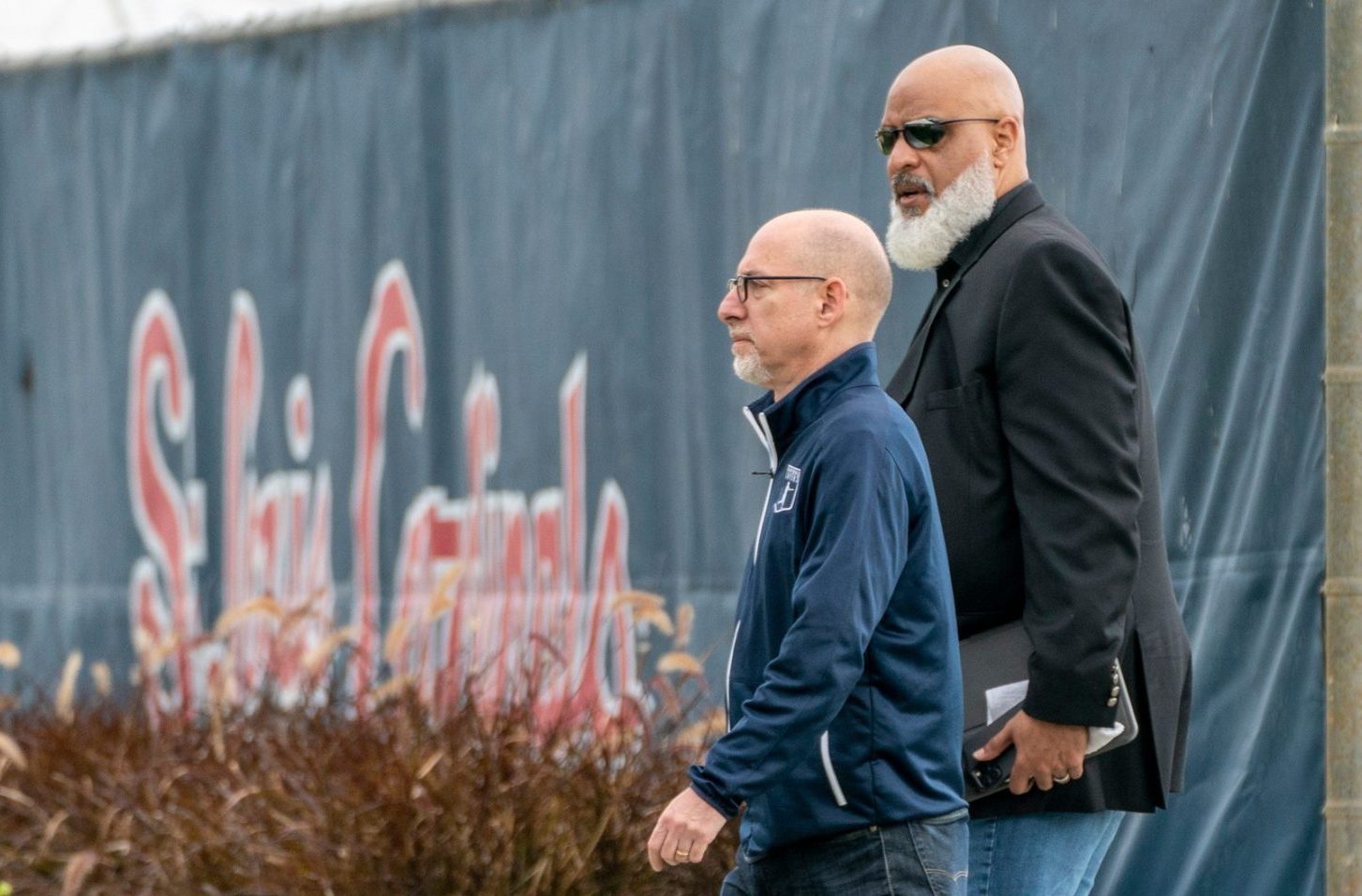
The MLB Players Association elevated deputy executive director Bruce Meyer to interim executive director, the union’s latest move as it looks to regain stability after the troubled departure of former leader Tony Clark.
Meyer, with the MLBPA and already a lead negotiating figure, will take over the union’s top day-to-day job in the wake of Clark’s exit. The MLBPA made that move official late Wednesday as Clark is under investigation for alleged financial mismanagement of licensing revenue, as well as an an inappropriate relationship with his sister-in-law, also a union employee.
The vote happened after players delayed making a decision Tuesday, after Clark resigned. The MLBPA also promoted general counsel Matt Nussbaum to interim deputy executive director.
Meyer, 64, joined the union in 2018 and led its negotiations during the 2021-22 round of collective bargaining with MLB owners, operating through a 99-day management lockout before reaching a five-year agreement in March 2022. He’s known as a fierce advocate for players and someone not afraid to ruffle feathers.
Pushing Forward
The union, meanwhile, believes it’s just as strong, unified, and prepared as ever, despite heading into critical labor negotiations with MLB owners while in the midst of the massive and embarrassing leadership shift.
“I’m not going to say this is a great thing; this is unforeseen,” Meyer said. “At the end of the day, leadership is important and leadership comes and goes, but what remains is the players. Our union is strong and always has been strong because of the solidarity of our members, of our players. That is going to continue. … Anyone that underestimates the strength and solidarity of the MLBPA does so at their own peril.”
Meyer, however, acknowledged the difficult circumstances surrounding Clark. In addition to the interpersonal matters, Clark has been under federal investigation since last year by the Eastern District of New York, along with the organization itself, over complaints of alleged self-dealing and misuse of licensing money.
“Just on a personal level, I think we’re all fairly devastated by the things that have happened in the last 48, 72 hours,” Meyer said Wednesday about Clark. “I’m not going to go beyond that in terms of personal feelings. But again, it’s fair to say that we were all personally upset, concerned about Tony. But I think [the resignation] was something that the players determined had to happen at this particular point in time. We’ll move forward, and again, be as strong as we always were.”
Negotiating Matters
As Meyer takes the reins, players are unquestionably entering a potentially industry-shaking labor negotiation with team owners.
Both sides are pushing for big changes, and on the management side, calls are rising for a salary cap or a cap-like structure. The intent is to even out a situation where the Dodgers, the sport’s current two-time defending champion, are set to nearly quintuple the 2026 player payroll of MLB’s lowest spender, the Marlins.
The union, however, has firmly resisted salary caps for its entire six-decade existence, previously going through several prior work stoppages in part to fight against them. The MLBPA has long pointed to recent issues in cap-based systems in other major sports, such as frequent cap-driven roster cuts and contract restructurings in the NFL. Formal labor talks are expected to pick up shortly after Opening Day.
“Our position and the historic position of this union for decades on the salary cap is well known,” Meyer said. “It’s the ultimate restriction. It is something that owners in all the sports have wanted more than anything, and baseball in particular. There’s a reason for that: because it’s good for them and not good for players.”