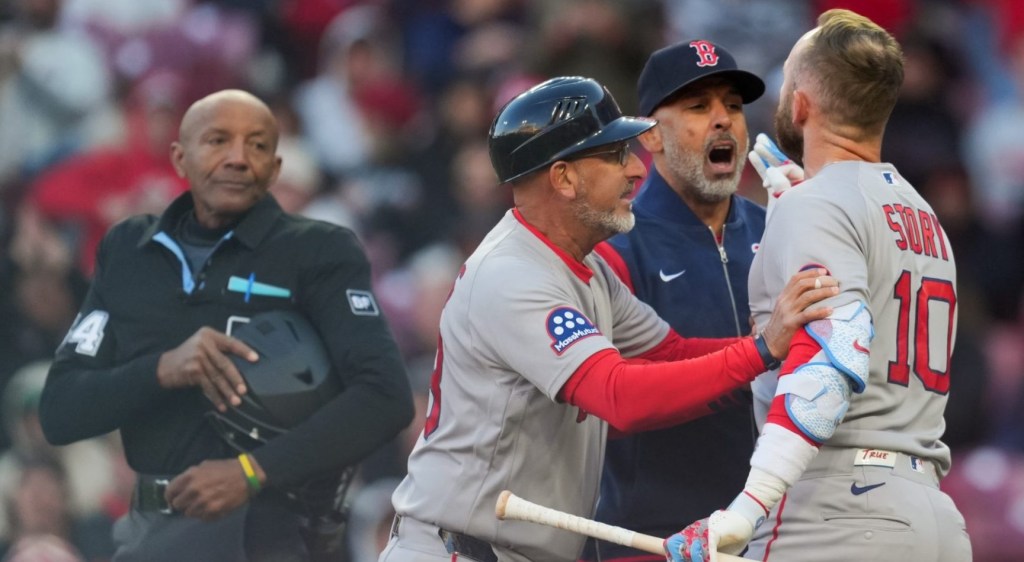
The MLB Players Association has amassed an organization-record asset base of $519.3 million as the union prepares for what is expected to be a fractious set of labor negotiations with team owners.
The union detailed the figure, effective Dec. 31, 2025, in a newly filed annual report with the U.S. Department of Labor. The $519.3 million total is up 47% from the comparable $353.1 million at the beginning of 2025.
As has long been the union’s practice, players have refrained from receiving licensing payments during the latter stages of the current labor agreement, instead opting to save and invest that money. That is done to create a larger financial base in the event of a work stoppage or other potential labor-related disruptions.
In particular, the MLBPA reported a sharp jump in its holdings of U.S Treasury securities, rising from $85.3 million at the beginning of 2025 to $222.1 million at the end of the year. Overall, the union has accumulated $415 million in those securities, cash, and other investments—a total more than twice the comparable $171 million from 2021, as the organization approached the previous set of labor talks with owners.
The owners, meanwhile, have reportedly amassed a reserve of more than $2 billion.
Bargaining Matters
Players and owners are set to begin formal labor negotiations this spring in advance of the Dec. 1 expiration of the current, five-year collective bargaining agreement. There is significant division between the two camps on how to address a growing fiscal gap within the sport, and owners are expected to pursue a salary cap—something that players have consistently resisted.
Even after the MLBPA’s recent leadership transition in which Bruce Meyer succeeded Tony Clark atop the union, that anti-cap position hasn’t changed.
“We don’t believe in a system that’s basically a zero-sum game that says if we pay you, we’ve got to take that out of the pocket of another player,” Meyer said after being elected to the post in February. “That’s how the other systems work. … What happens is the top guys get paid and then everyone else gets what’s left over.”
During last month’s World Baseball Classic, Meyer said the departure of Clark has not affected the union’s preparation for the upcoming labor talks.
“That leadership change, as unexpected as it was, has not and will not affect our bargaining,” Meyer said.
Clark, meanwhile, received $3.69 million in total compensation in 2025, while Meyer earned $1.61 million in his prior role as deputy executive director. On the licensing front, Fanatics is by far the largest source of revenue for the MLBPA, and that company paid the union $106.4 million last year.