The major players in prediction markets steadfastly insist they are not gambling companies. That is a distinction that federal regulators have approved, allowing them to offer their sports events contracts even in states where sports betting is not legal.
At least two of America’s biggest pro sports leagues remain unconvinced of any meaningful difference.
Late in the 2025 season, Major League Baseball sent a memo directly prohibiting its players from engaging with baseball event contracts on Kalshi, Polymarket, and other prediction markets, Front Office Sports has learned.
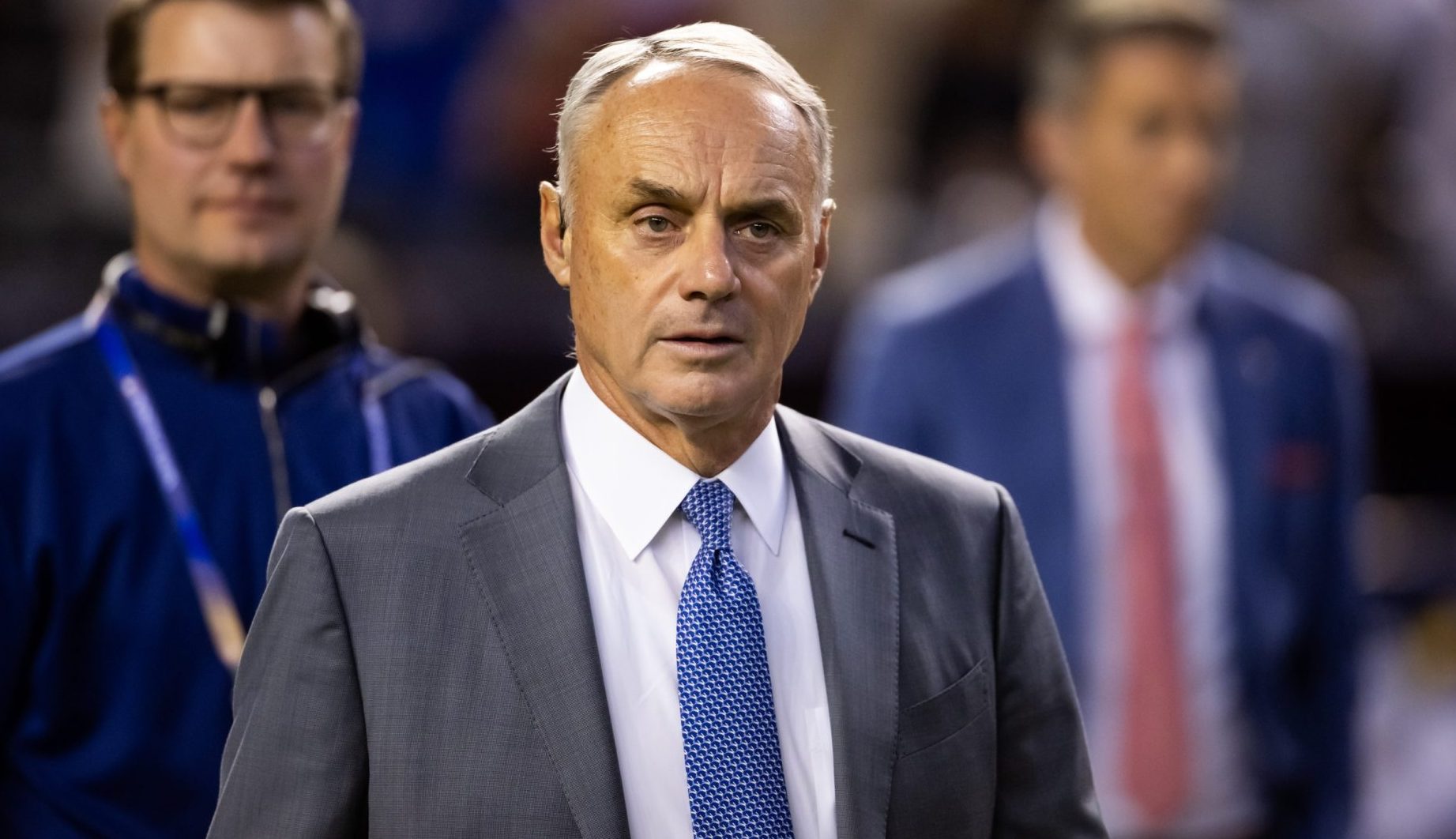
The memo, obtained by FOS, was titled “Re: Baseball Related Prediction Markets” and was jointly sent to players from commissioner Rob Manfred’s office and the players’ union.
The league firmly instructed players against “participating in ‘prediction markets’ to risk money on any outcome related to baseball games or events,” framing involvement as a violation of its longstanding sports betting policies.
“Several companies (including Kalshi, Robinhood, and Crypto.com, among others) are now offering what they call ‘prediction markets,’ which allow members of the public to risk money on the outcome of specific events, including baseball and other sporting events,” read the memo, which was dated Aug. 26, 2025, but included screenshots of Kalshi from May 5.
Two separate MLB team sources confirmed the memo was sent in August, distributed across the major and minor leagues, and also posted in visible areas near locker rooms. But communication regarding the status of prediction markets is still making its way through the player ranks. Three MLB players on different teams who spoke to FOS said they were still unaware of the memoʻs existence or any league or union-led conversations informing players about potential prediction-markets rule violations.
In the August memo, MLB and the MLBPA stated that the existence of baseball prediction markets was something that had “recently come to our attention.” But Kalshi launched its MLB markets on April 16, more than four months before the memo was circulated.
MLB did not respond to questions for this story about when it became aware of Kalshiʻs in-game prediction market, whether any incident prompted the memo, and whether any players who participated in baseball prediction markets before Aug. 26 would receive leniency. The MLBPA declined comment.
Though MLB has readily embraced online sports betting in recent years, lobbying alongside the NBA and PGA to legalize and striking lucrative deals with prominent operators like DraftKings and FanDuel, the league has been quiet on partnering with the emerging parallel betting models popularized by Kalshi and Polymarket.
Response from the other major U.S. pro men’s leagues has varied.
The NHL has deals with both Kalshi and Polymarket, while the NFL has said it’s concerned about the lack of regulation around prediction markets and that their offerings “mimic sports betting.” The NBA is in the midst of a major gambling scandal involving a current player, current coach, and former player and coach; and in May, NBA assistant general counsel Alexandra Roth wrote a letter to the Commodity Futures Trading Commission (CFTC) requesting “specific regulatory provisions that can mitigate the associated integrity risks” of prediction markets.
Meanwhile, the regulatory environment under President Donald Trump’s second administration has been far more favorable to prediction markets. Kalshi sued the CFTC under President Joe Biden for blocking its election-based event contracts and won; the CFTC said it would appeal but dropped its appeal under Trump; Polymarket, banned in the U.S. nearly four years ago under Biden, relaunched in the U.S. this week.
“As the resemblance between sports event contracts and traditional sports betting markets continues to grow, so too does the need to replicate the integrity and consumer protections that exist at the state level,” then–MLB VP Bryan Seeley wrote in a March letter to the CFTC. “Currently, those protections are lacking.”
“For example, MLB is not aware of anything that would require exchanges and brokers to notify leagues of potential threats to game integrity, cooperate with league investigations into player, umpire, or employee misconduct, or share data for integrity purposes,” Seeley wrote. “Sharing data tracking unusual betting activity has proven important for MLB’s efforts to juggle maintenance of its lucrative gambling business while enforcing its strict rules for players involved in gambling, including catching alleged violations of its gambling policy.
“MLB has been advised that some exchanges and brokers take the position that they are not even permitted to share information with MLB under current CFTC regulations,” wrote Seeley in March.
An alert from betting-integrity firm IC360 triggered the investigation into Guardians pitcher Luis Ortiz. Along with his teammate Emmanuel Clase, Ortiz was charged with wire fraud conspiracy and is on leave from the Guardians while the league and federal investigations continue.