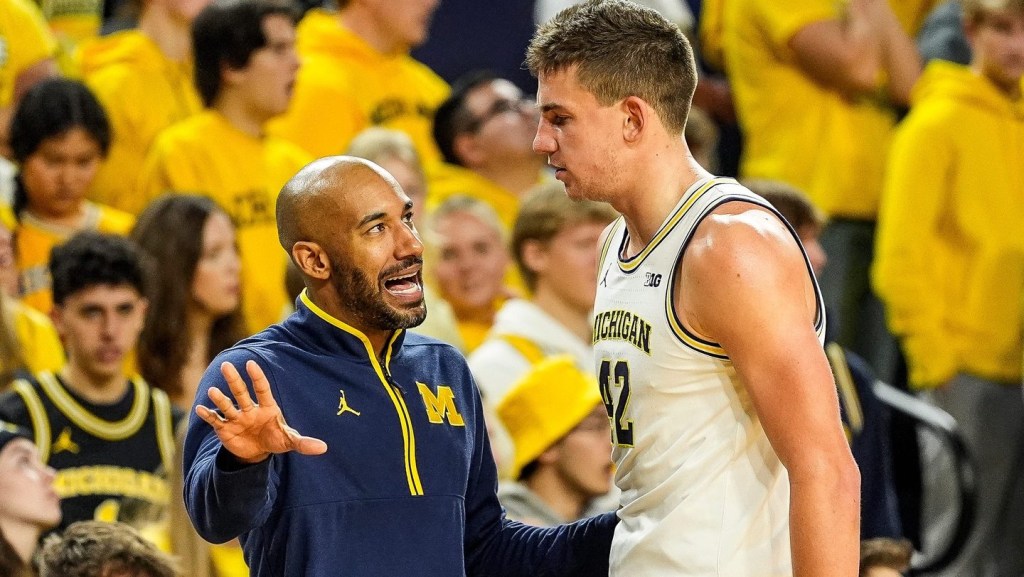
INDIANAPOLIS — The four programs taking the court on Saturday—Illinois, UConn, Arizona, and Michigan—will play for more than just a spot in the national championship game.
For the first time, they’re playing for millions of dollars worth of prize money.
This year, the NCAA expanded its “units” system, which awards more than $226 million based on how far teams survive and advance throughout the NCAA tournament, to include the semifinal and national championship games.
“Today’s vote emphasizes the importance of rewarding schools who invest in the development of their basketball programs and reach not just the Final Four but ultimately achieve the pinnacle of success in this sport by competing for and winning the national championship,” NCAA SVP of basketball Dan Gavitt said after the change was made official in January. “The expansion of these funds also continues to increase financial support to members during this pivotal time in college sports in which student-athletes are receiving unprecedented benefits from their schools.”
Here’s how it works: The NCAA awards an equal distribution to all conferences whose conference champions (or automatic qualifiers) participate in the tournament. Then, conferences receive $2 million for each at-large team that makes the tournament; the teams win another $2 million for each game they play in. In previous years, that system stopped at the Final Four. But this year, each team will have a chance to earn $2 million for making the title game, and an extra $2 million for winning it. The units are then broken up and distributed by the conferences to their members on a six-year rolling basis.
Each conference has its own policy for distributing units however they see fit. The Big Ten, for example, distributes prize payouts equally. So if Illinois and Michigan make it to the national championship, the Big Ten could earn $6 million—$2 million for each team in the title game, and $2 million for the team that wins. But other leagues give some or all of the prize payouts to the programs who earned them.
For some leagues—especially those without FBS football—the prize payouts are major financial drivers. The Big East, for example, was able to earn more than $10 million in units in this year’s tournament thanks to Villanova’s appearance, St. John’s Sweet 16 run, and UConn’s Final Four berth (that is, as of Saturday, still ongoing).
“As a conference which does not have the benefit of national football revenue but has had a school playing in either the Men’s or Women’s Final Four seven times in the last nine years that the tournament has been conducted, the Big East is very grateful for this change,” Big East commissioner Val Ackerman said in January. “We’re very glad that every team that advances to the championship game from here on out will benefit from this logical adjustment to our national revenue distribution policy.”
The women’s tournament, which is in its second year of the units system and will offer about $20 million this season, is also participating in this enhanced distribution system (though women’s units are paid on a three-year rolling basis, rather than six).
On Friday night, South Carolina and UCLA earned units for the SEC and Big Ten, respectively during their Final Fours. Their Sunday afternoon showdown will have another six figures on the line.