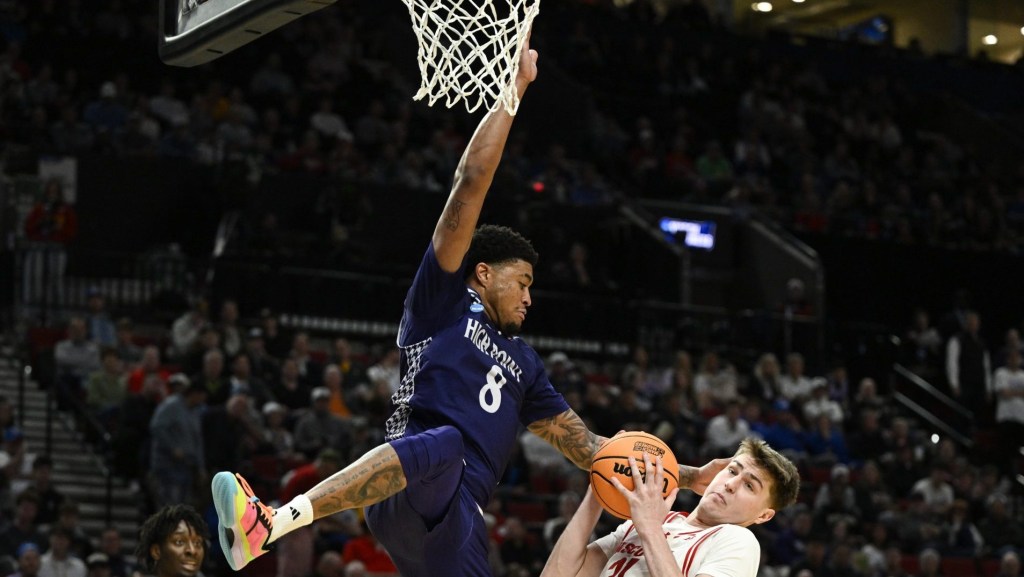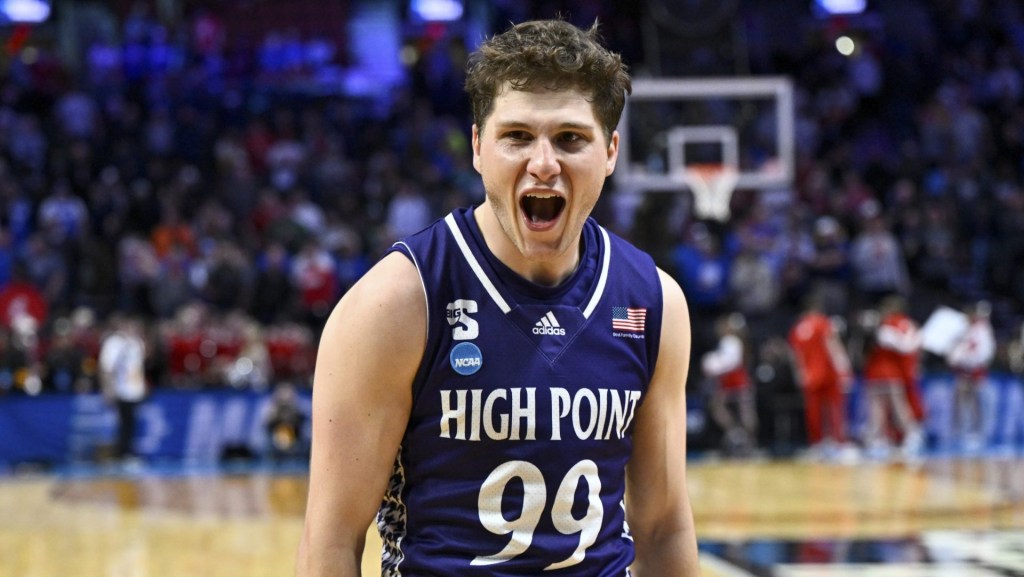
After No. 12 High Point upset No. 5 Wisconsin in the round of 64 on Thursday, High Point head coach Flynn Clayman had one message—and it wasn’t about the NCAA tournament.
“It looks pretty obvious to me that high-majors need to play mid-majors during the season,” he said with a flurry of emotion during the postgame television interview. “They said we ain’t played nobody. We played somebody now.”
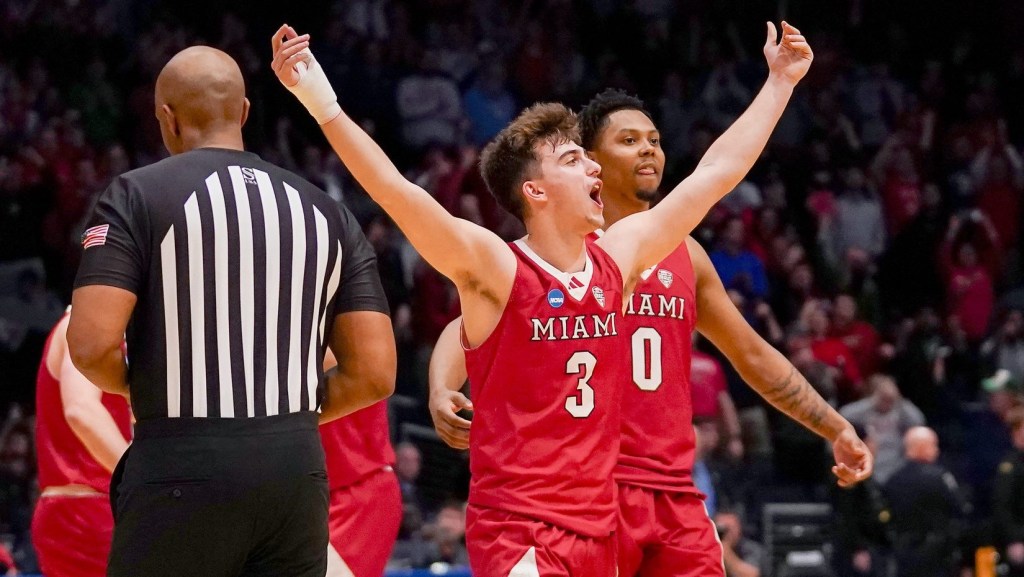
Both Clayman and Miami (Ohio) coach Travis Steele have used their platforms at the NCAA men’s basketball tournament to highlight that “high-majors”—power-conference and Big East programs—have refused to schedule early-season non-conference games against plucky underdogs like their programs. These games are essential for mid-major programs to have résumés impressive enough to garner at-large bids in the NCAA tournament.
For many lower-resourced schools, non-conference games are an opportunity to earn athletic department revenue in exchange for being outmatched on the hardwood. The games, where high-majors pay low- and mid-majors essentially to schedule guaranteed wins, are often colloquially referred to as “cupcake” matchups.
But for mid-majors with tournament aspirations like High Point and Miami (Ohio), the goal goes beyond earning cash.
These programs are looking to beef up their overall strength of schedule rating with wins against “Quad 1,” or highly ranked opponents. The NCAA selection committee is rarely inclined to award at-large bids to mid-majors because their conferences don’t have enough, if any, of these highly ranked opponents. Even if they’re good, an anemic schedule almost always keeps them out of March Madness unless they win their conference tournaments.
This strength of schedule question was the reason former Auburn coach and CBS/TNT analyst Bruce Pearl originally said Miami (Ohio) wasn’t good enough to get into men’s March Madness in the first place.
But the reality is that high-major programs have no incentive to say yes to these offers, as these games can harm their own tournament chances if they lose. And it’s even more difficult to get these high-major teams to play mid-majors at home. A Miami (Ohio) associate head coach told Yahoo Sports earlier this year that between 75 and 90 programs turned down playing the RedHawks ahead of this season.
“There’s a lot of very good teams that I think are deserving to have an opportunity at an at-large bid, but all the numbers are going to be slanted more towards the P5, P6,” Steele said before the RedHawks First Four win. “A lot of the mid-major basketball [teams] aren’t going to have opportunities to have Quad 1 games ever at home. That’s never happening—let’s make that very clear.”
Clayman rattled off other programs that had trouble scheduling high-stakes games and getting into the tournament as a result.
“High Point and Miami (Ohio) are 2–1 in Quad 1 games,” Clayman said. “We couldn’t get [more top] games. They couldn’t get games. Akron, UNCW, Belmont couldn’t get games. We won 22 of our last 23 games, and we didn’t move up one spot in the metrics. Not one.”
Clayman, who hopes to lead his Panthers to a second tournament victory over No. 4 Arkansas on Saturday, is looking to prove the program’s mettle far outstrips their strength of schedule. “If we can get games like this on neutral courts and some home games, I think we’d know who’s really the best teams.”