Prediction-market platforms have faced scrutiny over markets that could be manipulated by insiders, a risk highlighted by Tuesday night’s State of the Union address—especially since Donald Trump Jr. is both a strategic advisor to Kalshi and an investor in Polymarket.
On Kalshi, nearly $4 million was traded on how long President Donald Trump’s speech would last, and there was more than $28 million in trading volume on markets for what specific words or phrases Trump would say (examples that resolved to “yes” included “drill baby drill” and “cartel”).
Lawmakers have taken notice of the potential for insider trading. Last month, for example, Rep. Ritchie Torres (D., N.Y.) proposed legislation aimed at barring government insiders from capitalizing on insider knowledge.
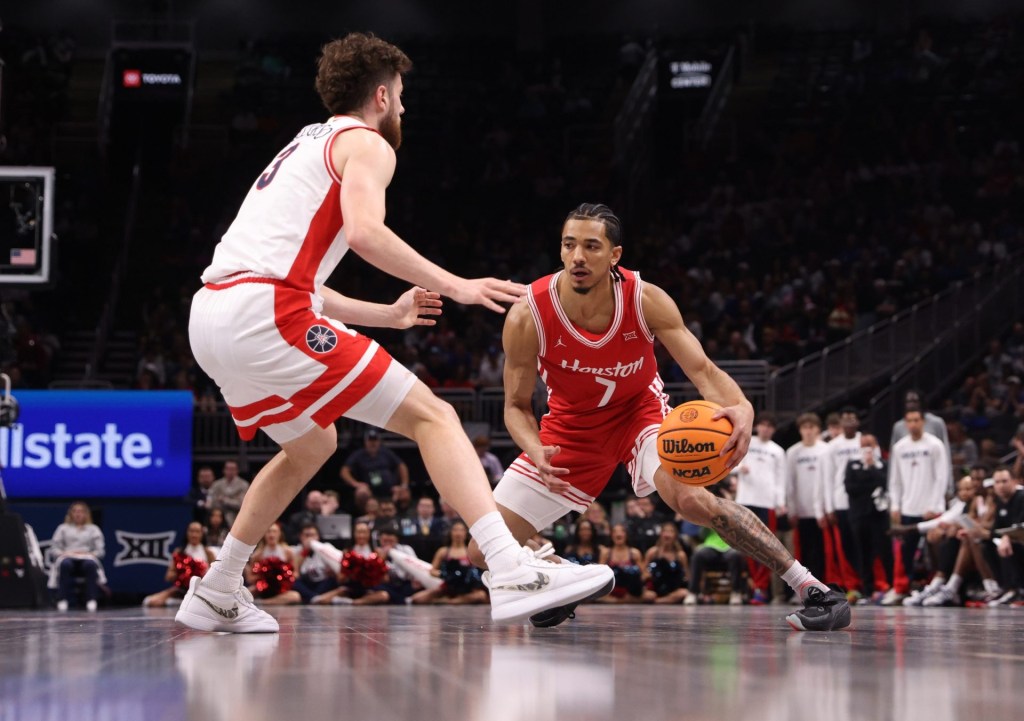
The risk of insider trading extends to sports. For instance, on Kalshi you can trade on when Jayson Tatum will play his first game this season, and on Polymarket’s international site you can trade on whether LeBron James will retire before next season (in each of those cases, people close to the players could have knowledge of what will happen prior to the public).
Kalshi says it takes insider trading seriously. The company prohibits the practice, which it defines as being “when a person trades on the platform while in possession of certain information or influence over the outcome of a contract that materially affects their decision to trade.”
It recently announced an independent surveillance audit committee that will produce quarterly reports with statistics on trades that have been flagged, probes that have been opened and closed, and cases that have been referred for further enforcement to the Commodity Futures Trading Commission—the federal regulator charged with policing prediction markets, whose new chairman recently expressed support for the industry. (Kalshi has its own internal monitoring system and uses third parties. For example, it works with a company called Solidus Labs to detect potential issues, and with sports specifically, works with integrity monitor IC360, which also works with pro leagues like the NBA, NFL, MLB, and NHL.)
On Wednesday, Kalshi announced enforcement actions against two individuals accused of insider trading. One of the two is Kyle Langford, who was previously running for California governor and is currently running for Congress.
In May, Langford posted on X/Twitter that he had wagered $100 on himself to be the next California governor. Kalshi’s surveillance department noticed the post, froze his account, and launched an investigation, according to a statement from Robert DeNault, a Kalshi attorney who serves as its head of enforcement.
“The candidate was initially cooperative and acknowledged that this violated the exchange rules,” DeNault said. “As a candidate in a race, you can (and probably should) follow and use Kalshi’s market forecast, but you should not trade on it.”
In total, Kalshi says Langford traded about $200 on his own candidacy. As a result, he’s banned from using Kalshi for five years and was hit with a financial penalty of more than $2,200. Langford did not immediately respond to a request for comment.
The second person is Artem Kaptur, who works for the star YouTube creator MrBeast.
Although Kalshi did not name Kaptur in the announcement, his identity was revealed in a separate notice of the violation posted by the company. In its statement, Kalshi described Kaptur as a “popular YouTube streamer [whose] videos” traded roughly $4,000 on YouTube streaming markets. Kalshi says its system “flagged his near-perfect trading success on markets with low odds, which were statistically anomalous,” and that the company also received tips from other users who noticed the trader’s success. That person was banned from using Kalshi for two years and hit with a financial penalty of nearly $20,400.
A representative for MrBeast said in an emailed statement to Front Office Sports that “Beast Industries has no tolerance for this behavior, whether by contestants or our own employees.” Beast Industries has a “longstanding policy in place” prohibiting employees from using proprietary information, according to the statement. The spokesperson said the YouTube streamer has “already initiated an independent investigation” on this matter.
“In both cases, our team collected evidence, applied Kalshi’s disciplinary process fairly, and concluded there was sufficient evidence that a trading violation occurred,” DeNault said. “No system is perfect. No financial exchange is immune from bad actors. Not stock exchanges, not banks, not prediction markets. We’re committed to deterring and finding the bad actors, manipulators, and those who willingly cheat.”
Kalshi says it has reported both cases to the CFTC, “as we are required to do,” and that it intends to donate the money from the fines to a “non-profit that provides consumer education on derivatives markets.” The company did not disclose the identity of that non-profit.
Over the last year, Kalshi says it has opened 200 investigations and frozen accounts when appropriate. More than a dozen of the investigations have become “active cases,” it says.
The CFTC acknowledged the situation with an advisory notice issued Wednesday afternoon. The regulator said that even though Kalshi’s “internal enforcement program handled these matters,” it has “full authority to police” an array of illegal trading practices, including insider trading on prediction-market platforms. The CFTC did not say whether it intends to take any further action.


![[Subscription Customers Only] Jun 18, 2025; Philadelphia, Pennsylvania, USA; Fan with a Morocco flag inside the stadium before a group stage match of the 2025 FIFA Club World Cup at Lincoln Financial Field.](https://frontofficesports.com/wp-content/uploads/2026/03/USATSI_26482439_168420755_lowres-scaled-e1773852693149.jpg?quality=100&w=1024)