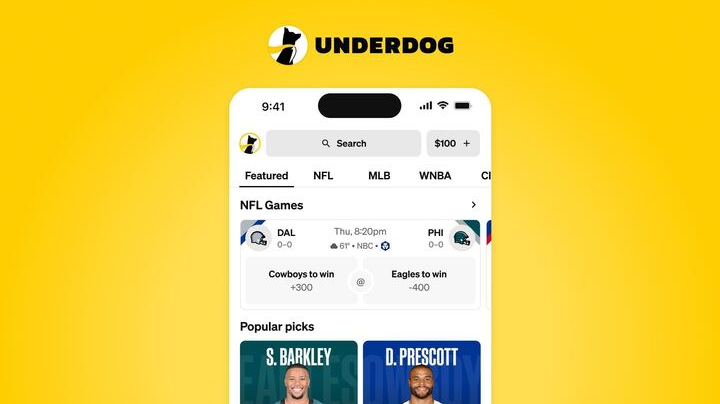
When more than 20% of Underdog employees were laid off last week, they were told it was part of a corporate restructuring. In addition to refocusing on prediction markets, the company has been laying groundwork to rely more on artificial intelligence.
The layoffs, which took place Feb. 27, affected at least 125 people and included cuts in the fraud operations department, as well as areas like customer support, graphics, marketing, and “drafts”—a product offering daily and season-long draft-based games. Following the cuts, Underdog now has a little more than 500 employees.
Some very longtime employees, who were among the first 50 people to ever join the company, “were let go like it was nothing,” one person who was laid off tells Front Office Sports.
Underdog is most known for its daily fantasy sports offerings, and it had been getting into traditional sports betting before pulling back amid the rise of prediction markets.
What Went Down
Employees began work that day with no idea that layoffs were on the horizon, which is not unusual when corporate cuts happen. There were two meetings held concurrently before lunchtime—one for employees getting laid off and another for employees who were not. One laid-off employee tells Front Office Sports the meeting for those who were not being laid off was led by Brandon Stakenborg, former co-CEO of Underdog, who is listed as a founder and executive at the company on LinkedIn.
Stakenborg “expressed sympathy” for the people in the other meeting and “told everyone who was safe that they could feel free to take the rest of the day off,” the person said.
Underdog founder and CEO Jeremy Levine spoke briefly in the meeting for employees being dismissed, and multiple people who spoke with FOS say he appeared and sounded upset. After the meeting with the laid-off employees was over, Levine joined the other meeting and spoke to the staff that will remain with the company, according to a person familiar with the matter. In total, FOS spoke to eight laid-off employees for this story.
In a statement, Levine attributed the layoffs to the company’s transition from a business focused on a “state-by-state framework to a national prediction-markets platform with seamless offerings across the country.”
“It’s simply a different operation, and the changes we made are a part of that transition,” he said in the statement. “We take pride in hiring people who are passionate, good human beings and who really care about their work, so if you’re hiring and come across an ex-Underdog person you’d be lucky to have them and call me for a reference.”
Underdog declined to comment further than Levine’s statement.
The company is providing severance—two impacted employees tell FOS the standard for full-time workers was at least 10 weeks’ pay, plus an additional week for each year completed with the company. Even employees who had been with the company for only a few months received severance; one person tells FOS they received 10 weeks’ severance, which is “longer than I was there.” Multiple employees tell FOS they are allowed to keep their company-issued laptops, and that the company is providing three months of free LinkedIn Premium.
One laid-off employee tells FOS “they have done a good job of setting these people up for success.”
“He seemed genuinely upset,” another laid-off employee tells FOS, talking about the meeting held with laid-off employees. “It didn’t sound like corporate-speak.”
More Than a Prediction-Market Push
What Levine said—that the company has transitioned to a focus on prediction markets—aligns with what employees were told. Underdog announced in September that it was entering prediction markets through a deal with Crypto.com, which would allow users in 16 initial states to trade on event contracts across the NFL, NBA, MLB, college football, and more.
But laid-off employees say an increased emphasis on AI also played a role. The company has been implementing more AI for about a year now—including to help with customer support—and had asked the same employees who have now been laid off to “assist with training and making the AI better,” one laid-off Underdog employee tells FOS.
That person says employees were “graded and critiqued” by team leaders on their use of AI.
Another former Underdog employee says “they were pushing AI heavily in previous company all-hands meetings,” that the company has enterprise ChatGPT and Claude accounts, and that employees were “encouraged” to use AI as part of their jobs.
“The basic context is that this was largely a bet on AI replacing a large swath of these employees,” another person tells FOS. “Leading up, there was a drive to build out an AI department with multiple engineers.”
“They lost a lot of quality people who did not get the chance to adapt to an evolving skill set and some of them will never forgive Underdog for how they were treated,” the person says.
The Broader Picture
AI has become a flash point in the larger conversation about the economy and job market. While data on direct causation remains mixed, forecasts about how many jobs AI will ultimately replace have become commonplace.
A report from outplacement firm Challenger, Gray & Christmas last month said January saw the highest level of job cuts since 2009. The U.S. lost more than 108,400 jobs, a 118% increase from January 2025. AI was cited as the reason behind 7% of the total cuts for the month.
“It’s difficult to say how big an impact AI is having on layoffs specifically,” the report said. “We know leaders are talking about AI, many companies want to implement it in operations, and the market appears to be rewarding companies that mention it.”
On Feb. 26, Twitter founder Jack Dorsey announced his financial technology company Block was cutting nearly half of its workforce, from more than 10,000 to just under 6,000. He explained on social media the cuts were made, in part, because “the intelligence tools we’re creating and using, paired with smaller and flatter teams, are enabling a new way of working which fundamentally changes what it means to build and run a company.”
Meanwhile, Underdog is not the only sports-related business that has recently laid off staff. DraftKings underwent a round of layoffs last month, the size of which is not clear.
“DraftKings has decided to reorganize some teams to better align their people with the most important priorities and areas of investment for the company,” a spokesperson said in a statement. “Unfortunately, these changes will impact some roles across the organization.”
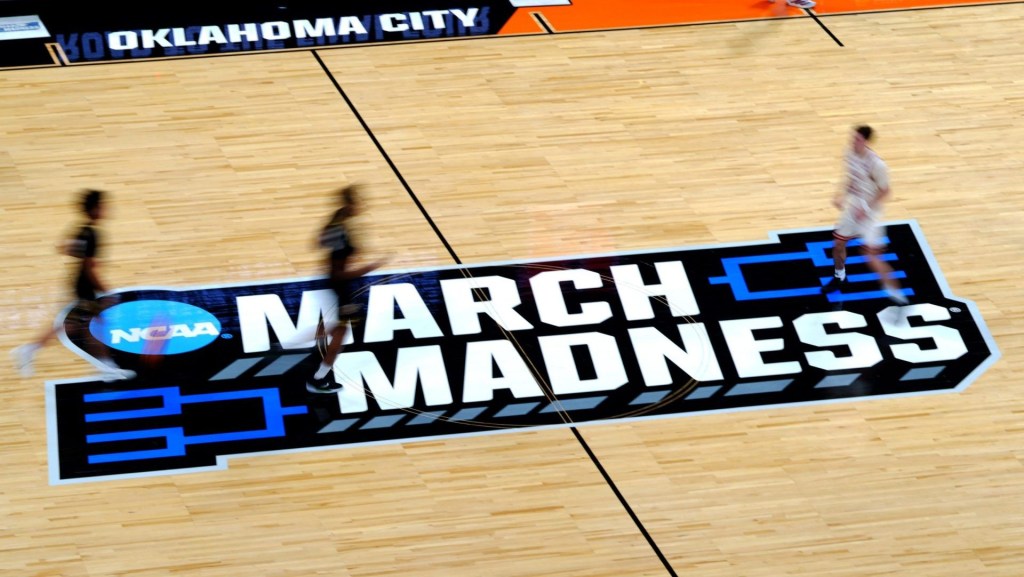
DraftKings reported positive net income for the first time in company history in fiscal 2025, although analysts were still underwhelmed by its performance. The company is also pushing ahead with prediction markets, and this week announced plans to offer a “super app” that will include its sportsbook, prediction markets, and casino and lottery games—“Phase One” is expected to roll out by March Madness.






![[Subscription Customers Only] Jun 18, 2025; Philadelphia, Pennsylvania, USA; Fan with a Morocco flag inside the stadium before a group stage match of the 2025 FIFA Club World Cup at Lincoln Financial Field.](https://frontofficesports.com/wp-content/uploads/2026/03/USATSI_26482439_168420755_lowres-scaled-e1773852693149.jpg?quality=100&w=1024)