Noah Eagle, Michael Grady, Zora Stephenson to Call WNBA on NBC
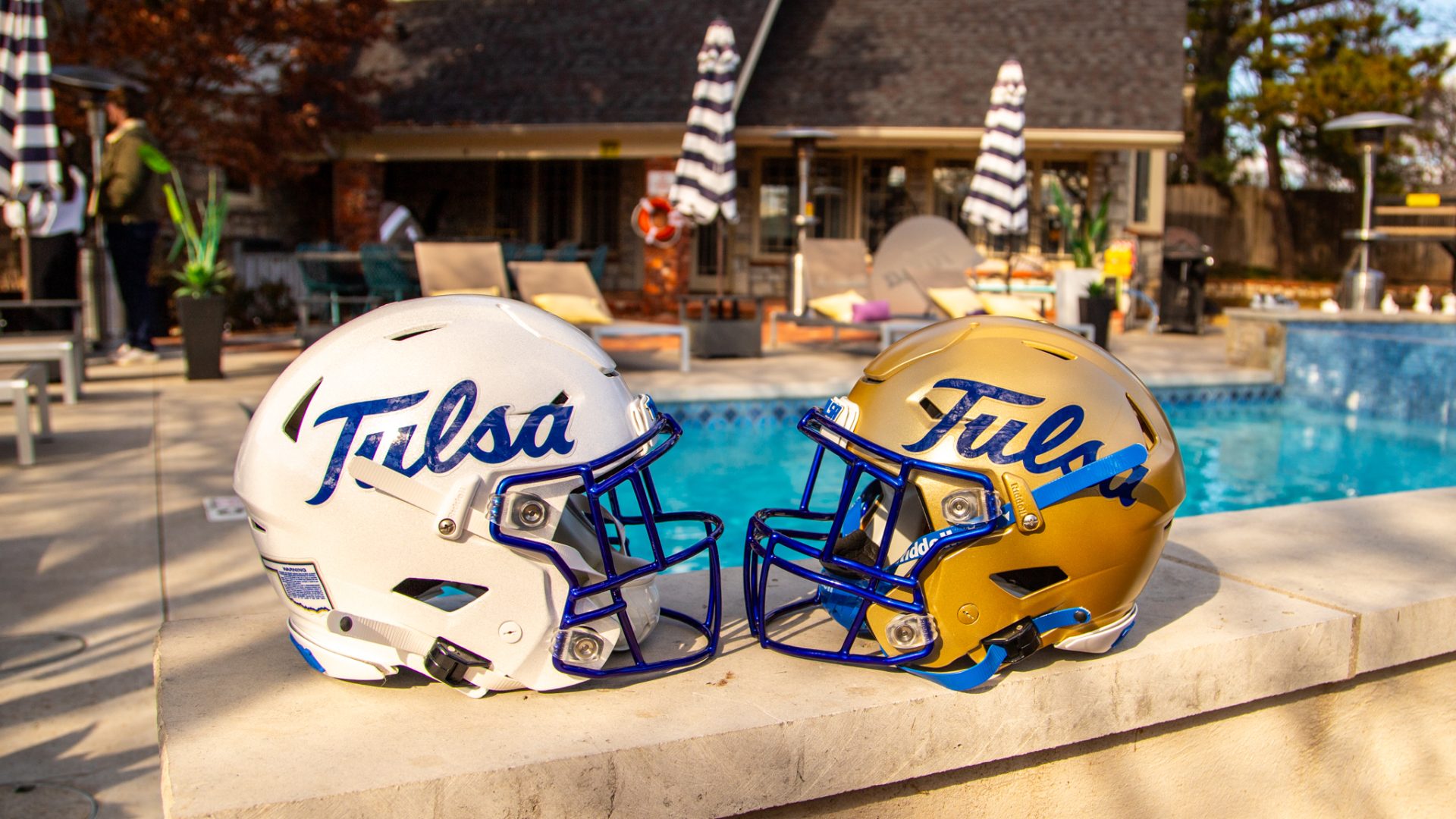
TULSA — As college football coaches across the country are holed up in offices fielding calls from potential transfers, the staff at Tulsa are plucking players from the portal while playing NBA Jam, sitting by the pool, and working on their putting games.
It’s called the Portal House: A lavish rental home that Tulsa’s football staff has transformed into its recruiting headquarters during the 14-day mad dash of the transfer window—and a place that’s helped the team score 20 recruits in the tight timeframe.
The Portal House was born out of necessity—Tulsa football had to get creative. The Golden Hurricane have had just three winning seasons in the past 13 years. In the era of NIL (name, image, and likeness) and the chaotic transfer portal, stacking wins is critical to attracting the next wave of talent and convincing them to stay put.
Tulsa’s coaching staff knows how rote recruiting visits often are for prospective players. Fly in, stay in a nice hotel, see the stadium and campus, check out the weight room, eat dinner at a steakhouse, and do it all over again at the next school. The Golden Hurricane wanted to change the game. It’s worked.
Doing It Differently
The first step in jumpstarting Tulsa’s football program was hiring Tre Lamb, who at age 36 is one of the youngest head coaches in the FBS. He went 4–8 in 2025, his debut season; far from making a splash, but already an improvement on Tulsa’s 3–9 campaign the year before.
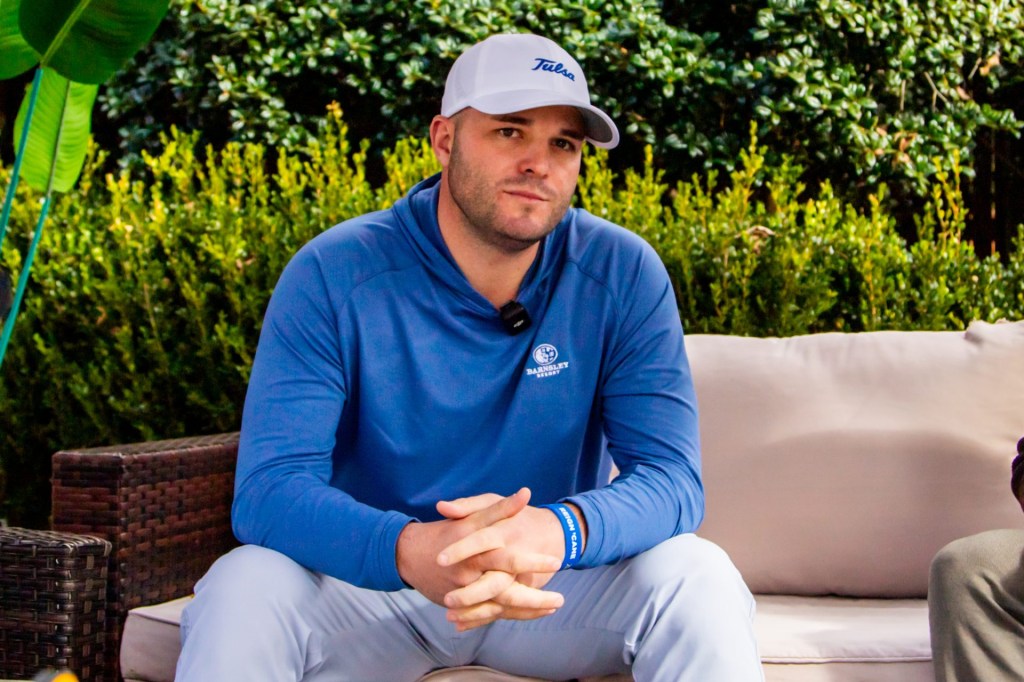
This season, Lamb is approaching the high-pressure offseason in a new way. “We all know what the stakes are,” he told Front Office Sports minutes after sinking a few putts in the backyard of the Portal House. “We’re not going to see our families [for two weeks], anyway. You’re going to be up at 7 a.m. and be here until 10 p.m.”
After years of piling assistant coaches into his own house during the two-week transfer window while coaching at Gardner–Webb and East Tennessee State, a member of his staff suggested renting a separate, privately-owned place off campus.
The idea was born: Secure a huge house in Tulsa, fill it with games and everything needed to recruit, and make it the program’s battle station during the most chaotic time of the college football calendar. Invite prospects to stay the night and allow them and their families to get to know the coaching staff in an intimate setting. Throw in a private chef—one of the players’ dads who cooks for the team on Saturdays during the season—and you’ve got the Portal House.
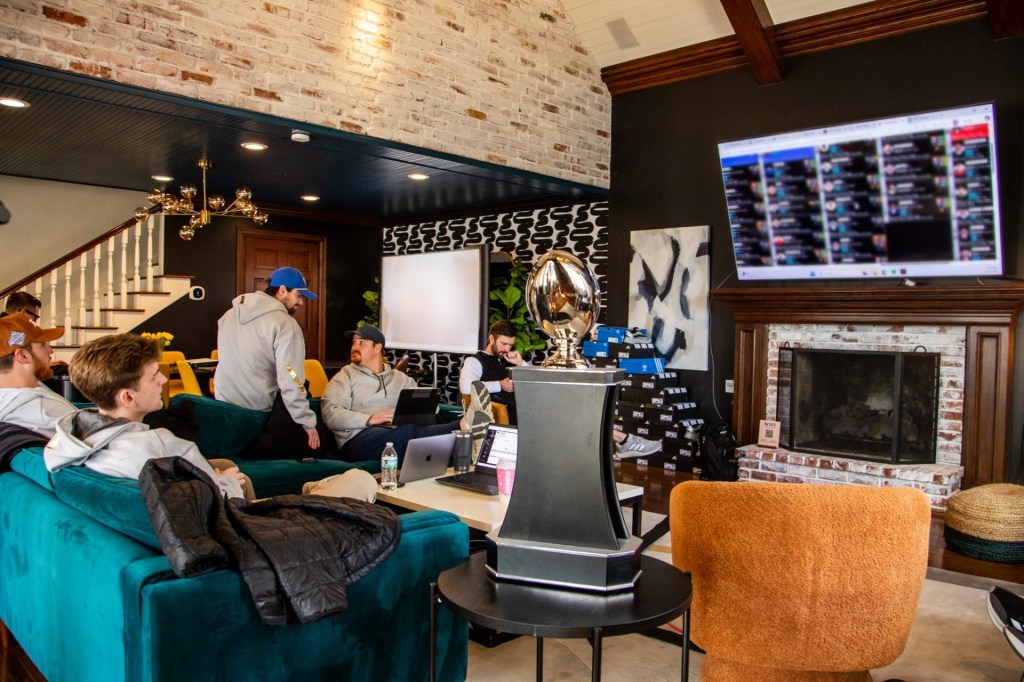
It’s not so far from the Rams NFL draft house (though not quite a $17 million Los Angeles mansion). A night at the rental property goes for up to $2,000 on Vrbo when it’s not being used to build a Division I football team.
“I think anytime you can create buzz at a place that needs buzz—and Tulsa needs buzz right now—you’re doing a good job as the head coach,” Lamb said.
The five-bedroom home opens to a front room decked out with everything Tulsa. The walls are covered in team colors, signage, and memorabilia honoring the city’s culture and history. The heated backyard pool (which has an attached hot tub, though it’s currently broken) is flanked by a barbecue, fire pit, giant chess board, and turf putting green. In front of one of the huge TVs inside, it’s not unusual to see coaches step away from watching film to play each other in EA College Football 26.
To an outsider, these look like distractions for a staff trying to put together a winning team. But the way the coaches see it, the fun is a way to make recruits feel comfortable. Instead of a formal sit-down dinner, Tulsa’s staff would rather get to know a player through video games, karaoke, and foosball.
“It’s like a cookout,” Lamb explained. “We’re able to peel back some layers and get to know them. This setting allows you to do that better than sitting in a booth at a steakhouse.”
Coaches need a break, too. Only so many hours can be spent on the phone or in front of film before going crosseyed. For Lamb, who says he can’t do just one thing at a time, a house stocked with games is right up his alley. “I’ve taken like 25 calls on that golf course,” he said. It’s no exaggeration: Moments after sitting with FOS, he was playing NBA Jam while on the phone.
What the Portal Really Looks Like
Amid the laid-back game rooms and amenity-filled backyard lies the war room. This is where the gravity and urgency of the recruiting situation sets in—and how the portal operation is revealed.
Two giant projector screens play film nonstop. A dozen coaches sit at laptops to research player stats. Animated discussions over what, and who, will help Tulsa win football games rage. Every 60 seconds, a different coach’s phone rings and they step out into the backyard to chat with a player or agent.

“Nonstop portal,” Tulsa general manager Mason Behiel told FOS. “We’re taking phone calls, watching tape, looking at new guys that are hopping in the portal. Stuff comes up nonstop.”
Of everyone at the Portal House, Behiel looks like the busiest. Nearly all his time is spent with a phone to his ear. He is responsible for every aspect of recruiting, roster management, and player acquisition and retention. If an agent thinks their player could be a fit for Tulsa, they call Behiel, who served in recruiting roles at Ole Miss, Columbia, and Fresno State before landing his first GM role with the Golden Hurricane.
A college football GM, a must-have in the new era, is on the front lines of what many coaches believe has become the wild west. Texas head coach Steve Sarkisian said in December some players are represented by their college roommates. Montana’s Bobby Hauck claims he has walk-ons with agents.
Behiel said he has even seen players switch agents in the middle of the portal window. “I’ll be dealing with someone’s agent and send them a text asking for an update,” he explained. “They’ll say, ‘Oh he fired me and went with a different guy.’ There’s not a lot of anything official. It’s a lot of hearsay now. More guidelines… like the NFLPA, how they do it there, would probably be helpful.”
The Portal Moves Fast
One of the biggest benefits of the Portal House is efficiency. With only two weeks to make the most of the transfer portal, decisions are made at breakneck pace.
If the Golden Hurricane need a running back, Behiel says they may recruit 10 players for that one spot. Once they get their guy, they have to turn down the others, who then rush to find a different university to land at.
“There are a lot of guys out there that enter the portal without knowing where they’re going to go,” Behiel said. “A lot of players enter the portal and think it’s the best thing for them. There’s a ton of people that enter, but right now with one window you’re seeing how quickly spots get filled up.”
When every minute matters, a coaching staff living and breathing the transfer portal in one place is invaluable.
“I’m not having to go walk to the GA’s office, then walk to the offensive coordinator’s office, then walk across the street to the GM’s office,” Lamb says. “Here, I can get decisions made at a high rate. Once the decision is made, we can get the guy on campus and get him recruited as fast as possible.”
The urgency is essential. “If the guy doesn’t agree to that deal when he has breakfast with us or at night when we meet at the Portal House, we just move on to the next one,” Lamb said. “Fly the next guy in tomorrow.”
This is life in the new era of college football—and the Portal House shows what it really looks like.
It also shows just how creative programs need to be to get in the running for the best available talent. For a Group of Six team that needs to win, the Golden Hurricane believe this souped-up rental is giving them an edge they need. Even the mayor of Tulsa stopped by to see it.
Tulsa is so confident other programs are going to follow their lead that they’re moving to trademark “Portal House.”
“We’re going to win during the season,” Lamb said. “I’m going to make sure of that. This gives us a chance to win the offseason and win the portal window. We’ve signed 20 of the 28 guys who have visited. Our hit-rate is really high. This will translate to wins.”