Want more from Front Office Sports
in your search results?
Ryan Ruocco was live the night sports media changed forever.
On March 11, 2020, the play-by-play announcer was calling ESPN’s national telecast of the Nuggets at Mavericks when news broke that the NBA was suspending its season due to the COVID-19 pandemic that eventually killed more than 1.2 million Americans.
It was a “surreal” moment for him and analyst Doris Burke, recalls Ruocco. Rumors were flying heading into that night’s game in Dallas, but nobody thought the NBA season would be shut down. When the news hit his cellphone, Mavs owner Mark Cuban told Tom Rinaldi it felt more like a movie, not reality.
“We felt the walls closing in on us and all of a sudden—boom,” Ruocco recalls. “I think people thought we were moving to no fans [in the arenas] or some evolution. I don’t think anybody thought, ‘Oh, the season’s going to be canceled tonight.’ Once we got that news, I remember thinking of Walter Cronkite. Thinking, ‘Now our job is to be this calming, factual welcome presence as we deliver shaking news that’s definitely going to disconcert our viewers.’”
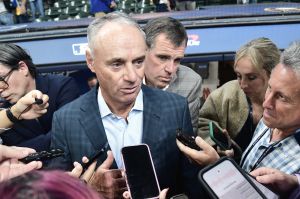
Within weeks of that night, sports froze to a standstill. Along with the NBA season, the NCAA’s March Madness, the MLB season, and the Tokyo Olympics were postponed. The NBA created a closely monitored “bubble” in Orlando to complete its 2019—2020 season. NFL commissioner Roger Goodell announced player picks remotely from his basement during the virtual 2020 NFL Draft. (The first U.S. sports event canceled due to COVID was the Indian Wells tennis tournament, going on right now in California.)
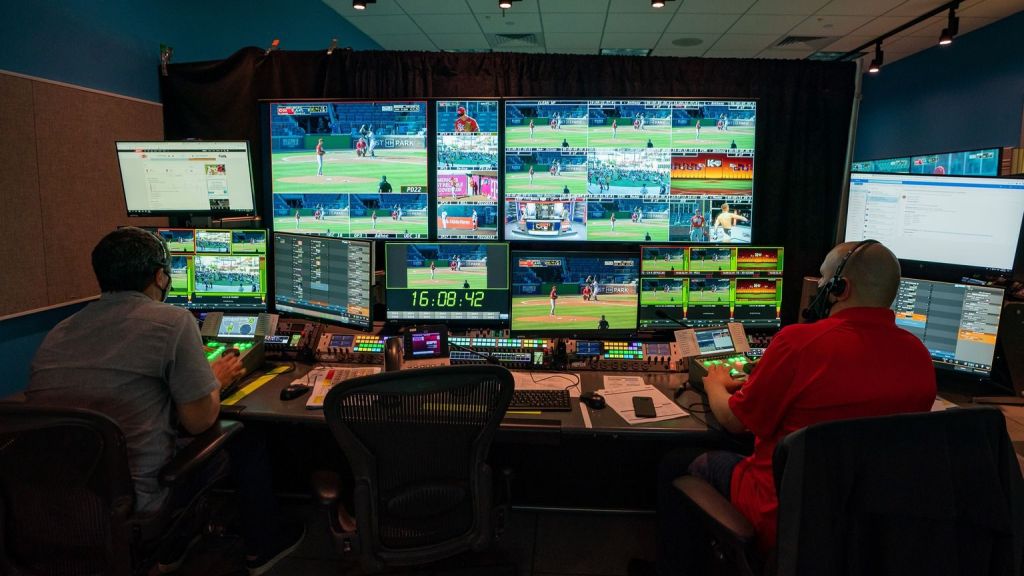
Fast-forward five years, and sports media is a much different place. Many fans hate the changes, but it’s now routine for networks like ESPN to have announcers and analysts call some games remotely—to the point that they’re colloquially known as REMI games. Instead of producing games from trucks on location, ESPN can do it from control rooms in Bristol, Conn., notes former ESPN producer Scott Turken. Ditto for player and guest interviews.
“The biggest difference that I see is the way guests are used on shows,” he tells Front Office Sports. “Before the pandemic, shooting a high-profile guest would require a camera crew, a truck to feed it, or some mobile version of the truck. Now Zoom, FaceTime, and other similar executions are common. There are also remote solutions for podcasts, like vMix or Riverside, that are common.”
The ability to cover live games remotely was a game-changer for all sports networks, notes LeslieAnne Wade, a former CBS Sports VP turned founder of the White Tee Partners consultancy. Even if it became harder for sportscasters like Ruocco to summon the same brio for their calls.
“No in-person pre-event meetings. No travel. No meals. No hotels,” she says. “It forced all personnel to work and create together and individually through remote connections.”
Streaming Surge
Meanwhile, the use of video conferencing technologies like Zoom helped fuel the expansion of live sports on streaming platforms. Giant streamers like Amazon Prime Video now have NFL and NBA rights, while NFL Sunday Ticket is now on Google’s YouTube TV. The old cable bundle is crumbling.
With no live games to watch in the spring of 2020, ESPN’s The Last Dance docuseries about Michael Jordan and the Bulls drew huge audiences week after week. It’s fair to say the success of that 10-part documentary helped inspire the recent explosion in sports docs from ESPN, Prime, Peyton Manning’s Omaha Productions, Netflix, and others, says John Kosner.
Even if the ex-ESPN executive turned founder of Kosner Media believes it’s gotten out of hand. “The Last Dance sent sports documentaries through the roof—but also led to an oversaturation of the genre,” he warns.
The coronavirus wrought other changes. With no live games, Ticketmaster and other companies improved their digital ticketing technology, according to Kosner. Since the pandemic, sports has only cemented its reign as king of entertainment.
“I think we realized sports isn’t just a luxury for so many of us,” says Ruocco. “It really does feel like a necessity. I think that period of time helped drive home just how important sports are in our society.”