The Guardians are the latest MLB team to insist they cannot fully compete in the sport’s current economic state—a type of claim that will be at the heart of upcoming labor talks between players and owners.
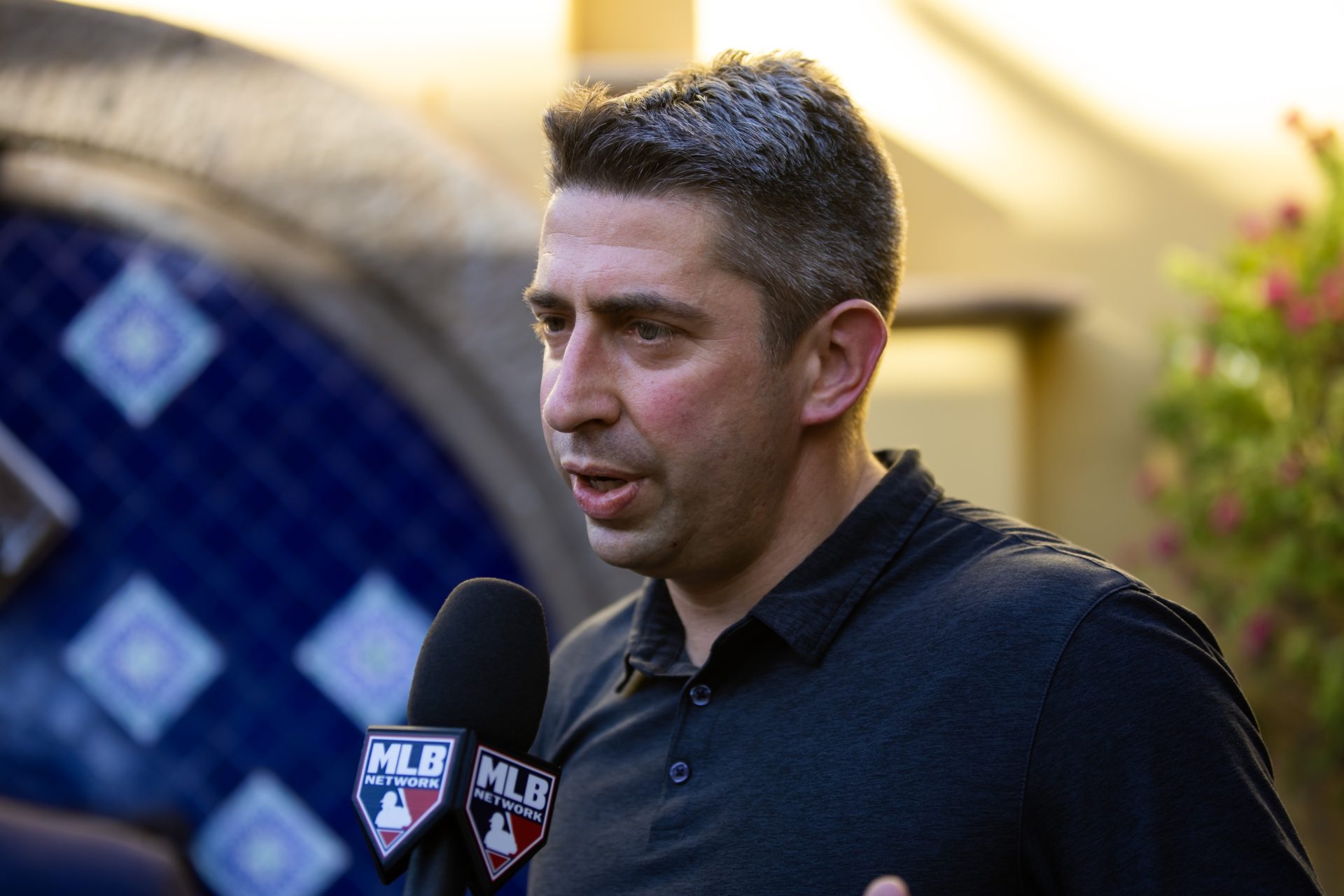
Cleveland GM Mike Chernoff told the Foul Territory podcast that it’s “impossible” for the club to sign top free agents given the rising fiscal disparity between the large-revenue franchises and ones like the Guardians.
“We have to do things differently. We’re a small market,” Chernoff said. “In today’s economic environment in baseball, we can’t go out and sign top-tier free agents. It’s just impossible with the [current] economic landscape. We have to do it through scouting and development.”
Uphill Climb
The full extent to which that is true promises to be a source of significant debate between team owners and the MLB Players Association. It is clear that the Cleveland area has faced broader economic challenges for years. The Guardians are also part of the MLB Media in-house program for the production and distribution of local broadcasts—a situation that ensures game availability, but more uncertain revenue compared to the guaranteed rights fees previously available through regional sports networks.
The Guardians, meanwhile, remain largely stuck as a mid-tier attendance performer, drawing about 2 million fans annually, and not reaching 2.5 million since 2002. The days of attracting more than 3 million to Progressive Field, as the team did each year between 1996 and 2001, is an increasingly distant memory.
Along those lines, MLB and a growing collection of teams have increasingly signaled the perceived lack of competitive balance as the league enters collective bargaining with the MLBPA this spring. The league is expected to pursue a salary cap in what will likely be a fractious set of talks.
“We have a significant segment of our fans that have been vocal about the issue of competitive balance, and in general, we try to pay attention to our fans, so it is a topic of conversation,” MLB commissioner Rob Manfred said in November.
Player Perspective
As the MLBPA goes through a large transition with new interim executive director Bruce Meyer, many players remain skeptical that all teams are doing everything they can in the current system. The Guardians currently have a $94.7 luxury-tax payroll for the 2026 season, 29th in MLB and only higher than the $78.1 million Marlins. Teams in smaller markets such as San Diego, Milwaukee, and Cincinnati are spending at far greater levels than the Guardians are this year. Cleveland has additionally cut more than $30 million from its payroll this year, and is at their lowest level since 2022.
“You can stack up payrolls as much as you want, but we don’t make excuses about payrolls,” Chernoff said. “Over the past 10 years, we’ve been to the postseason seven times. We are stacking ourselves up on wins, not on payroll.”
Since 2017, though, Cleveland has won just two playoff series, and the team has just one player making at least $10 million—franchise icon José Ramirez—while the Blue Jays comparatively have 14 such players and the Dodgers have 13. Los Angeles, meanwhile, continues to be the sport’s economic pacesetter through its aggressive spending.
“Every team should be doing it,” Padres third baseman Manny Machado recently said when asked about the Dodgers. “That shit is fucking great for the game.”