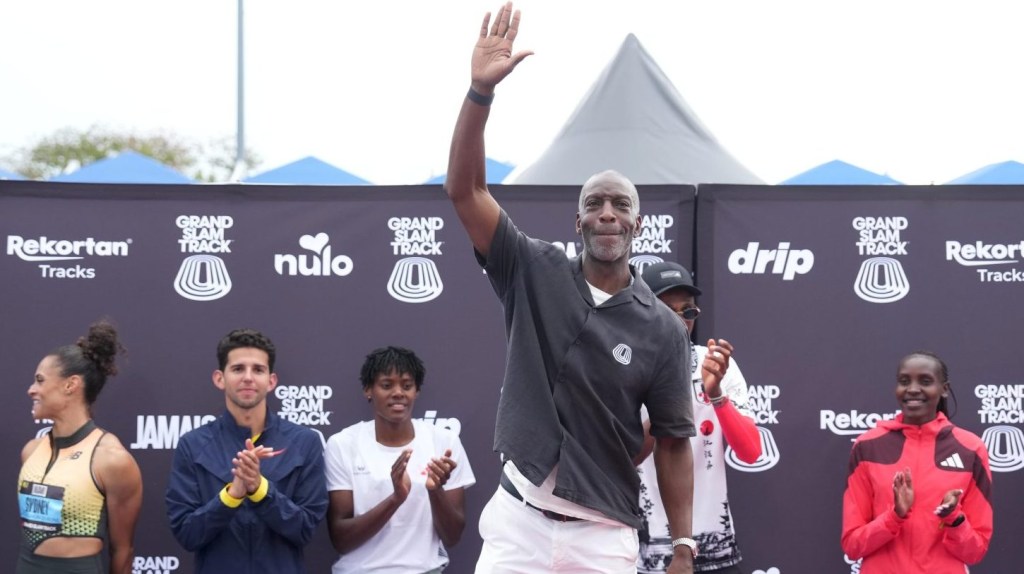
Grand Slam Track, Michael Johnson’s embattled running startup that filed for Chapter 11 bankruptcy last week, owes vendors and athletes millions of dollars.
A new legal filing Monday detailing the league’s creditors shows exactly who is owed how much money. The list of unsecured creditors includes some of the biggest names in the sport; world record holder Sydney McLaughlin-Levrone is owed more than $350,000.
On Thursday, Grand Slam filed its original bankruptcy filing, aimed at restructuring the business and eventually staging a comeback. The league amended that document on Monday to include several other revealing details. The company changed its estimation for its assets, which last week it listed as under $50,000, to between $1,000,001 and $10 million.

The new filing also says that Winners Alliance, which led Grand Slam’s initial investing round, owns 100% of preferred shares in the league. Winners Alliance is the for-profit arm of the Professional Tennis Players Association and is chaired by hedge fund billionaire Bill Ackman. Winners Alliance, Johnson, league president and COO Steve Gera, and investor Robert Smith are listed as the league’s four equity security holders.
The filing then lists the 20 people or entities to whom Grand Slam owes the most money, excluding any secured creditors or “insiders,” a legal term that largely includes business partners and relatives.
At the top of the list is Momentum Broadcast and Carr Hughes Productions, the production company who made a deal with Grand Slam to broadcast all of its events. The league owes the company $3,035,583.93, according to the new filing.
The other creditor owed more than seven figures is PMY, which was Grand Slam’s official technology partner. That company is due $1,267,579.98, the filing reads.
The list then goes on to name media companies, marketing and communications firms, a law firm, and several star athletes. Front Office Sports has redacted the personal contact information from the list of 20 creditors that appears in the filing.
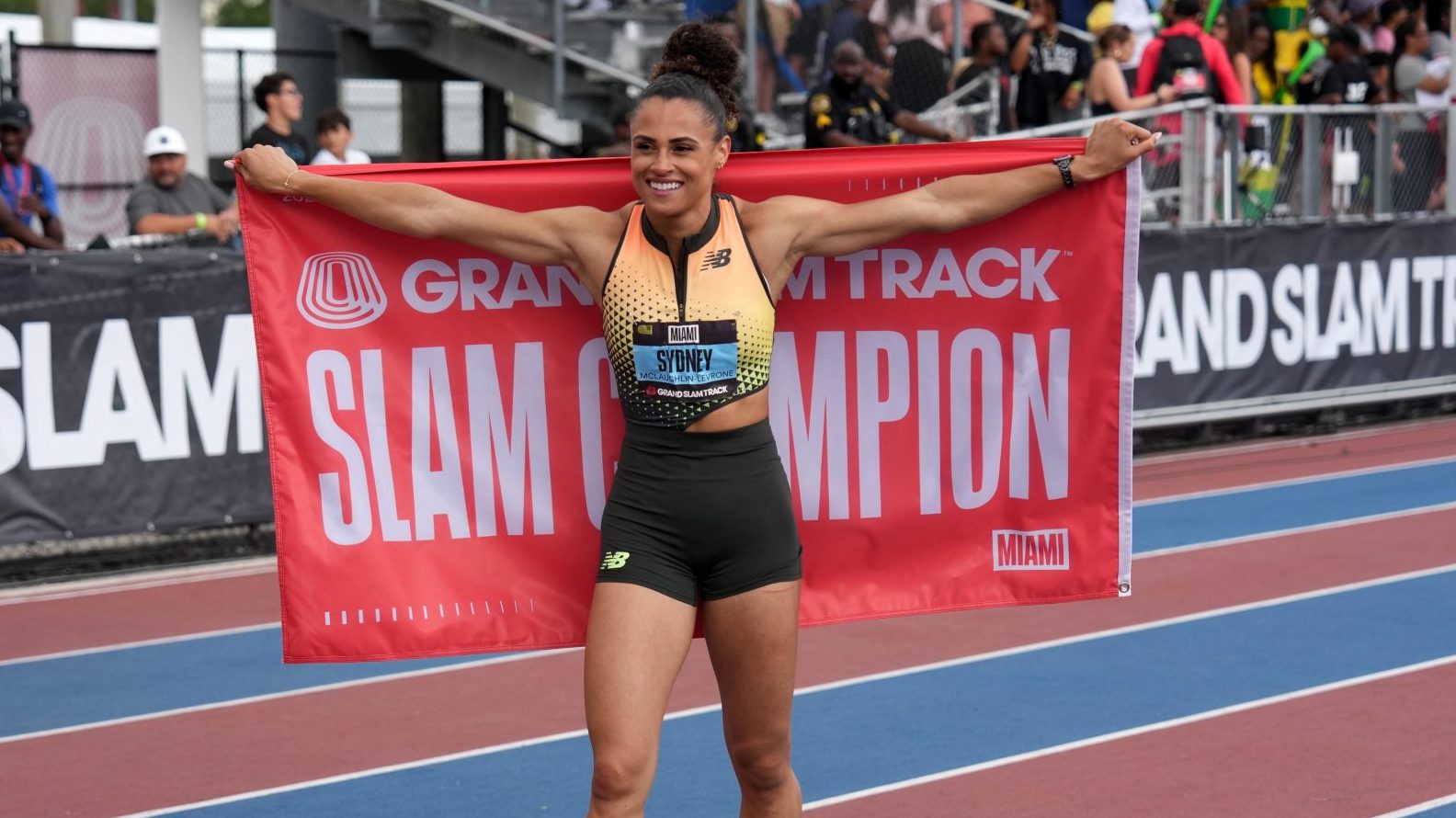
The league owes Olympic gold medalist Sydney McLaughlin-Levrone $356,250, the fifth-highest amount of any unsecured creditor, the filing says. Grand Slam owes Olympians Gabby Thomas $249,375, Kenny Bednarek $225,000, Josh Kerr $218,750.00, Marileidy Paulino $211,875.00, and Alison dos Santos and Melissa Jefferson-Wooden $190,625 each, according to the document.
In addition to Momentum–Carr Hughes, the league owes large sums to several other media companies.
It owes graphics company Girraphic $690,624.13, production partner Tata Communications $485,000, studio partner Jack Morton Worldwide $314,145.00, the running media company Citius Mag $272,915.80, and sports entertainment company Two Circles $250,000, according to the filing.

The other listed creditors are: law firm Eversheds Sutherland LLP, owed $324,968.50, Allied Global Marketing, owed $283,895.29, SRK Strategies (which previously handled its communications), owed $248,164.68, event logistics company TMSCORPRO, owed $238,850.75, The Parker Company LLC, owed $222,364.59, and Elysian Strategic Marketing, Inc, owed $179,547.09.
It’s not clear if the sums to the athletes include a payment it sent them in October covering roughly half of their prize money, but it does shed some light on the salaries and appearance fees it promised to its top athletes. McLaughlin-Levrone being its highest-paid athlete is easy to understand; she had broken the world record in the women’s 400 meter hurdles in 2024 at the Paris Olympics.
Grand Slam burst onto the scene with salary and prize promises that would have shaken up the sport, and they were able to attract talent like McLaughlin-Levrone with those promises. In addition to the $12.6 million prize money pool, the league’s top athletes were signed to base salaries that were unreported before Monday’s filing.
After canceling its fourth and final event in Los Angeles this summer, Grand Slam was about $19 million in debt, with roughly $11 million owed to athletes and about $8 million to vendors. Existing investors provided Grand Slam with up to eight figures of emergency financing earlier this fall. The cash was enough to cover some of the league’s debts, but not all. In early October, Grand Slam sent athletes about $5.5 million, roughly half of what they were due, then tried to negotiate payments to vendors.
Some of those vendors rejected the league’s offer to pay back half of total invoices. With the out-of-court settlement faltering, Grand Slam filed for bankruptcy with the intent to restructure the business last week.
— Dan Kaplan contributed reporting.