Every weekend, Front Office Sports will bring you one of the week’s best conversations from our daily podcast, FOS Today. This week we’re highlighting host Owen Poindexter’s interview with Chelsea Janes, the national baseball writer for The Washington Post. We spoke with Janes at the outset of the MLB year to help us make sense of a wild offseason—and what promises to be an intensely dramatic regular season, too. To hear the whole conversation, check out the episode here. The following has been edited for clarity and length.
Front Office Sports: The Orioles are now officially controlled by David Rubenstein. He’ll soon own a majority stake. How do you think he’ll alter the trajectory of that franchise?
Chelsea Janes: I think he just brings a little bit of a different vibe to them. The Angelos family was well known in Baltimore but had recently rubbed people the wrong way for many reasons, including how they handled negotiations with the city over the lease and how they’ve handled the payroll in recent years. So I think it injects goodwill, just by being someone other than them. And then, more broadly, I asked [Rubenstein about spending]—and while he didn’t want to say that he’s going to increase payroll, he did say that he’ll try to defer to what general manager Mike Elias recommends, which I think Orioles fans can take as a decent sign. Generally speaking, Rubenstein just seems like he wants to sort of foster goodwill on all fronts. And I don’t think that was a priority for the previous regime. If it was, they did not execute that particularly well.
FOS: The contractual and legal situation around MASN, the regional sports network the O’s share with the Nationals, has not changed with this new ownership, but now there are new negotiating partners. Do you expect there to be some kind of thaw there, where maybe a deal gets worked out?
CJ: I do. I have no idea what it looks like, but Rubenstein has said a lot in recent days that he wants to figure it out. I think everyone kind of knew the Angelos family and the Lerner family, which owns the Nationals, resented each other for many reasons. And at times that MASN situation became less about what was actually happening in the litigation and more about beating the other guy. I think for many reasons it’s going to be easier with Rubenstein, one of which is, frankly, there’s not that much money involved anymore. We’ve seen cord-cutting diminish the value of all those cable deals. That’s happened for the Nats’ rights, the Orioles’ rights. … So I think it’s just going to be a little bit easier to unstick that whole thing. I don’t know what that looks like, but Rubenstein seems pretty determined to do it.
FOS: Once that gets worked out, do you expect the Nationals to go back on the market?
CJ: I don’t know. They’ve been incredibly puzzling in how they’ve handled all this. I certainly think the fact that the Orioles owe them about $300 million in back rights fees is worth noting. I don’t think they’re going to jump ship on that. Mark Lerner said a few weeks ago: “We’re keeping the team; we’re going to take it off the market.” I think if someone comes in with $2.5 billion for them, that will change immediately—but I don’t see that person coming.
FOS: Let’s talk MLBPA. A bunch of player reps are calling for the ousting of Bruce Meyer, the deputy executive director, in favor of Harry Marino. What do you see as the core issue here?
CJ: I think there’s more than one thing happening. I think there are people in the PA who feel like they should have done better in the last collective bargaining agreement, and whose arguments in that direction have been bolstered by a few things that have happened lately. I think the J.D. Davis arbitration situation with the Giants surprised some people, because while I think everyone knew on paper that if you went to arbitration the deal wasn’t guaranteed, that doesn’t feel like something they should have agreed to. With all due respect to Bruce Meyer, he’s not a fine print guy. I covered the lockout—he’s kind of big picture. And I think that is starting to show. I also think there is some concern over where the money’s going. I don’t know if that concern is founded. I have heard those rumblings for a long time, that these dues the players pay into the money that MLBPA used to sort of give people during the pandemic, stuff like that. Like, where is it going? And where is it coming from?
They also have had a few moments where the MLBPA said they were going to pay into some charities for pandemic workers, and those people said they didn’t get it. I think there’s enough smoke that you saw Harry Marino calling for an audit. That being said, I think the biggest factor is just that there are minor leaguers there now. They know Harry Marino better. I think they don’t trust Bruce Meyer and the negotiating committee that represents MLB to negotiate on their behalf. But it sounds like from what MLBPA executive director Tony Clark has said, and what I’ve heard behind the scenes, that they don’t feel like the Harry Marino coup is actually going to work. I think the fact that it got this far and got this public is a huge problem for the union, and they’re going to have to really kind of buckle down and figure out what’s going on there.
FOS: The current collective bargaining agreement only runs through 2026. What do you think the MLBPA is going to fight for in the next CBA?
CJ: The way free agency went this winter in terms of veteran guys not getting paid is going to be used as evidence that owners aren’t spending. And I think that that is going to be something they try to fix. A lot of people agree that really the only way to fix that is to impose a salary floor and say, Hey, you’ve got to spend $100 million on your roster. If you can’t do that, you can’t be a part of this. But the problem with that is that if the players get that, then the owners are going to want a salary cap. You’re not going to get one without the other. And that is the one thing the MLB players will never do. I think we’re coming to another reckoning. It’s going to be pretty ugly. But I think, ultimately, forcing owners to spend will be MLBPA’s priority.
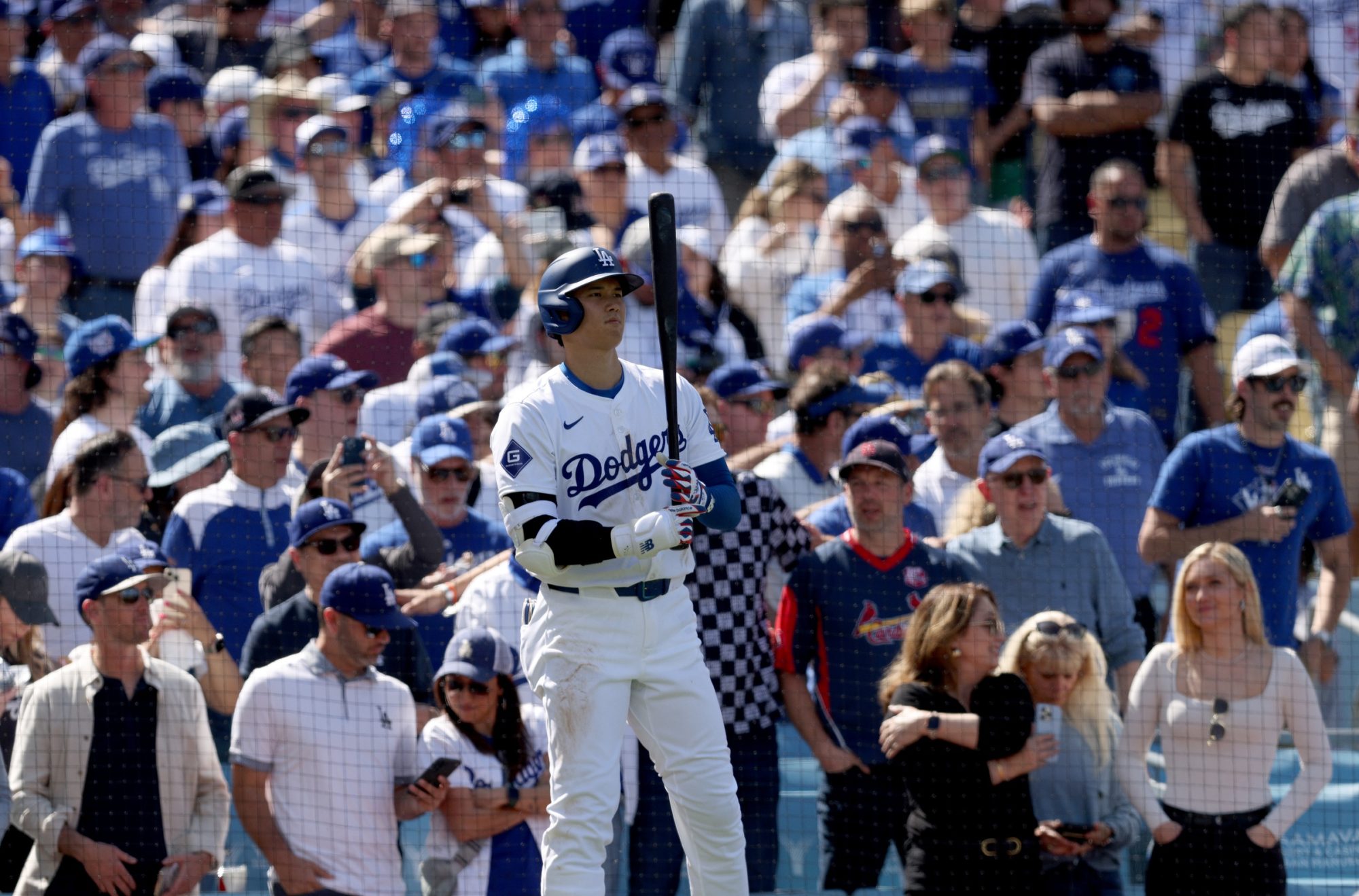
FOS: Lastly, what are you watching for in terms of the next dominoes to fall in the Shohei Ohtani case?
CJ: We’ve never really seen Ohtani act emotionally, but his former translator, Ippei Mizuhara, was his best friend. Ohtani’s never played a professional game in Japan or the States without him until last week. He has been able to handle everything that’s come at him, but this is new. So that’s what I’m watching. And frankly, I think the way he came out in that press conference was so clear—would they let him say that if, you know, it weren’t true? Because he could get sued for defamation, it really just exposes him. So I think he’s done everything he can to kind of say, Here’s what happened, and it wasn’t my fault. And until something overturns that, I think he’ll just play and everything will be status quo.