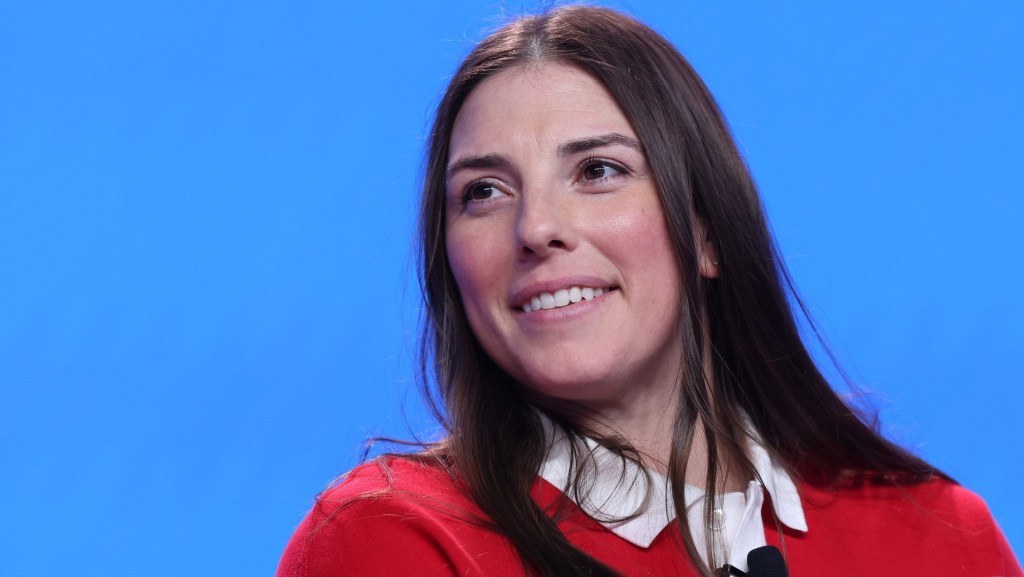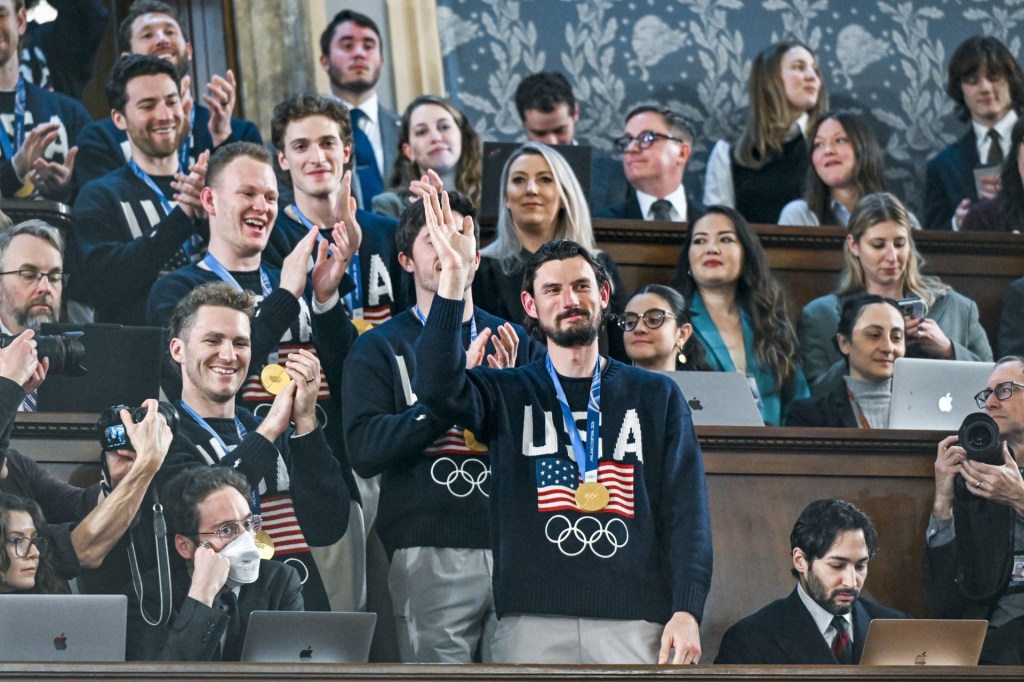
Every Olympics produces breakout stars. Among those minted in Milan (so far) are a 54-year-old personal-injury lawyer who moonlights as an alternate for the U.S. men’s curling team, a knitting-obsessed Alpine skier who won Team USA’s first gold of the Olympics, a U.S. women’s hockey goalie who Instagrams Caesar salad reviews, and roughly two-dozen tiny flying cameras.
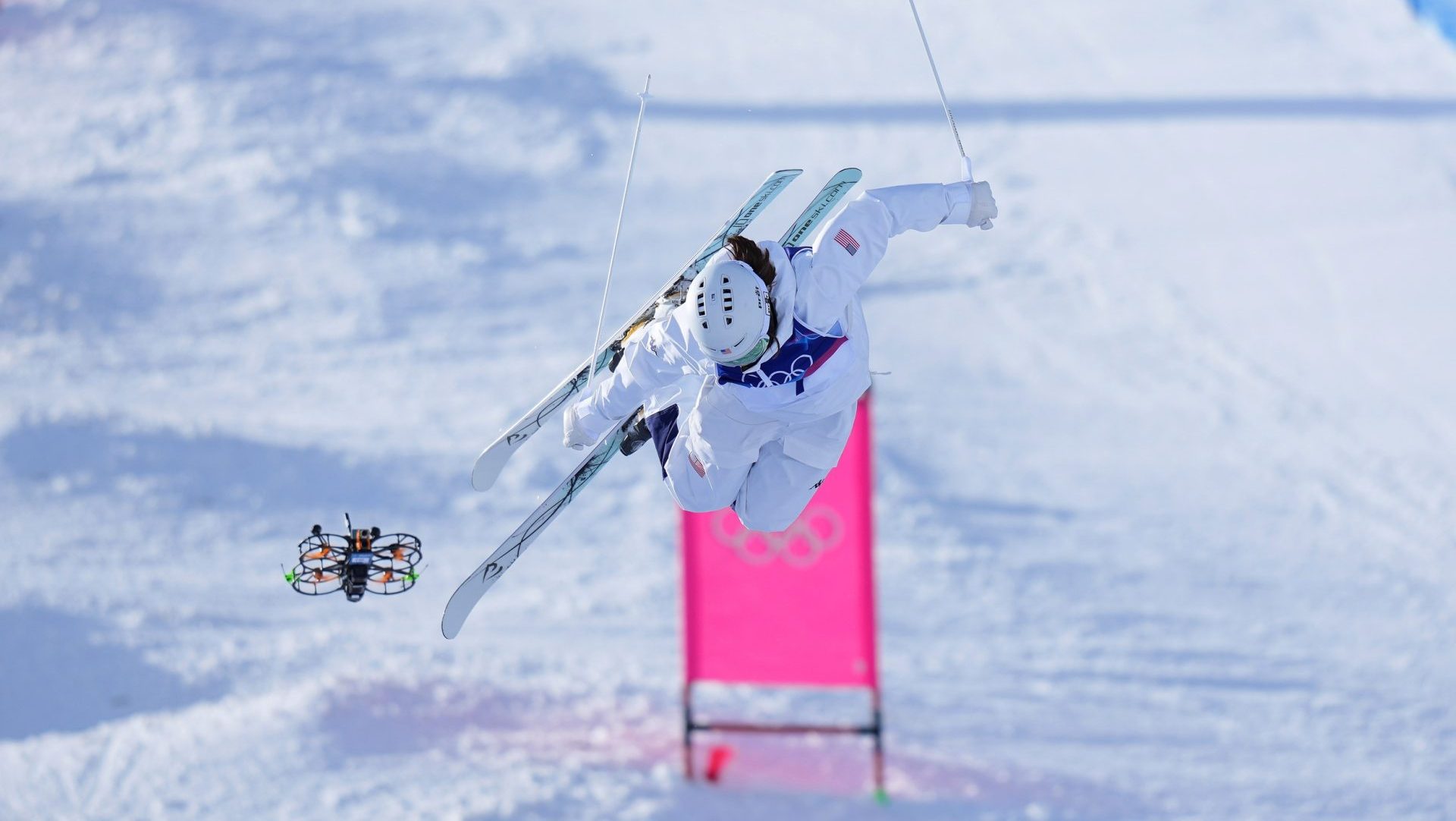
These specialty first-person-view (FPV) drones are operated by the Olympic Broadcasting Services (OBS) and will cover nearly all events in the 2026 Winter Games. They provide dramatic new angles of sports such as downhill skiing and bobsled, which enable viewers to experience the speed, intensity, and challenges from an athlete’s perspective.
They’ve spurred continuous, effusive praise on social media throughout the first week of the Olympics. Both OBS and its U.S. rights holder for the Winter Games, NBC, are taking a victory lap.
“Seemingly everyone is talking about the live drone coverage,” Molly Solomon, executive producer and president of NBC’s Olympic production efforts, said on Wednesday. NBC has also gained access to American athletes in previously restricted spaces such as warmup areas, field tents, and starting corrals—all of which have combined for a visually different, and more impactful, Winter Games. (That’s always been the goal—OBS and NBC are in daily contact for the two years between each Olympics to plan.)
Drones have been part of Olympic coverage—and sports broadcasts broadly—for more than a decade. But Milan Cortina marks the first time the first-person technology is being used en masse during the Games.
“Drones keep getting better, faster, smaller, more agile and longer-lasting,” Mike Sheehan, NBC’s coordinating director for the Olympics, told Front Office Sports. “Because of that, we’re finally able to see how beautiful they are to integrate into broadcasts at scale.”
The first-person drones keeping global viewers rapt weigh less than 9 ounces and can travel up to 75 miles per hour. Whereas sporting events are typically captured laterally or top-down from fixed or semi-fixed cameras, the drones at Milan Cortina are flying directly behind athletes—at a safe, unintrusive distance that varies by sport. The resulting view, Solomon said, is both “breathtaking” and “terrifying.”
Highly skilled, multi-person teams—including a pilot (who wears VR goggles) and a spotter—operate the drones. They’ve been described as “unsung heroes”—but as their games have gone on, they’re increasingly getting their due.
“I don’t dare to tell you that our [drone pilots] have trained as much as the Olympic athletes themselves, but they have each trained many, many, many days on how to capture their specific sport,” OBS president Yiannis Exarchos said this week. But some OBS operators now have their own backgrounds in elite athletics.
The FPV pilot for ski jumping is Jonas Sandell, a former Norwegian national team jumper. He founded a production company with other athletes that focused on capturing his sport through the FPV drones; once he had a proof of concept, he rolled out the model to professional broadcasts. (“You only get one chance to nail it,” he said.) On the U.S. side, former Team USA ice dancer Jordan Cowan, who created skating camerawork company On Ice Perspectives, serves as an on-ice camera operator for figure skating.
Sheehan told FOS it’s “a no-brainer” for NBC to keep running with an athlete-led strategy of its own. “The more you can incorporate the perspective of people who know what’s going on inside the head of an athlete, whether in an operational or consulting role, the better your broadcast is going to be,” he added. (And with sports photography becoming a popular hobby among former athletes from Ken Griffey Jr. to Suni Lee, NBC won’t have a hard time finding talent to choose from.)
Amid the organic social media chatter surrounding the FPV drones, Olympics ratings are climbing. Through the first five days of the 2026 Winter Games, NBC is averaging 26.5 million viewers across its broadcast, streaming, and digital properties—a 93% increase from the comparable period during the 2022 Beijing Winter Olympics. The time zone is certainly favorable for American audiences, but Solomon believes the camera advances also play a part.
The success of these visually rich broadcasts is poised to trickle down to other sporting events, and NBC is already thinking about how its presentations may evolve.
“We’ll get together as a group at NBC Sports when we get home and evaluate the Olympic coverage, both ours and OBS’s, to see what we can incorporate into future presentations,” Sheehan told FOS. Other specialty, fast-paced events that NBC produces, like the Kentucky Derby, may be a natural fit. “Maybe instead of using 25 FPV drones, we’ll use one or two where it makes sense.”
Beyond drones, other advances are hitting some of their broadcasts, including the new wind-tracking technology rolled out during Super Bowl LX.
Rob Hyland, coordinating producer for NBC’s Sunday Night Football and Super Bowl LX, told FOS the point of any sports broadcast is always to get viewers “as close to the action on the field as possible.” (Hyland wanted a player-worn camera at the game; he didn’t get it this time but thinks we’re “only a couple of years away.”)
“The Olympics has taken big strides in getting viewers closer to the action. Our partners at OBS have really leaned in to that and have encouraged athletes to at least try a microphone or a camera. The major American sports leagues are very interested as well,” Hyland said. “I do think we’re going to get to a place where it’s sort of the expectation that you’re going to be on the field and hear what the star quarterback is hearing in his headset. We’re not there yet, but I know I speak for every network when I say that that’s what we all want.”