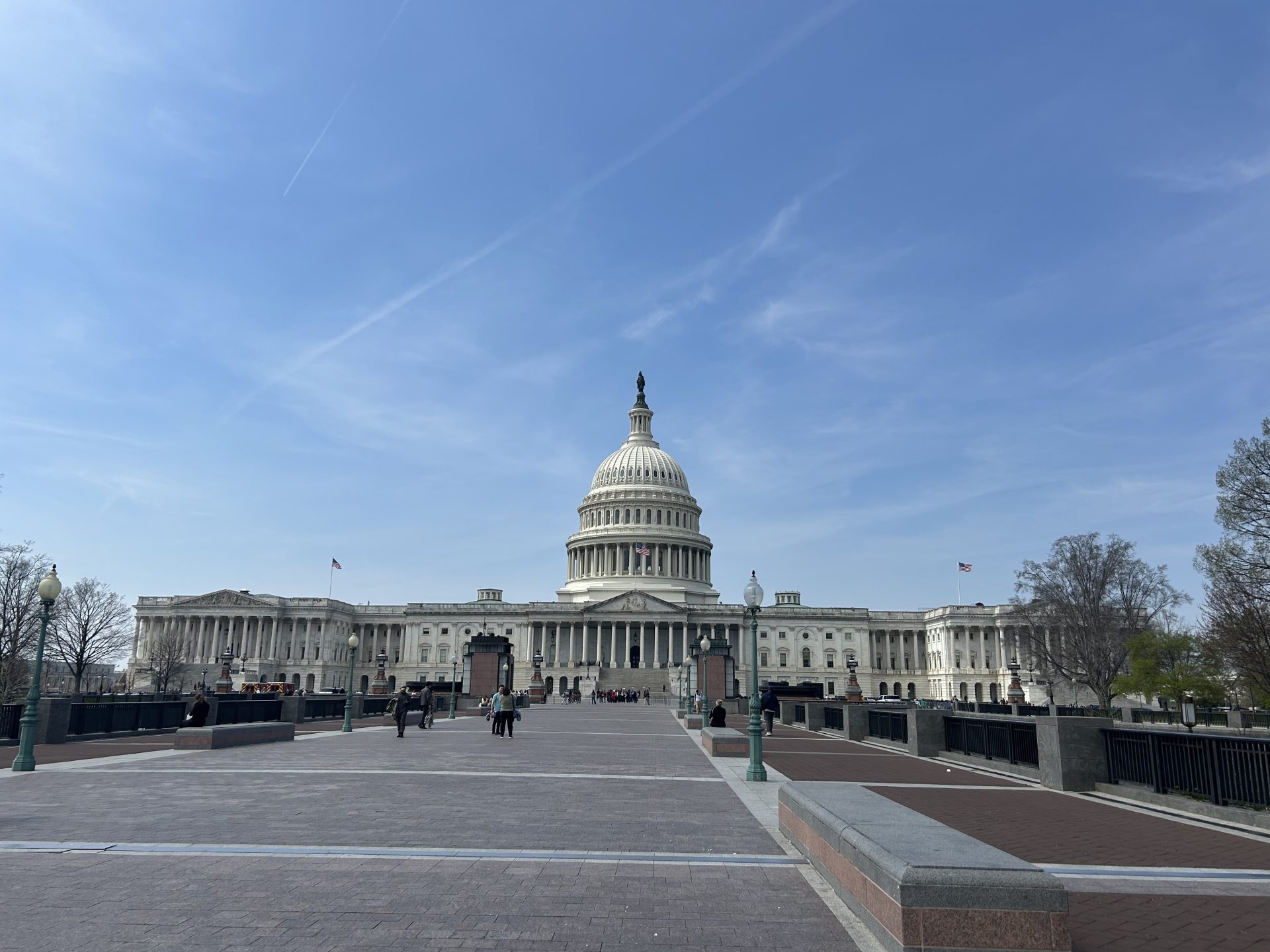
WASHINGTON — Both Democrats and Republicans agree that college sports’ current system of “unrestricted free agency” is a major problem that needs solving. The biggest hurdle: they don’t agree on how to solve it.
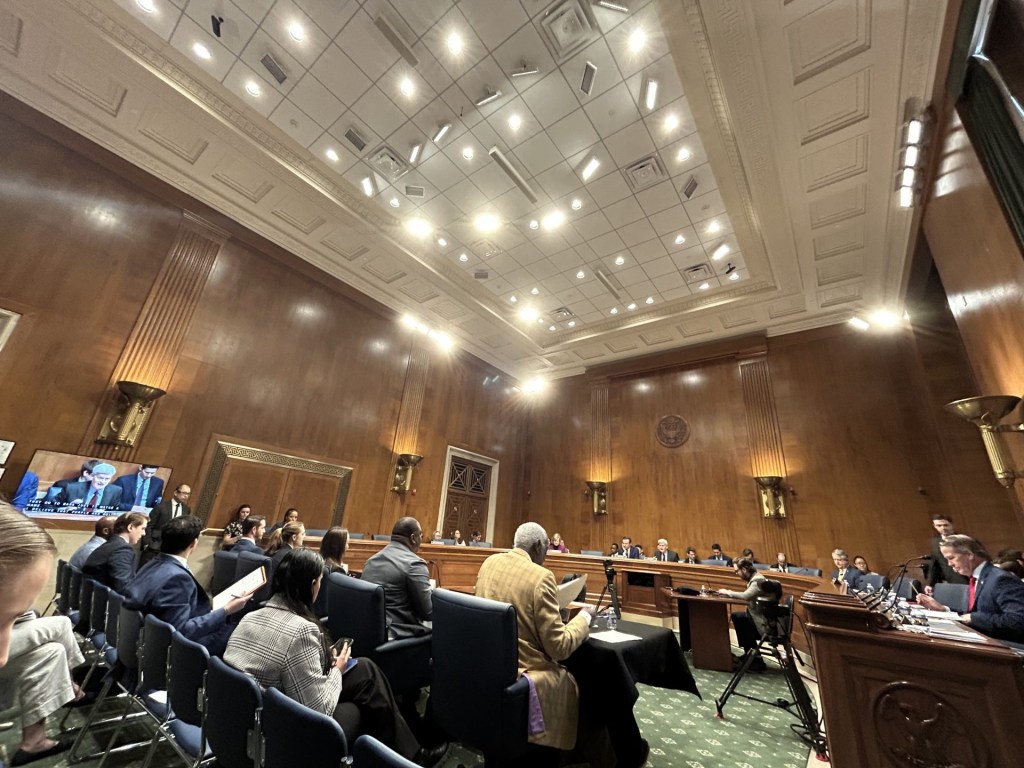
Lawmakers held a hearing over the future of college sports in the Senate on Thursday, but appear no closer to introducing legislation that could pass both houses of Congress.
During the two-hour Senate Health, Education, Labor, and Pension (HELP) hearing titled “Don’t Fumble Their Future: Positioning Student-Athletes for Success in School and Beyond,” senators on both sides of the aisle said they agreed that the problems brought on by NIL and limitless transfers should change. But Democrats favor collective bargaining as a potential solution, while Republicans oppose it.
“The employment issue seems to be the major dividing point,” Senate HELP Committee chairman Bill Cassidy (R., La.), said at the end of the hearing. “Everything else has a lot of common ground.”
Since 2020, lawmakers in the House and Senate have held more than a dozen hearings about the future of college sports, and have introduced several pieces of legislation. But none have been brought to the floor of the House or Senate for a vote. The closest to reach the floor, the SCORE Act, probably wouldn’t pass the Senate at this time. The collective bargaining issue, among others, continues to be a roadblock for broad college sports legislation to garner bipartisan consensus (and the 60 votes needed to pass a bill in the Senate).
The divide was also palpable among the five witnesses, who included LSU Board member and former basketball player Collis Temple Jr., Grambling State athletic director Trayvean Scott, former Illinois soccer and track athlete Abby Lynch, as well as two athlete advocacy group representatives: United College Athletes Association (UCAA) organizing director Mikayla Pivec and Players Council Member of the National College Players Association, Liam Anderson.
Some Democrats argue giving players collective bargaining rights could solve issues in college sports for both schools and players. In the pros, collective bargaining agreements allow athletes to negotiate and agree on restrictions for compensation and player movement. Republicans countered that that would require making athletes employees—and said its unsustainable model because of added costs to universities for paying players and tax implications for athletes.
A notable exchange came at the end of the hearing, when Cassidy grilled the two witnesses in favor of collective bargaining—Anderson and Pivec—about whether deeming athletes employees would cost schools so much extra money that they’d have to cut Olympic and women’s sports. He also asked if scholarships would be taxed if athletes were employees. Both reiterated their stances in favor of a CBA agreement as a solution.
SCORE Act Still Stalled
The ideological gap doesn’t just make it difficult to introduce legislation in the Senate. It likely means passing the NCAA-backed SCORE Act—the only comprehensive college sports bill to advance to the House floor in six years of lobbying and endless Congressional hearings—wouldn’t be possible in the Senate.
The SCORE Act, which was introduced in the House last summer, would codify NIL rights and revenue-sharing. But it would also impose new restrictions: It would create a national NIL standard overruling the patchwork of state laws, give antitrust protections to the NCAA, and prevent players from being classified as employees. After House leadership canceled bringing the bill to the floor twice, the SCORE Act is expected to finally be introduced on the House floor, as negotiations between Republican leadership and certain members (including members of the House Freedom Caucus) continue.
“Meaningful progress is being made, but we still need to ensure guardrails are put in place in order to preserve the integrity of college sports for future generations,” Rep. Chip Roy (R., Texas) told FOS Thursday.
“It’s dead on arrival for me,” Sen. Chris Murphy (D., Conn.), who previously introduced a bill that would give athletes collective bargaining rights, told FOS after the hearing. Part of the reason, in his view, is that the no-employee clause prevents collective bargaining. But Murphy says “it’s not the biggest problem with the SCORE Act. The SCORE Act is basically a wishlist for the NCAA and the conferences,” he said, adding that it “limits athletes’ compensation rights, and puts the schools and the NCAA back in charge in a way that I think is fundamentally immoral.”
From a Republican standpoint, Cassidy told FOS after the hearing that the SCORE Act could be something Senators could work with. “Can we get to something that both sides can agree to?”
Meanwhile, lawmakers have introduced other bills to address some of these same issues. Sen. Tommy Tuberville (R., Ala.), who participated in the hearing, has introduced legislation that focuses on eligibility and transfers: It would limit athletes to one transfer without penalty and give athletes five years to complete five full seasons of college sports. Earlier this year, Sen. Eric Schmitt (R., Mo.) and Sen. Maria Cantwell (R., Wash.) introduced a bill that would allow schools to pool their media rights—a revenue idea that’s gaining steam. (Cantwell also has a counter to the SCORE Act called the SAFE Act.)
But with all the ideas floating around, none have made significant progress. “I constantly hear people ask, will Congress do something?” Cassidy said during his opening remarks. “We should tackle it. … This hearing is: How do we set up the student-athlete for success?”