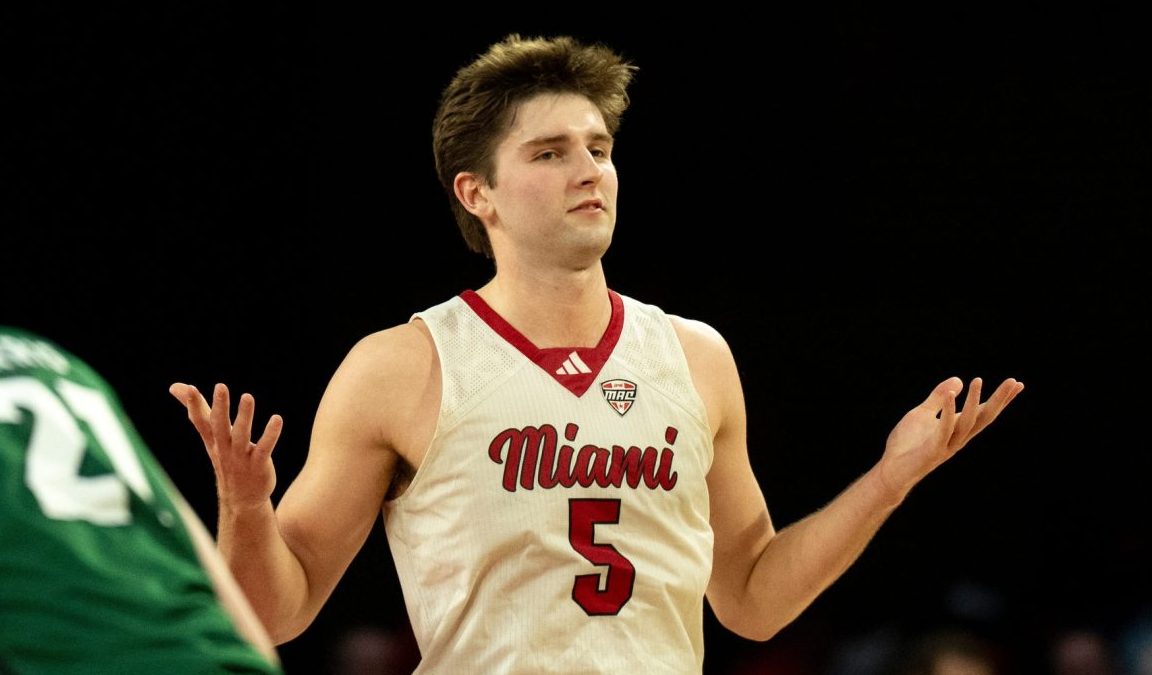
In the turbulent world of college basketball, even perfection might not be enough to get sufficient regard from the March Madness selection committee.
The undefeated Miami (Ohio) RedHawks continue to be the feel-good story of the season, extending their record to 29–0 with a Friday victory at Western Michigan. The team has risen to No. 19 in the latest Associated Press national rankings. That status, at least in the minds of some commentators and bracketologists, still has not made Miami a lock for the tournament.
“Miami of Ohio, here’s the deal: Are we going to select the 68 most deserving teams? Or are we going to select the 68 best teams?” TNT Sports analyst and former Auburn coach Bruce Pearl said Saturday. “If we’re selecting the 68 best teams, then Miami of Ohio is going to have to win their tournament to qualify as a champion. Because as an at-large, they are not one of the best teams in the country.”
Of course, Pearl has his own biases. The Tigers are currently coached by Pearl’s son, Steven, and the team is currently sitting very much on the tournament bubble. Auburn is currently 15–14 overall, 6–10 in the Southeastern Conference, and won just a single game in the entire month of February. In composite tournament projections on BracketMatrix.com, Auburn gained a slot in 63 of 94 entries.
The elder Pearl, however, signaled what is increasingly true for schools not in a Power 4 conference: it’s win their conference tournament or bust to get into March Madness. That’s increasingly true in recent years, highlighted by the SEC claiming a record 14 slots in last year’s field. Miami’s Mid-American Conference, conversely, hasn’t had an at-large bid since 1999.
“For the mid-majors and low-majors, it’s all about the [conference] tournament because they recognize it’s only going to be a one-bid league,” he said. “For the rest of the leagues, it’s all about the grind of the regular-season championship, and I think that’s what matters most.”
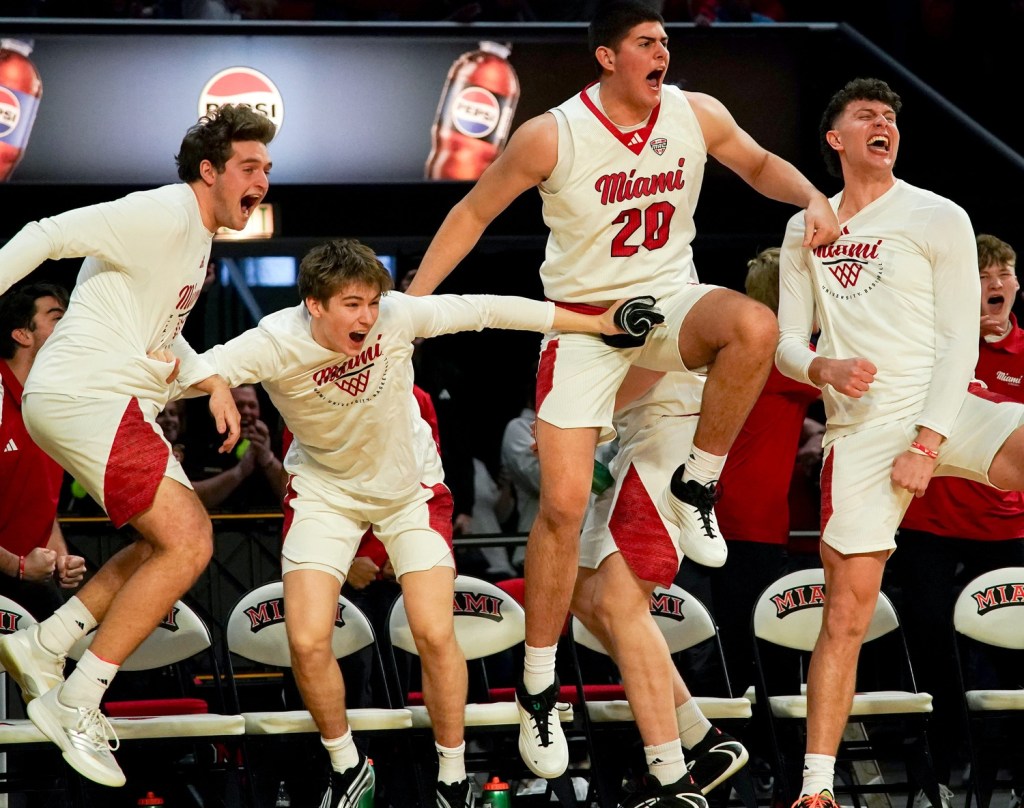
Metrics Madness
Current advanced rankings and analytics, meanwhile, further highlight the often-upside-down state of the sport.
The NCAA’s NET rankings, one of the key tools used by the tournament selection committee, show Auburn ranked at No. 38 in the country. The Tigers, however, have just a 2–7 record on the road and a 5–11 mark against Quad 1 opponents—defined as those ranked 1–30 in home games, 1–50 in neutral-site games, and 1–75 in away contests.
Despite winning every game, the RedHawks sit at No. 52 in the NET rankings. KenPom rankings, another evaluation tool developed by statistician Ken Pomeroy, tells a similar story, with Auburn at No. 40 and Miami at No. 87.
In both situations, a perceived strength-of-schedule difference is core to the difference, with Auburn’s slate ranked as the third-hardest in the country, and Miami coming in at No. 256. The rankings, however, often favor losing to a major-conference school over defeating a mid-major or small-conference school, as evidenced in part by Auburn’s position. With scheduling tightly controlled by multiple-team events (MTEs) and buy games, it’s harder than ever for a smaller school to even get those opportunities.
“What always amazes me is that these bad bubble teams never fall off after horrible losses to unranked teams, yet heaven forbid we lose one game [and] it is all over,” said Miami AD David Sayler in a social media post. “The double standard is really staggering. It always has been the case, but obviously playing a lot closer attention now!”
In a series of subsequent tweets Monday, Sayler took a more specific aim at Bruce Pearl.
“You are flat out wrong about Miami when you say we would finish last in the Big East,” Sayler responded to Pearl. “The disrespect is awful and you should not be near a TV studio covering this sport when you show your true colors! [You] even slipped in a ‘we’ when talking about Auburn. Nice work!”
The financial implications of tournament decisions are substantial, with last year’s March Madness units worth about $2 million each, helping fuel a record $70 million haul for the SEC last year.
The RedHawks have two final regular-season games—Tuesday against Toledo and Friday at Ohio—in their attempt to enter the Mid-American Conference tournament undefeated.