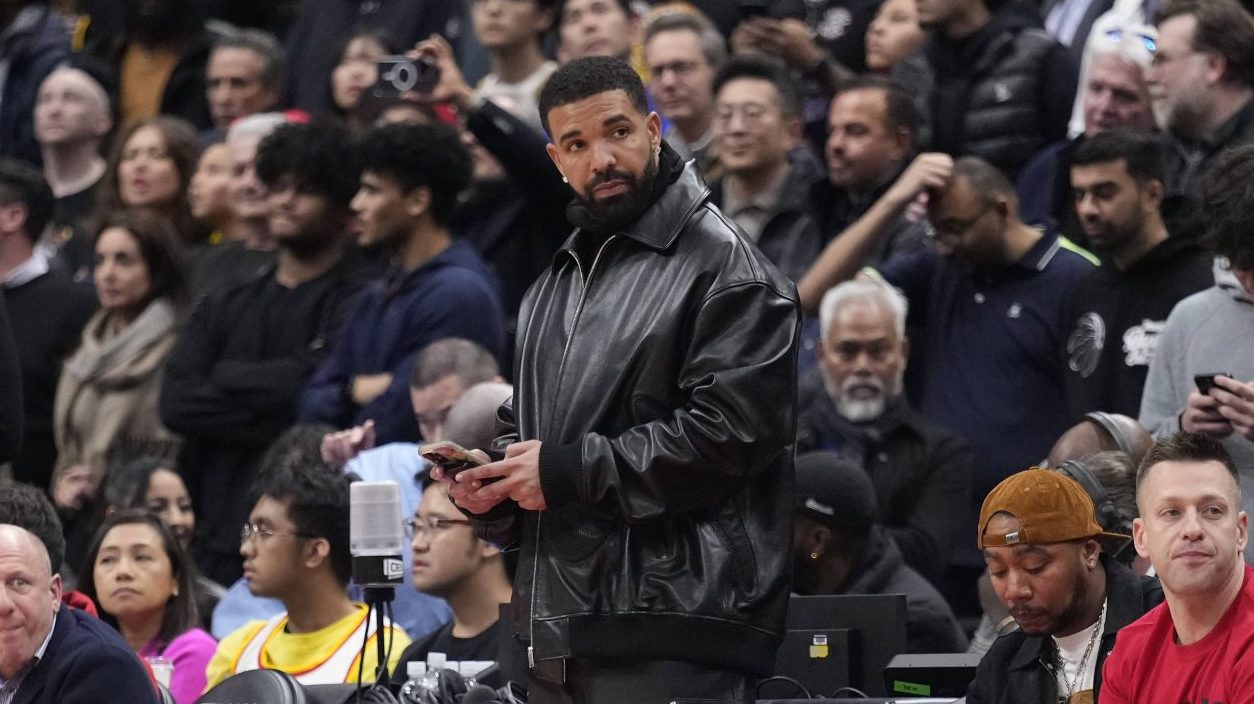
Drake is facing a lawsuit claiming he promoted a misleading casino gambling platform and used it as part of a scheme to artificially boost his music streams.
Two users filed a 22-page proposed class action suit against the rapper on Wednesday in the Eastern District of Virginia. The suit alleges Drake and others misled customers by promoting Stake, which the filing claims falsely brands itself as a legal casino game. Stake is run by Cyprus company Sweepsteaks Limited and offers games like blackjack, roulette, and slots.
Sweepsteaks, Drake, streamer Adin Ross, and Australian social media creator David Nguyen are all listed as defendants. The plaintiffs are Stake.us users LaShawnna Ridley and Tiffany Hines, who the suit says were influenced by Drake to play.
Sweepsteaks Limited is the company behind the online gaming platforms Stake.com and Stake.us. The former doesn’t operate in the U.S. because it lets users gamble with real money, which is banned in most states. The latter operates in most states and calls itself a social and sweepstakes casino. The suit alleges Stake.us in fact does add a real money element to the equation because users can both purchase virtual currency on the platform and convert winnings into cryptocurrency. The suit says the alleged illegal activity has been going on since 2022.
Drake, Ross, and Sweepsteaks are also defendants in proposed class action lawsuits in Missouri and New Mexico initiated in October that claim Stake is an illegal gambling operation “deceptively and fraudulently” promoted by Drake and Ross. The Los Angeles City Attorney filed a suit against Sweepsteaks this summer, but did not include Drake or Ross as defendants.
“Drake’s role as Stake’s unofficial mascot is quietly corrosive—he’s glamorizing the platform to millions of impressionable fans, many of whom treat his wild betting habits like gospel,” the Missouri suit says. “What makes it even more unsettling is that Stake apparently fronts Drake and Ross ‘house money,’ so any reported losses are part of a marketing tactic designed to draw attention.”
The Virginia suit says that “by masking its real money gambling platform as a free and safe ‘social casino,’ Stake and Defendants create a predatorial gambling environment, deliberately misleading consumers and exposing consumers to the risks of gambling addiction and jeopardizing the financial well-being of consumers and their families.”
Neither Nguyen nor representatives for Sweepsteaks, Drake, or Ross responded to requests for comment.
“The real question is whether this is just social and harmless (as Stake claims) entertainment or is this a form of gambling that has real financial risk,” Washington and Lee University law professor Melinda Roth tells Front Office Sports.
Drake is a “long-time member of the Stake community,” according to a page dedicated to the Canadian rapper on the company’s website. Drake’s frequent viral gambling foibles are valuable to the company: Stake pays him $100 million a year to be an endorser, the Financial Times reported in 2023.
As part of his endorsement deal, the rapper advertised Stake on his social media, live streamed himself playing games, and through the partnership donated $1 million to LeBron James’s school in Akron.
The new suit alleges Drake and Ross both use “house money” provided by Stake for large wagers, which “encourages and influences” their fans to make big bets with their own money. It says the defendants violated federal racketeering and Virginia consumer protection laws, with damages exceeding $5 million. Proven violations of federal racketeering law can triple the damages.
The suit in Virginia is notable because it adds the racketeering allegations and Nguyen as a defendant.
In England, Stake is the jersey sponsor for Premier League club Everton, though all betting companies will be banned from appearing on the front of kits after this season.
Sweepstakes platforms have been increasingly scrutinized in recent months for being too similar to gambling websites. “The walls are closing in on the sweepstakes casino industry largely because it’s properly viewed as a subterfuge,” gaming and sports betting attorney Daniel Wallach tells FOS. “What customers are really buying are the coins that allow them to play real money gambling and cash out.”
Several states have sent cease-and-desist letters to sweepstakes operators or banned them altogether, like California did. “We cannot look the other way while these platforms exploit legal grey areas,” said Avelino Valencia, the California Assemblymember who introduced the bill against online sweepstakes that went into law on Jan. 1.
Sweepstakes operators including Stake have pulled out of states that have issued threats, but continue operating elsewhere.
“Whether sweepstakes casinos are legally gambling is not a cut-and-dry issue,” Dustin Gouker, author of The Closing Line Substack, tells FOS. “But sweepstakes casinos can unquestionably be used as a proxy for real-money gambling by their customers.”
Artificial Streams
On top of the claims that Drake and Ross promoted a predatory product, the suit says Drake used the platform as part of a scheme to have “automated bots and streaming farms” boost his music on platforms like Spotify.
The lawsuit says that Drake, Ross, and Nguyen have sent each other money through Stake’s “tipping” function. With the money, Nguyen “interfaced with bot vendors, supervised coordinated amplification strategies, and integrated paid ‘clipping’ campaigns,” the filing reads.
The lawsuit also says that Nguyen runs the popular social media news and meme account “Grand Wizard Chat N***a,” which as of Monday had references to Drake and a recent post about Ross on its private, 522,000-follower Instagram.
“Public posts, chat logs, leaked communications and other records document Nguyen’s direct handling of funds through multiple payment platforms, orchestration of narrative surges, and amplification alongside—and as an instrument of—Drake and Ross,” the suit reads.
In November, a proposed class action suit against Spotify alleged the company “turned a blind eye” to “mass-scale fraudulent streaming” that awarded Drake billions of fake streams.