DraftKings CEO Jason Robins calls efforts to ban prop bets in the wake of recent pro and college sports betting scandals “crazy,” arguing prohibition would push the practice back into the black market.
The idea of a potential ban on prop bets—which involve putting money on individual player outcomes, such as how many passing yards a quarterback will throw or how many points a basketball player will score—is not hypothetical.
NCAA president Charlie Baker has called for nationwide prop-bet prohibition in college sports, and Ohio gambling regulators have considered a new rule that would put strict limits on prop bets in the wake of the sports betting scandal involving Guardians pitchers Luis Ortiz and Emmanuel Clase.
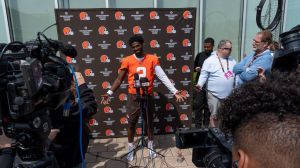
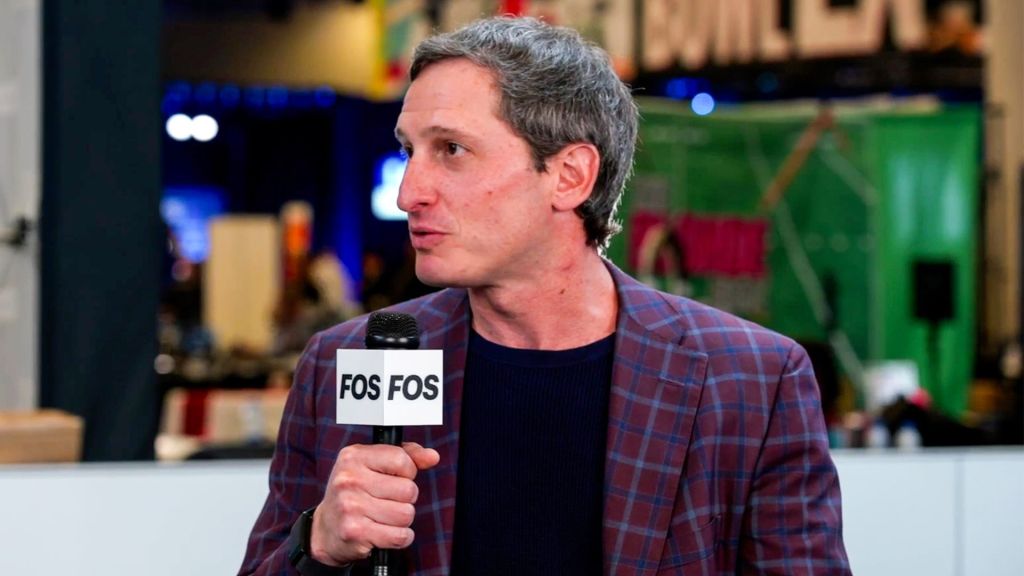
“Jumping to ‘let’s ban it’ is crazy,” Robins told Front Office Sports on Radio Row Friday ahead of Super Bowl LX. “It’s absolutely not the right answer.”
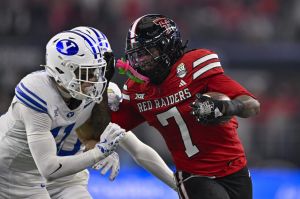
His comments come as multiple explosive prop-bet scandals have rocked sports in recent months. In addition to the Guardians pitchers, NBA player Terry Rozier was indicted for purposely taking himself out of a game early so that co-conspirators would win prop bets on the under for stats including how many points he would score; the NCAA and federal investigators also opened probes into potential gambling violations by about 30 current and former men’s Division I college basketball players.
Robins noted that the high-profile incidents are anomalies, as opposed to “something that’s broadly infecting sports.” They “represent a tiny fraction of a fraction of a fraction of a percentage of people playing in professional and collegiate sports. The vast majority of professional and college athletes have never been accused of wrongdoing.”
He concludes the violations that have been discovered show the system is working.
DraftKings has worked with leagues to refine or even remove certain prop bets, he said—for instance, the company no longer takes bets on turnovers, and it has placed limits on pitch-by-pitch betting to try and reduce the incentive for cheating.
Such “nuanced” solutions are better than any outright ban, believes Robins, who told FOS all a ban would do is push prop betting “back into the illegal market and create bigger problems long term.”
Prediction Markets
Robins also addressed prediction markets, which DraftKings leaned further into this week through a new deal with Crypto.com. The partnership will see the sports betting giant expand into player props, such as how many rushing or receiving yards a player will have in a given game. There’s currently a contract available for how many passing yards Drake Maye will have in the Super Bowl—over or under 229.5.
DraftKings launched its app, DraftKings Predictions, in 38 states in late December. Sports event contracts are only available in states where online sports betting is still illegal, such as California, Texas, and Georgia.
Prediction-market platforms including Kalshi and Polymarket have drawn criticism—those companies, as well as others like Robinhood, Crypto.com and Coinbaase—are fighting legal battles against state regulators and officials who argue sports event contracts constitute illegal sports betting. But the industry’s momentum can’t be denied, which is why DraftKings, and FanDuel, each launched their own apps late last year.
“There’s real opportunity here,” Robins told FOS. “We’ll see how big it ultimately can be.”
He pointed to estimates that the prediction-market industry could be worth billions of dollars in revenue, and said if DraftKings can “capture a significant chunk of that … That’s huge incremental EBITDA and revenue upside for us.”
Kalshi and others argue that they are federally regulated by the Commodity Futures Trading Commission, which Robins agrees with.
“It’s certainly regulated, but like any product, there’s always new things, and regulations have to evolve as new things emerge,” he told FOS. He spoke positively about new CFTC chair Mike Selig, who has expressed support for the prediction-market industry. He says Selig has been “explicit” in saying he intends to “advance guidelines” and help create a world where sports event contracts can exist and are properly regulated.
Will DraftKings Buy Kalshi or Polymarket?
In its pursuit of a competitive prediction-market product, DraftKings has already engaged in M&A. In October, it agreed to pay up to $250 million to buy federally licensed prediction-market platform Railbird Exchange. And alongside its new partnership with Crypto.com, it also has a deal with CME Group.
Why not just buy one of the two biggest players, Kalshi or Polymarket?
“There’s always considerations like that, but I think those companies are raising money at huge valuations, and it would be tough to do a transaction at this point,” Robins said.
DraftKings is more focused on building out its product to be competitive, and Robins feels the company has built in advantages, such as the underlying infrastructure for traditional sports betting and strong relationships with all the major leagues.
He told FOS, “We like our chances.”