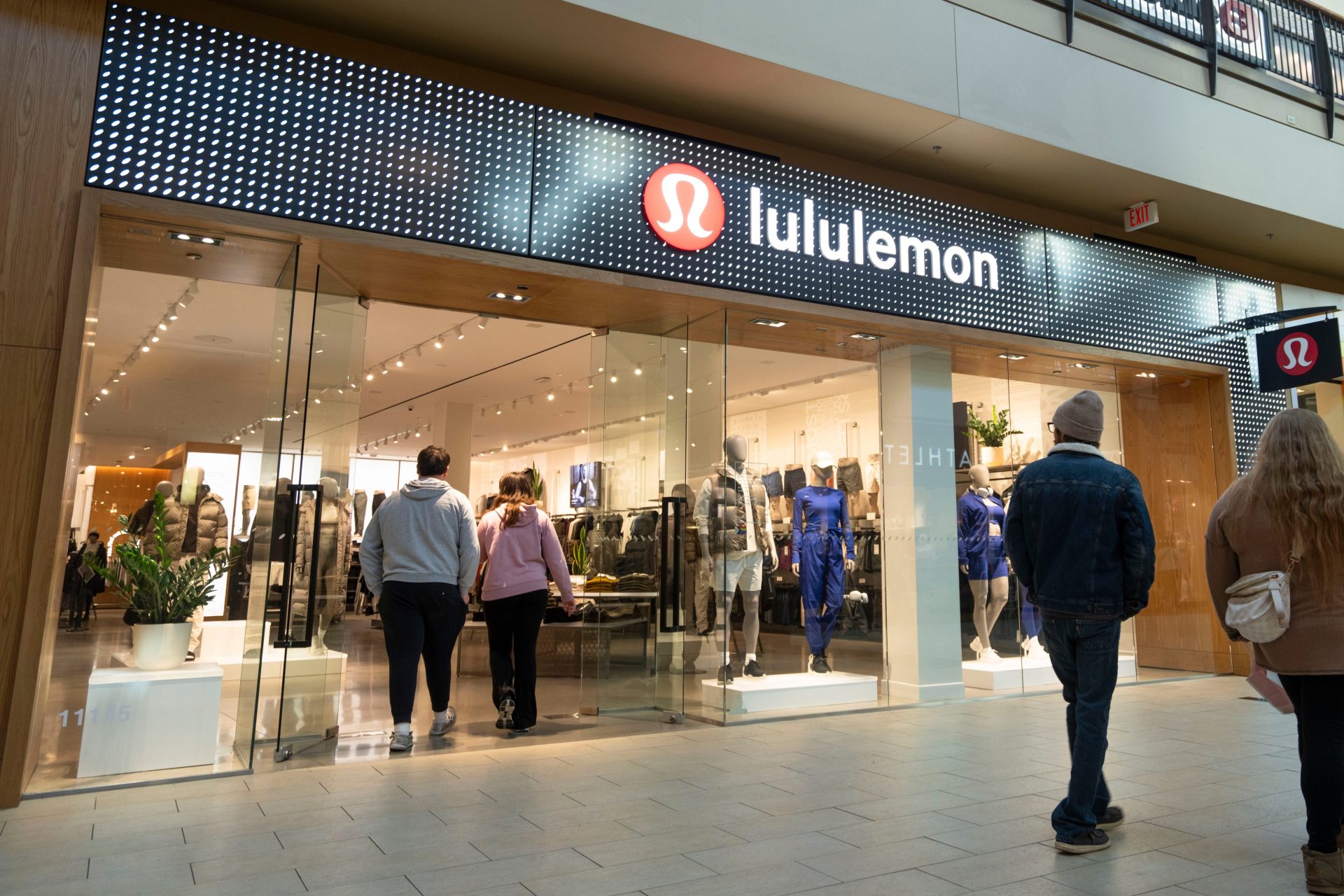
Lululemon has been sued by a group of consumers who say they are owed a portion of the “hundreds of millions” of dollars in tariff refunds the company is supposed to get through its own lawsuit against the federal government.
The proposed class action lawsuit, filed March 27 in Michigan federal court, claims that Lululemon Athletica is currently positioned for “double recovery.” The idea is that consumers were left to foot the bill when the company raised prices in response to President Donald Trump’s tariffs, and now the company stands to obtain a significant refund through a lawsuit it filed against the federal government in the Court of International Trade (CIT). The U.S. Supreme Court struck down Trump’s tariff policies in February, ruling he unlawfully enacted them using the International Emergency Economic Powers Act (IEEPA).
“This lawsuit seeks to prevent Lululemon, one of the world’s largest yoga wear and sportswear companies, from double recovery,” the complaint says. “Lululemon has made no commitment to return any portion of its anticipated tariff refunds to the consumers who ultimately bore those costs.”
Lululemon is one of thousands of companies that have sued the federal government in the CIT as a result of the tariff policies implemented at the start of Trump’s second term. Lululemon’s lawsuit was filed before the Supreme Court’s February ruling. Other sports retailers that have sued to clawback tariff costs include Reebok, On Holdings, Skechers, and Peloton.
The lawsuit against Lululemon includes four named plaintiffs, and claims the class contains more than 100 people, with total damages exceeding $5 million. The suit says it is “estimated” that Lululemon paid about $240 million in tariffs, but those costs were passed down to consumers—the company announced in June it would raise prices in response to the tariffs, according to the suit.
The plaintiffs said they filed the lawsuit because they have no other recourse to be repaid, according to the complaint. The “importer of record”—in this case, Lululemon—is the only party that can recover a refund from the government, Justin Nelson, a lawyer with Susman Godfrey, which advises businesses seeking refunds, tells Front Office Sports.
The consumers are the “truly injured parties,” yet they “possess no direct avenue for redress, even when the Supreme Court strikes down the tariff as unlawful,” the suit says. Lululemon is not alone in being sued by its own customers over tariffs. On Feb. 27, FedEx was sued by a proposed class of consumers in Florida federal court who want to be repaid once the company receives a tariff refund, and on March 11, Costco customers filed a similar suit in Illinois.
Although the government has been ordered to provide tariff refunds, no payouts have yet happened, and companies will likely be waiting awhile.
“The government has given no indication that it will simply pay these claims without litigation,” Nelson previously told FOS. “The government said it will take years, I think they’re trying to scare people off.”
Other Battles Lululemon Is Fighting
Chip Wilson, Lululemon’s polarizing founder, mounted a board challenge in December, saying the company is in dire need of a board shakeup. Wilson, who founded Lululemon in 1998, resigned from the company’s board of directors in 2015 but reportedly held onto a roughly 9% stake, making him its second-biggest shareholder behind investment manager Vanguard Group.
This month, Lululemon appointed Chip Bergh, former CEO of Levi Strauss, to its board of directors, replacing David Mussafer. Wilson applauded that announcement, but reiterated that more must be done. “I want to be clear that while yesterday’s announcement is a step in the right direction, glaring governance deficiencies remain,” he said March 18.
Lululemon posted net revenue of $11.1 billion for 2025, up 5% from the prior year. The company expects 2026 net revenue to fall between $11.35 billion and $11.5 billion, slightly below analyst estimates.
Representatives for Lululemon did not immediately respond to a request for comment.