In the NIL and open transfer-portal era, private jet travel is an unavoidable expense in college football recruiting—not to mention a competitive perk when trying to land a big-name coach.
Nearly 50 schools responded to a public records request for their football programs’ private jet spending in 2025 (separate from travel to games). Among the respondents, three surpassed the $1 million mark.
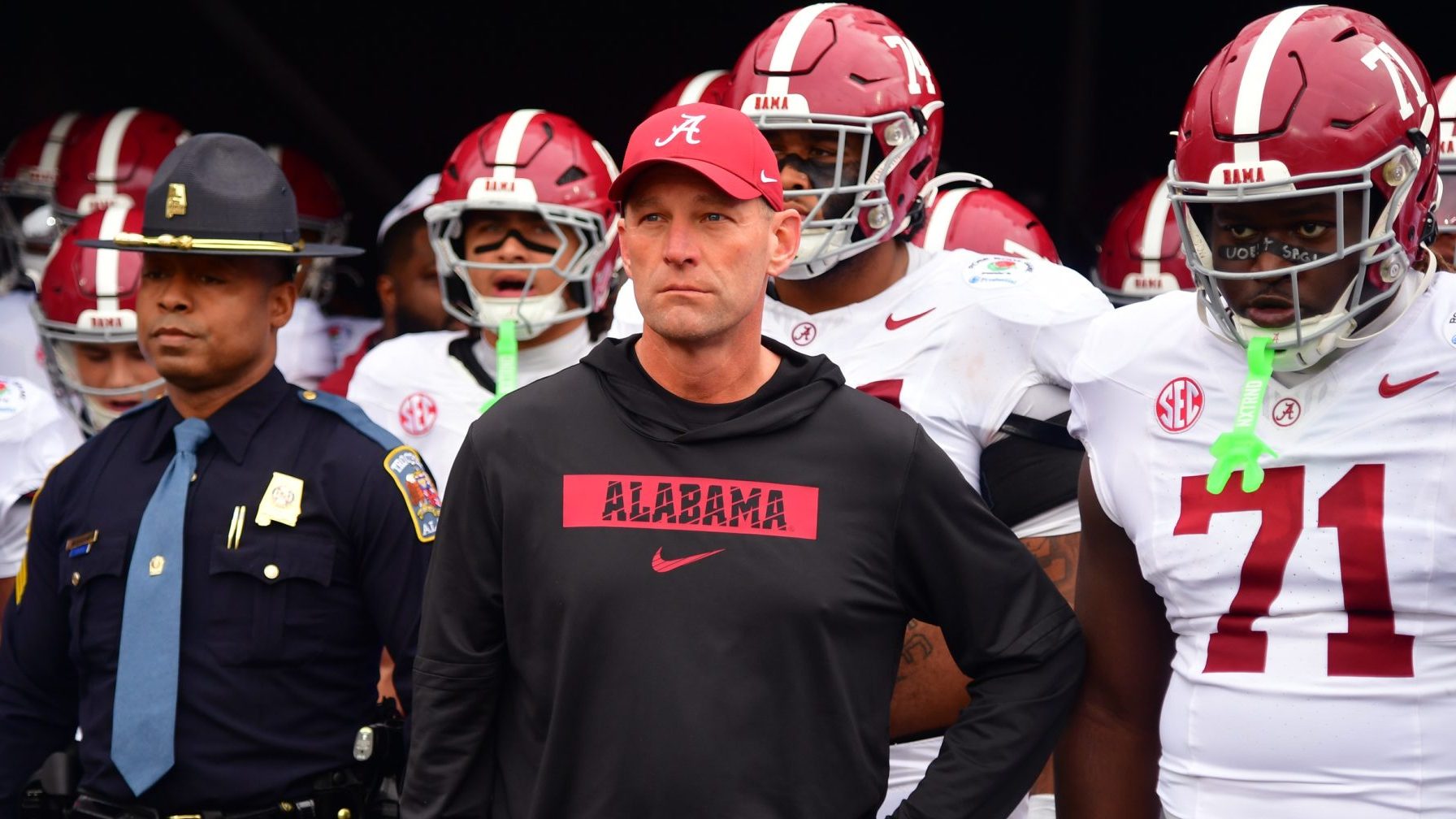
Alabama ($1.23 million), Nebraska ($1.13 million), and Michigan ($1.07 million) led the way; the top 12 spenders were all from the SEC and Big Ten.
Frequent Fliers
Texas A&M, No. 4 at $925,911, provided the most detailed records of any program.
During its 2025 fiscal year, members of the Aggies football program took 39 private jet trips. Fifteen of those were explicitly filed under recruiting, medical purposes, or conferences like media days.
The other 24 were all tagged as personal for head coach Mike Elko. The tab just for Elko, whose contract guarantees him 40 hours of flight time, was just shy of a half million dollars: $493,000.
Texas wasn’t far behind at No. 5, with $817,898.
Records shared by the Texas athletic department give a window into how head coach Steve Sarkisian used his contract perk of 20 hours a year for personal use. In 2025, he took trips to California and Atlanta.
Ole Miss clocked in at a much lower total, with $201,639. The smaller spend doesn’t necessarily mean Lane Kiffin took fewer jets than his SEC peers, but rather highlights the difficulty in making apples-to-apples comparisons.
For example, in Brian Kelly’s contract at LSU (where Kiffin is headed next), he received an annual $275,000 for private jet travel. The conference notes that the sum could be paid for by the Tiger Athletic Foundation, which isn’t subject to public records laws.
And while LSU returned no records for any private jet spending in 2025, it probably didn’t spend zero—even Kentucky, a mid-tier SEC program, is still dropping over a half million dollars on private jets for staff, coming in No. 7 at $624,142.
A Big 12 school doesn’t appear until No. 13 with Arizona State, which spent $173,323.
Donated Miles
Outside of the two biggest conferences, schools such as Eastern Carolina and Houston each traveled on private jets only once last year. For ECU, that was coach travel for one recruiting visit ($14,700), and for Houston that was Big 12 media days in Dallas ($11,720).
But ECU coach Blake Harrell’s recruiting trip wasn’t paid for directly by the school. The figures from schools also reveal the different ways each team gets its airfare covered.
When Michigan State hired Pat Fitzgerald, it wasn’t going to fly him to East Lansing on Frontier. One Spartan booster, Mike McNamara, loaned his jet to the team for the day of Fitzgerald’s introductory press conference, an in-kind donation of $7,919.28.
McNamara gifted eight different flights to the Football Excellence Fund, which totaled $197,133, mainly recruiting trips for former head coach Jonathan Smith.
At least four other schools—ECU, Nebraska, Iowa, and Marshall—disclosed their totals included donated hours from boosters’ private aircraft.
For the Hawkeyes, $41,896 of their $322,365 total came from donated flight hours. The Cornhuskers received almost 17 hours of jet time, worth approximately $138,558 in gifted travel. And all of Marshall’s 40 private jet hours were donated. The school did not provide an estimate of the cost.
The travel spending did not appear to correlate with winning. Nebraska’s $1.13 million earned it a 7–6 record. Minnesota finished a game ahead of Nebraska in the standings and spent $500,000 less on private jets.
At Michigan State, all of McNamara’s donated hours got the school a 4–8 season. Maryland, also with eight losses, spent less than half on private jet travel, at $83,959.
There was one outlier: Indiana spent just $42,200 on non-commercial private jet travel in its run to a 16–0 season and national championship. But it’ll likely spend more in 2026. While Curt Cignetti’s first contract with the Hoosiers did not specify any private jet usage, his revised deal signed last year—before he signed another new deal after the Hoosiers’ title run—includes 75 hours of private jet travel per year.
David Covucci writes the independent newsletter FOIAball.