The Chiefs are officially headed across the border to Kansas, sealing a two-part stadium deal with state officials Monday that includes a $3 billion domed facility.
Confirming fast-growing expectations and ending a facility deliberation spanning more than two years on both sides of the Missouri-Kansas line, the NFL team has reached a far-reaching agreement with Kansas. The pact includes:
- An agreement to build the domed stadium somewhere in Wyandotte County, Kan., with a projected opening date in 2031. A specific site has not been selected, but a parcel near the existing Kansas Speedway is one leading possibility. The forthcoming stadium will include a surrounding mixed-use development.
- A separate development, worth more than $1 billion, to build a team practice facility and headquarters in Olathe, Kan., in the state’s Johnson County.
Put together, the Chiefs’ stadium situation will somewhat resemble the Cowboys, who have The Star, its training facility and headquarters in Frisco, Texas, and AT&T Stadium in nearby Arlington, with both facilities seeing continued development around them.
Kansas officials on Monday approved a bond measure that will contribute about 60% of the total costs. The Chiefs will fund the other portion.
“[Monday’s] announcement is truly historic. Actually, it’s a little surreal,” Kansas Gov. Laura Kelly said. “Today’s announcement will touch the lives of Kansans for generations to come. Today’s announcement is a total gamechanger for our state.
“Take heed, because Kansas is not a flyover state. We’re a touchdown state,” she said.
Momentous Decision
Chiefs owner Clark Hunt and his family, who control the Chiefs, viewed the stadium decision as a generational choice, one carrying massive implications for the franchise, the Kansas City area, and the NFL. The construction of a domed facility will open the Kansas City region to major events such as the Super Bowl, Final Four, and College Football Playoff—competitions currently not possible at the outdoor Arrowhead Stadium.
Officials on the Missouri side, particularly Jackson County, made a last-ditch effort, including in the last several days, to keep the Chiefs on that side of the border. Ultimately, the large-scale upside of a new facility, and public funding that isn’t subject to a public vote like the failed one in Jackson County last year, were too much to ignore. The Chiefs have been in Kansas City since 1963, when they were still an American Football League franchise.
“While the Chiefs aren’t going far away and aren’t gone yet, today is a setback as a Kansas Citian, a former Chiefs season ticketholder, and lifelong Chiefs fan,” said Kansas City, Mo., mayor Quinton Lucas. “Business decisions are a reality, and we all understand that, but Arrowhead Stadium is more—it’s family, tradition, and a part of Kansas City we will never leave.”
While the move to the western edge of the Kansas City metro area will certainly be a major change for the Chiefs and their fans, the new stadium site will still be within the core region. The Chiefs also plan to maintain a robust tailgate scene that is central to their fan culture.
“The location of Chiefs games will change, but some things won’t change,” Hunt said. “Our fans will still be the loudest in the NFL, our games will still be the best place in the world to tailgate, and our players and coaches will be ready to compete for championships, because on the field or off the field, we are big dreamers, and we’re ready for the next chapter.”
Extending a Trend
The Chiefs follow a fast-growing wave across the NFL of teams building domed stadiums, many of them also joined by mixed-use developments.
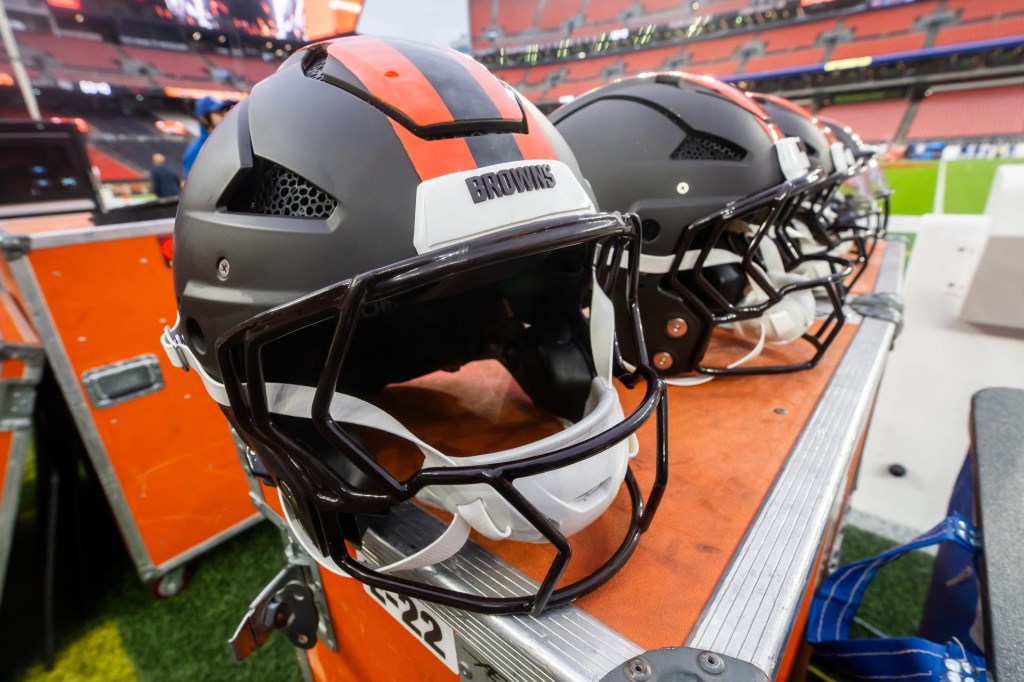
The Browns recently reached a settlement with the city of Cleveland that will help pave the way for a planned move to suburban Brook Park, Ohio. The Commanders received final District of Columbia approval in September for its planned return from Maryland. The Bears are seeking a similar facility and development of their own, and recently expanded its pursuit of that to Northwest Indiana. The Broncos are planning a retractable-roof facility for Denver’s Burnham Yard. The Titans have a domed stadium of their own well into construction, and will open that in time for the 2027 NFL season.
The situation in Washington is perhaps the closest counterpart to the Chiefs, as it also involves crossing jurisdictions within the same market territory. Many of those have team contributions toward these other stadiums, however, are far greater than what’s contemplated in the Chiefs’ project. The Chiefs, for their part, branded Monday as the single most important day in the franchise’s business history.
“This is a great day for Kansas City Chiefs fans,” said NFL commissioner Roger Goodell. “This public-private partnership, the result of a thoughtful and deliberate process, will build upon the Hunts’ generational legacy by boldly investing in one of America’s greatest fan bases.”