Want more from Front Office Sports
in your search results?
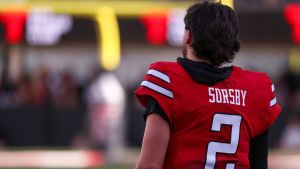
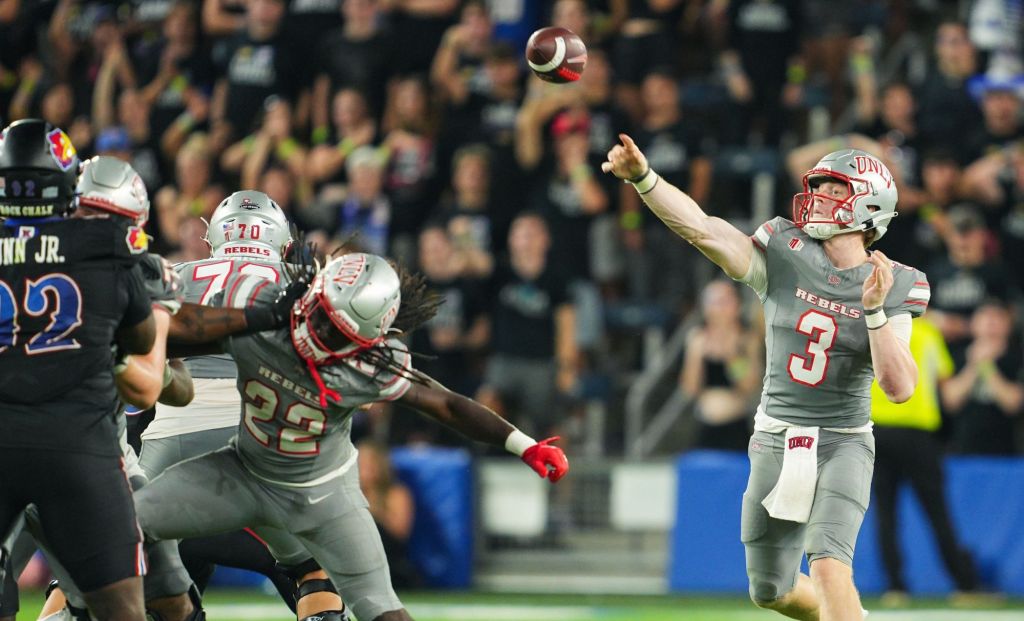
On Tuesday night, UNLV quarterback Matt Sluka announced he intended to transfer schools because of an unfulfilled NIL (name, image, and likeness) deal. Multiple reports suggested the crux of the dispute was a verbal agreement for $100,000 promised to Sluka by coaches before he committed to UNLV—a promise that was never fulfilled, and that UNLV’s athletic department and NIL collective said they never agreed to.
On Wednesday evening, the NCAA finally weighed in. President Charlie Baker told a small group of reporters that he believed the terms of the proposed House v. NCAA settlement would alleviate some of the issues plaguing the fledgling NIL industry.
It would not, however, prevent more situations like Sluka’s.
The House v. NCAA settlement proposal, first filed in July, would require the NCAA and power conferences to pay $2.8 billion in back damages to athletes who couldn’t participate in NIL before 2021—and allow schools to pay a percentage of annual revenue directly to athletes, starting at around $22 million. But the settlement also includes a provision that would allow the NCAA to have more control over the NIL landscape, and specifically NIL collectives. A “clearinghouse” would be established and maintained by a third party that would require any NIL deal over $600 to be submitted for approval. The entity could block any deals seen as “pay-for-play,” rather than “fair-market value.” The settlement would also allow NIL collectives to be brought in-house to athletic departments.
Baker suggested to Yahoo Sports and NBC Sports that the settlement would “put in place a structure that will be transparent, where people have obligations and assignments and responsibilities and accountability.” In other words, the schools would pay players, and anyone else who wanted to offer NIL deals would have to go through an approval process.
The settlement proposal, in any case, has a long way to go. Northern District of California judge Claudia Wilken raised concerns about the NIL clearinghouse in a hearing on Sept 5—and the NCAA’s lawyer said it could be willing to blow up the entire settlement if the language doesn’t include those NIL restrictions.
The attorneys have until the end of the day Thursday to file a response.
Allowing schools to share revenue with players will not result in the end of the NIL industry—or the NIL collective industry, as multiple industry stakeholders have previously told Front Office Sports.
There’s another reason the settlement wouldn’t prevent a dispute like the one Sluka faced. The entity proposed in the House settlement would not be tasked with making sure collectives keep their word on paying players. Instead, its goal is to allow deals to go through if they’re considered legitimate, or be rejected if they are considered recruiting inducements, according to court documents. That enforcement mechanism would be irrelevant to Sluka’s conundrum.
If anything, situations like Sluka’s may become even more common. His agent said that the agreement was verbal, rather than written, because it was discussed before Sluka committed to UNLV—and was therefore to protect the parties from being accused of agreeing to a recruiting inducement. (A federal judge has since ruled that the NCAA can’t punish athletes for negotiating and signing NIL contracts before committing to a school, further complicating matters.)
But in a world in which the House v. NCAA settlement governs NIL, where deals are strictly scrutinized as pay-for-play, it may become more common for players to agree to verbal offers, and get nothing in writing so they aren’t accused of accepting bribes.
Outside the House settlement, the NCAA says its hands are tied when it comes to protecting athletes from bad actors. “The NCAA fully supports college athletes profiting from their NIL, but unfortunately there is little oversight or accountability in the NIL space and far too often promises made to student-athletes are broken,” Tim Buckley, NCAA SVP of external affairs, said in a statement shared with FOS on Thursday. “Positive changes are underway at the NCAA to deliver more benefits to student-athletes but without clear legal authority granted by the courts or by Congress, the NCAA, conferences and schools have limited authority to regulate third parties involved in NIL transactions.”
Download the FOS App
The business of sports, in your pocket.


Scan the QR code to get the app now.