After a first round of power conference upsets and Group of 6 losses, the CFP took a break over the week of Christmas. But the expanded postseason returns this week.
The College Football Playoff quarterfinals will take place on New Year’s Eve and New Year’s Day, thanks to a contract that mandates the CFP format include New Year’s Six bowl games.
For the second year in a row, four New Year’s Six bowl games will serve as the hosts for the CFP quarterfinals, and two will host the semifinals.
- On New Year’s Eve, No. 10 Miami will face off against No. 2 Ohio State in the Cotton Bowl.
- The first quarterfinal on New Year’s Day will be the Orange Bowl, featuring No. 5 Oregon and No. 4 Texas Tech.
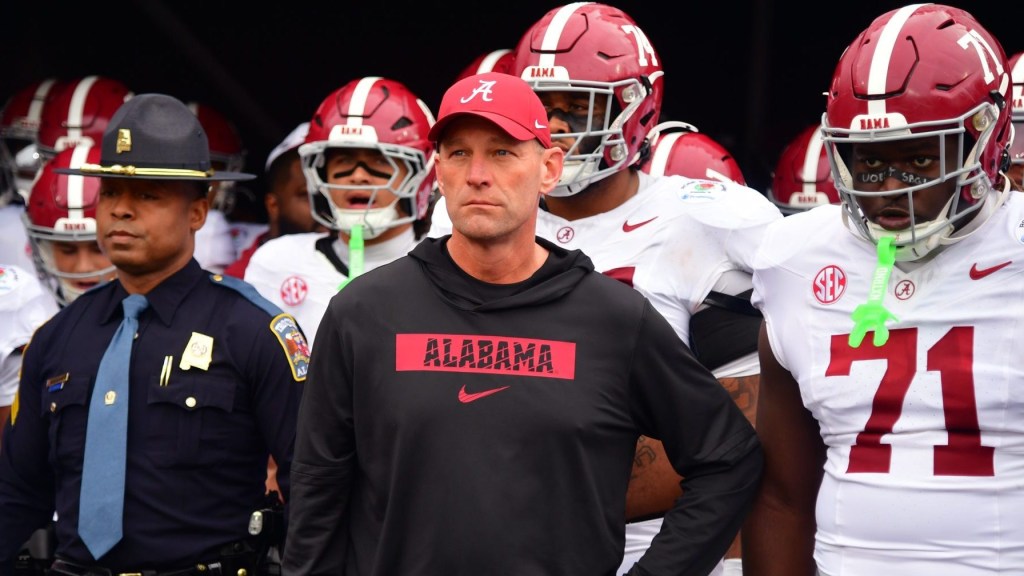
- The Rose Bowl will feature No. 9 Alabama and No. 1 Indiana.
- The nightcap will be the Sugar Bowl between No. 6 Ole Miss and No. 3 Georgia.
Next week, the Peach Bowl and Fiesta Bowl will host semifinals on Jan. 8 and 9.
Fewer Ratings Hurdles
The first round of the CFP drew an average of 9.9 million viewers across ESPN and TNT platforms, 7% lower than the first round last year. That’s thanks in part to direct competition against the NFL, as well as lower viewership numbers for the two games that featured Group of 6 programs.
There won’t be any Group of 6 teams or NFL overlap for the quarterfinals, however. And the matchups will feature all power conference programs ranked in the top 10.
But they’ll have stiff numbers to compete against compared with last year’s quarterfinals, which averaged 16.9 million viewers across platforms—despite the delayed Sugar Bowl.
Prize Money Increase
The CFP offers about $116 million in overall prize payouts to teams based on how far they advance in the postseason. These payouts are distributed to each conference.
Up until this point, all the teams playing this week have earned a total of $8 million—$4 million for getting into the CFP, and $4 million for advancing to the quarterfinals. (The top four ranked conference champions were also guaranteed $8 million as a compromise for changing how bye weeks were distributed last year, so Tulane earned $8 million even though the Green Wave lost in the first round.)
But this week, the schools are playing for a bigger prize. The price tag increases to $6 million for every program that reaches the semifinals, and teams will earn another $6 million for making it to the national championship.