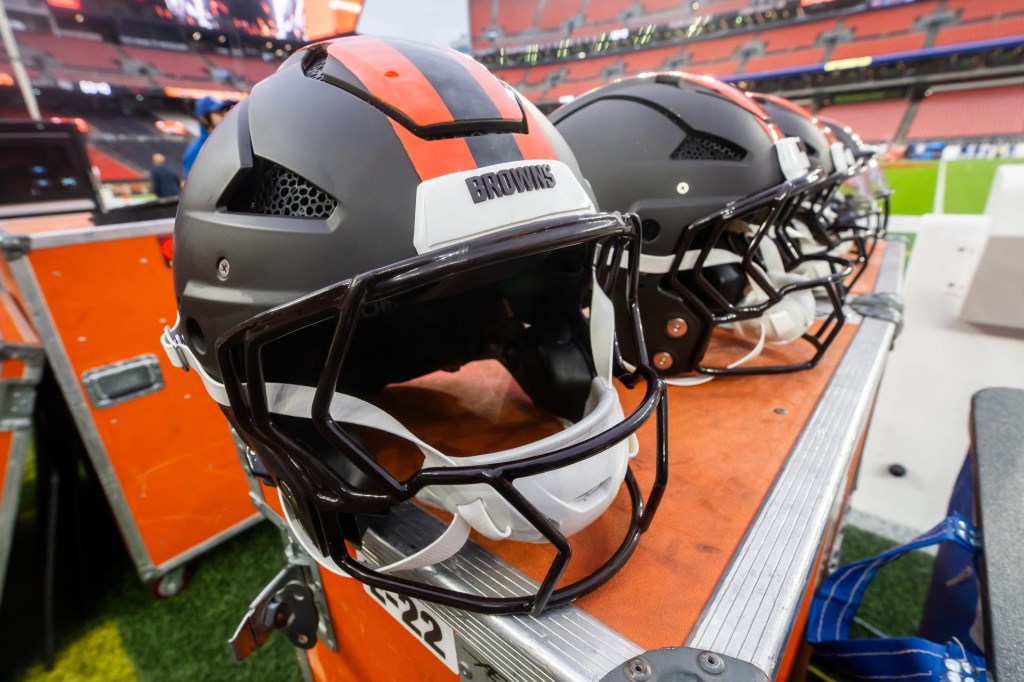
The Browns are digging deeper into their own pockets to finance the team’s $2.6 billion domed stadium in suburban Brook Park, Ohio.
On Thursday, the NFL team detailed a new funding model for the planned venue, which is scheduled to open in 2029. The latest structure involves at least $1.755 billion of private money, $600 million from the state of Ohio, and $245 million from the city of Brook Park. Haslam Sports Group, which owns the team, will also cover all cost overruns and is now set to fund at least 67.5% of the stadium cost.
That’s a significant pivot from the team’s original aspiration of a roughly even split between private and public money.
Cuyahoga County, however, has long been a firm opponent of supplying any funding, and County Executive Chris Ronayne previously pushed for the team to stay in downtown Cleveland. The Brook Park contribution, meanwhile, is still under negotiation between city Mayor Edward Orcutt and HSG regarding the plan to secure that money from local admissions and city income taxes.
The overall cost of the stadium is also up from a prior $2.4 billion, with such escalation common in large-scale stadium and arena projects as they proceed through planning and construction. In this case, design enhancements sought by HSG also added to the latest price.
A planned mixed-use development that will surround the new Huntington Bank Field will cost another $1 billion, all of which will be funded privately.
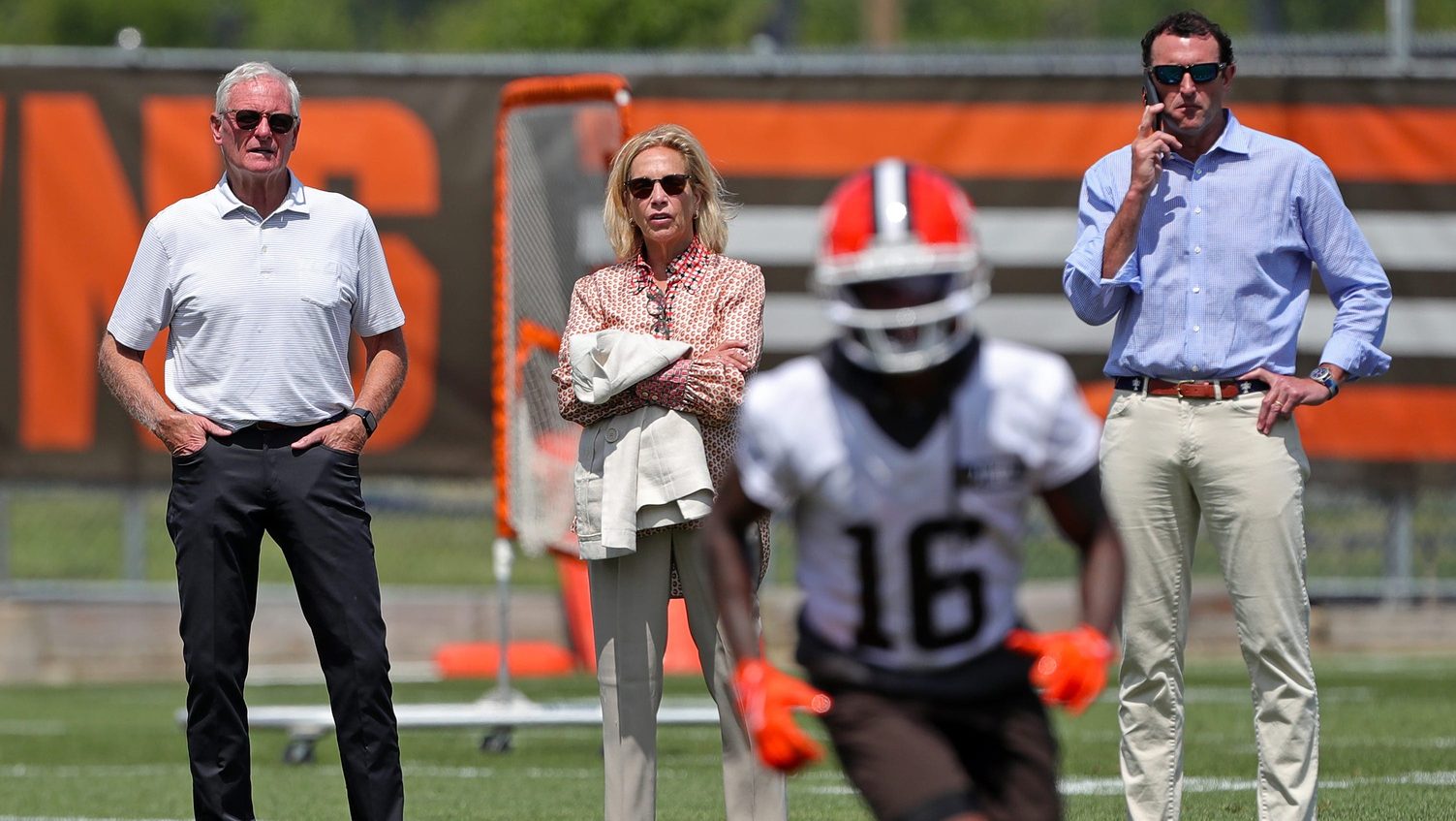
“We are committed to Northeast Ohio and believe with this increased investment, we will create not only a transformative world-class stadium and development but an opportunity to positively impact further growth in our region,” team owners Jimmy and Dee Haslam said in a joint statement.
More Hurdles To Come?
The planned $600 million contribution from the state is also not necessarily a sure thing. That outlay from the state’s unclaimed funds is now being challenged in court. A Franklin County, Ohio, judge placed a preliminary injunction on the use of those funds earlier this month, elevating from a prior temporary restraining order.
A group of plaintiffs sued the state last year, arguing that using the money this way is unconstitutional at both the state and federal levels. The legal case is ongoing, and if Ohio loses, HSG could be forced to shoulder additional stadium expenses.
The unclaimed funds are derived from sources such as utility deposits, uncashed cashier’s checks, and forgotten bank accounts. Ohio currently holds nearly $5 billion of such money.
Excavation work has already begun at the stadium site, and a formal groundbreaking is scheduled for April 30.