
Taylor Twellman Joins Yahoo Sports for World Cup
When Topgolf first launched in 2000, it debuted a novel concept: Memberships to a pricey golf club aren’t needed to putt around—people can practice drives comfortably indoors, in front of a high-tech simulator with a group of friends while eating bar food and drinking beer.
The idea of socializing while playing sports may have been popularized by Topgolf, but it was pioneered by bowling decades ago. Social sports clubs featuring activities like indoor driving ranges, pickleball, and pool are raking in millions of dollars of investment, and they’re all following the bowling formula.
The sale of Topgolf to a private-equity firm, completed Jan. 5, was viewed in some corners as an indictment of its business model. The combined company’s stock had plunged 71% from its all-time high in June 2021, and the sale of Topgolf valued the business at $1.1 billion, nearly $1 billion less than Topgolf’s $2 billion valuation in 2020.
But Topgolf, now separated from Callaway, continues to expand. In November it opened its 100th U.S. location (and 112th globally), and on Thursday it announced a new Texas venue will open later this month.
Topgolf may be the most well-known, but similar concepts are popping up across every sport: Poolhouse for pool, Ballers for racket sports like pickleball and padel, Batbox for baseball, Toca Social for soccer—the list goes on.
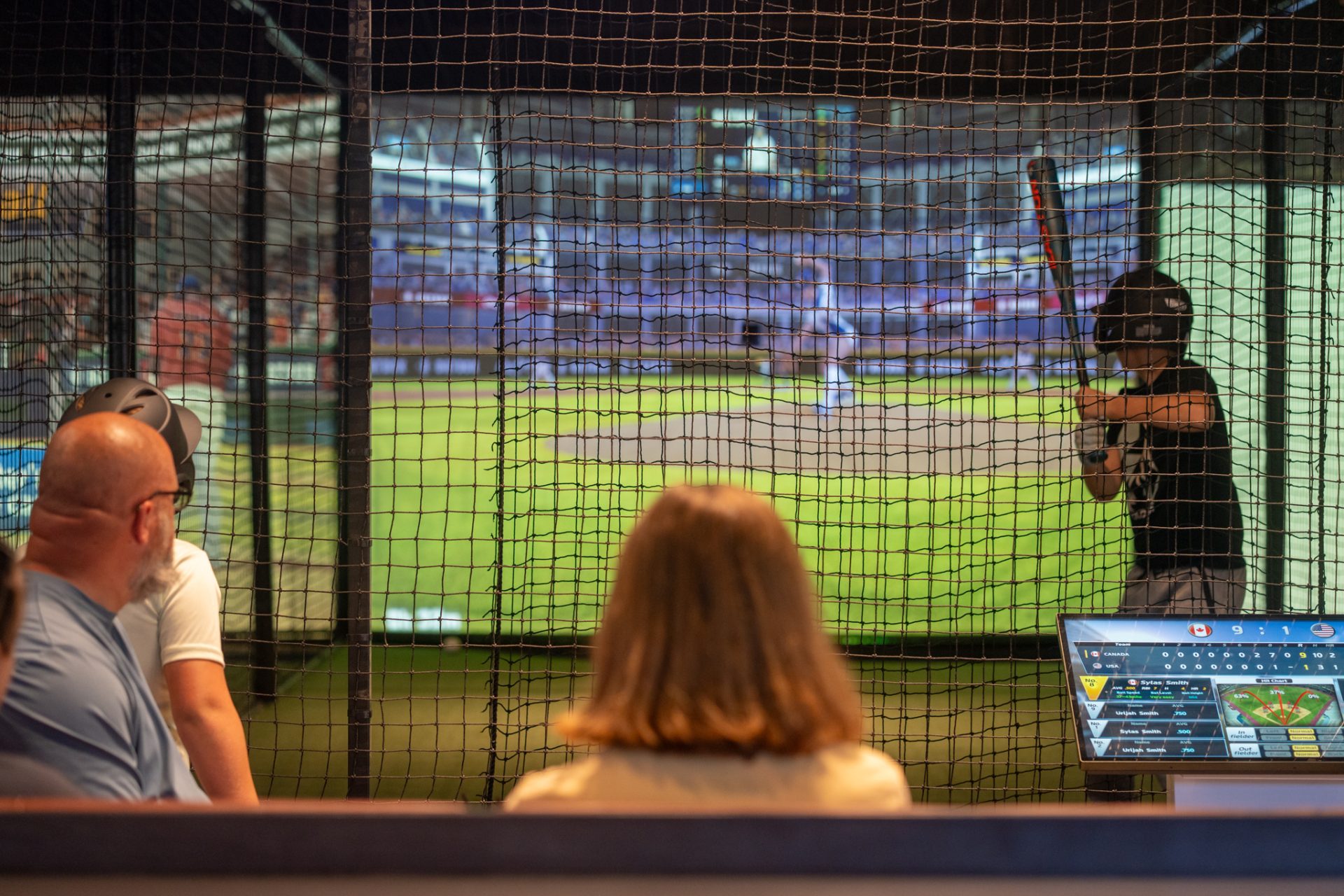
Topgolf venues are typically around 65,000 square feet. The first Poolhouse location will open this year in London with two floors of high-tech pool tables spread across roughly 21,000 square feet; the debut Ballers location is in a 55,000-square-foot facility that used to be the largest power plant in Philadelphia, and features six pickleball courts, three padel courts, two squash courts, a turf field, four golf simulators, and a putting green, among other amenities. The flagship Dallas Batbox location features 10 simulators on 13,000 square feet. Toca Social venues are typically around 30,000 square feet and can fit up to 1,000 guests.
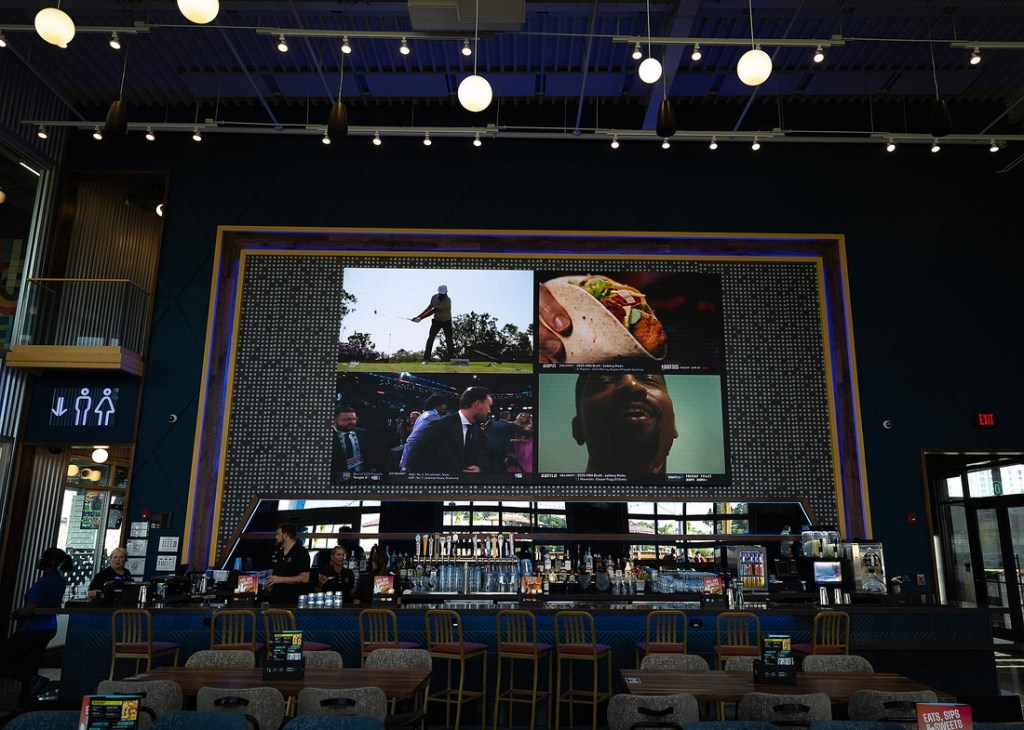
Like Topgolf, many of these businesses, including Poolhouse and Toca Social, have U.K. roots.
“The United Kingdom is the birthplace of many of these concepts, owing to a number of factors including strong pub culture,” says Lloyd Danzig, a managing partner at Sharp Alpha Advisors, which is invested in Ballers and Poolhouse. “The U.K. market is roughly two to four years ahead of the U.S. in its cycle of adoption in the competitive socialization space.”
Modern Versions of Bowling
“A lot of these are like modern versions of bowling,” says Chris Russo, CEO of advisory firm Fifth Generation Sports. “They are taking advantage of people wanting to be out having experiences and being social.”
Like bowling, these businesses pair casual, group-friendly games with food and drink. Poolhouse, which was formed by the founders of Topgolf, raised $34 million last April; Ballers, which last year opened its first location at Philadelphia’s historic Turbine Hall, raised $20 million in June from a group of investors featuring tennis legend Andre Agassi, NBA star Tyrese Maxey, and MLS goalkeeper Maarten Paes. Batbox, which has immersive baseball simulators in more than 70 locations across the U.S. and Latin America, raised more than $7 million in 2024 and an additional $3 million last year.
Mathew Focht is invested in several of these companies, including Poolhouse and Batbox, through his growth equity firm Emerging. The firm is also invested in a number of other similar concepts, like golf-based Puttshack and darts-based Flight Club.
For investors like Focht, the appeal comes down to how people behave once they’re inside these places.
“People spend three to four times more money on the same visit in a restaurant and entertainment venue compared to a department store like Nordstrom,” he tells Front Office Sports.
Appetite for Interactive Entertainment
There are multiple reasons these sorts of companies have erupted—there’s also Spin for ping pong, Jumpshot for basketball, and Chicken N Pickle for pickleball.

The COVID-19 pandemic ramped up consumers’ appetite for socially distant yet interactive entertainment, a trend that has continued even as the pandemic has receded into the rearview mirror. Meanwhile, advancements in technology mean venues can offer novel features: Flight Club, for example, uses technology that can accurately track each dart thrown within two millimeters, while Puttshack has a 20-year patent on a ball that tracks where it hits and is “basically a computer,” Focht says.
Another major factor is the availability of real estate. Malls in the U.S. have been closing at an accelerated pace, and “immersive” experiences are emerging as “critical success factors” for developers and operators looking to fill these spaces, according to retail and consumer research firm Coresight.
“In the early 2000s, there was an explosion of mixed-use real estate development,” Focht tells FOS. “But traditional department stores don’t create the frequency and reach of restaurants and entertainment.”
Randy White, CEO of White Hutchinson Leisure & Learning Group, which offers consulting services and helps develop leisure and entertainment venues globally, says there’s another “significant” factor in addition to the reasons outlined above: Gen Z and younger millennials are less focused on socializing through just, say, drinking at a bar, than the generations before them. He points to research from U.K.-based Mintel that shows younger generations are more interested in activities like axe-throwing and darts than simply going to the pub.
“It’s all about maximizing socialization, and nothing does that more than these games,” White tells FOS.
Catering to Foodies
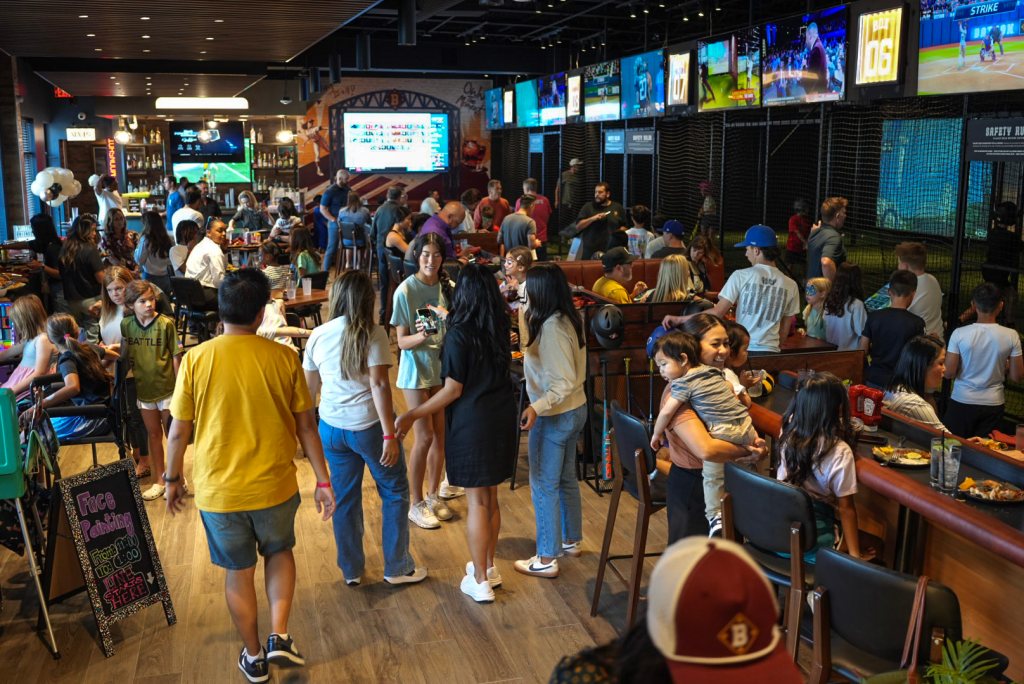
According to White, two more important aspects that contribute to social gaming businesses being successful are the level of competition for their games and the quality of their food and beverage offerings. Both of these points once again tie back to bowling, which, while somewhat competitive, is more relaxed because it features one person playing at a time while the rest can eat and drink while they wait for their turn.
“The key is to have that aspect,” he says. “The more highly competitive versions are not as successful as those that are less competitive, just like bowling. When you get into serious competition, it destroys the socialization.”
The quality of food has become increasingly important, White says, because “we live in the foodie generation.”
Sharp Alpha Advisors is actively looking for new investments, armed with $150 million in capital for a new fund it closed in October. Danzig says there are four “ingredients” Sharp Alpha looks for when considering whether to invest in a social gaming business: They must foster high-frequency visits, generate strong food and beverage revenue, offer high-margin technology licensing, and be highly conducive to hosting events.
Not all of these companies will survive. Before investing, Danzig looks for warning signs such as inconsistent repeat customer visitation, business models that work only when locations are extremely busy, and real estate strategies that aren’t sustainable over the long term.
Even understanding those red flags, it’s not easy for investors to know which companies will ultimately succeed and which ones will fail.
“A lot of these will work in the first year because of their uniqueness,” White tells FOS. “Everyone shows up once.”