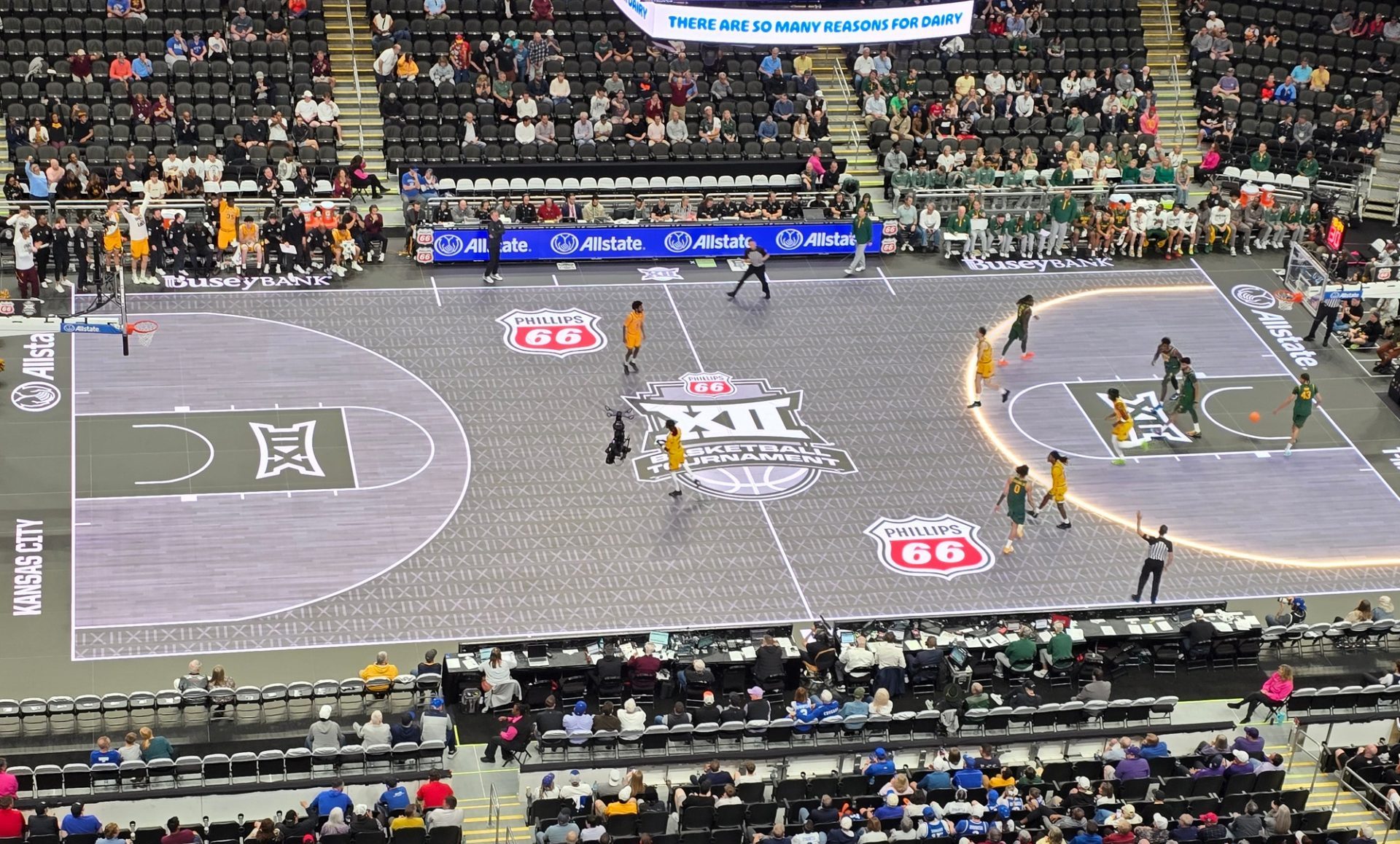
A big technological idea has gone bust, at least for now, as the Big 12 Conference has abandoned its plan to use an LED court for the rest of its men’s basketball tournament.
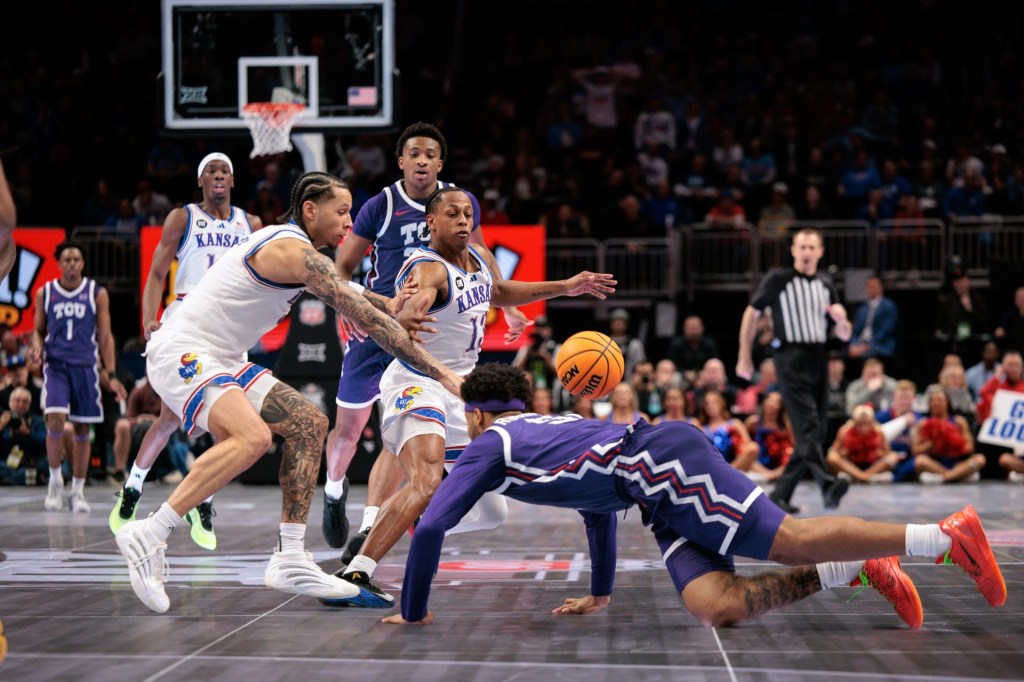
The Big 12 originally unveiled the high-tech court earlier this month, featuring an ability to change digital graphics on the glass surface at will. Players in both men’s and women’s basketball, however, frequently complained of the new court being overly slippery. The situation then hit a heightened point of tension after Texas Tech star Christian Anderson left his team’s quarterfinal loss to Iowa State after slipping on the floor and injuring his groin.
As a result, the conference will revert to a traditional hardwood floor beginning with Friday’s semifinals.
“After consultation with the coaches of our four semifinal teams, I have decided that in order to provide our student-athletes with the greatest level of comfort on a huge stage this weekend, we will transition to a hardwood court for the remainder of the tournament,” Big 12 commissioner Brett Yormark said in a statement. “We look forward to a great semifinals and championship game.”
Not Everyone Bought In
That statement marked an about-face from Yormark’s prior, unabashed support of the court, which he called “the future.” This was the first time that the technology had been used in official U.S. competition.
“Any time you innovate, you never get 100% buy-in,” Yormark said earlier Thursday on ESPN. “I like where we are. Obviously, it’s all about the student-athlete’s safety, first and foremost. We did a lot of due diligence with [manufacturer ASB] from Europe. It’s FIFA certified. It’s used in EuroLeague; it’s used in other parts of the world as well. We’re excited to be there first [in the U.S.], and we’re looking forward to the next couple of days.”
Coaches and players supported the switch.
“I think it’s the right thing to do,” said Kansas head coach Bill Self. “That doesn’t need to be the storyline. … The narrative [Friday] needs to be the two games and not somebody slipping on the floor.”
Manufacturer Claims
ASB, the German company that manufactured the court, originally claimed that the high-tech floor was better for reducing athlete wear and tear, and that it featured a grip superior to many NBA hardwood floors. Upon the announcement of the Big 12 project, ASB GlassFloor America CEO Chris Thornton said the floor “is engineered to enhance athlete safety while delivering the elite performance standards players demand.”
At least so far at Kansas City’s T-Mobile Center, those boasts haven’t held up to game use. The Big 12 semifinals, meanwhile, will feature four top-15 teams in the country among No. 2 Arizona, No. 5 Houston, No. 7 Iowa State, and No. 14 Kansas—as well as a series of NBA hopefuls who are being actively scouted during the tournament.
“The floor is slippery,” said Kansas guard Melvin Council Jr. “I didn’t want to fully, fully run.”