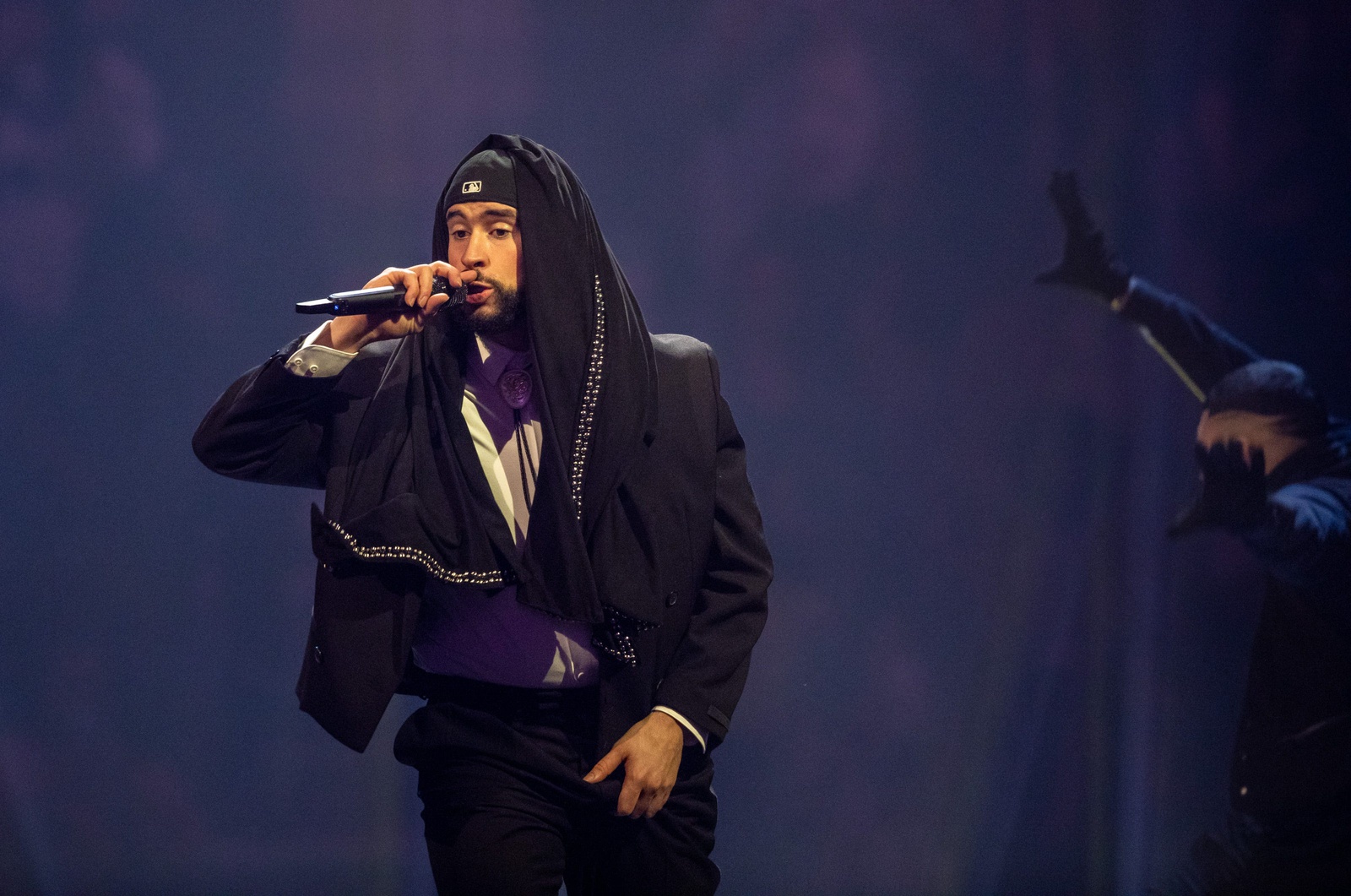
The NFL’s selection of Bad Bunny as the Super Bowl LX halftime performer has become a culture war flashpoint. President Donald Trump called it a “terrible choice,” while the “King of Latin Trap” himself said “ICE out” at the Grammys on Sunday.
But the selection is also reflective of the NFL’s business strategy. In recent years, the league has put an emphasis on catering to all demographics while also reaching a global audience.
Bad Bunny, a Puerto Rican artist whose real name is Benito Antonio Martínez Ocasio, topped Spotify’s 2025 global list of artists; he largely performs in Spanish. His Grammy Award–winning album DeBÍ TiRAR MáS FOToS also topped the list of albums globally.
“You may have people watching the Super Bowl in all of Latin America who usually wouldn’t watch it. As a business decision, this is absolutely brilliant,” Amílcar Barreto, a Northeastern University professor of cultures, societies, and global studies, tells Front Office Sports.
The rapper’s impact is also expected to be felt domestically.
“The Hispanic audience is still the largest growing demographic in the United States, and whether they are English first or Spanish first doesn’t really matter,” sports media consultant Joe Favorito tells FOS.
NBCUniversal-owned Telemundo is set to air Sunday’s Spanish-language broadcast, including in Puerto Rico. Miguel Gurwitz and Rolando Cantú will call the game on Telemundo.
Citing fears over immigration enforcement last year, Bad Bunny chose to do a 31-show residency in Puerto Rico rather than a world tour—and generated an estimated $200 million in direct economic impact, according to Puerto Rico’s tourism board.
The league began televising the Super Bowl in Spanish in 2014 and has already seen significant viewership growth. Last year’s broadcast, which aired on both NBC’s Telemundo and Fox Deportes, drew 1.9 million viewers, 340% more than the first Spanish broadcast in 2014 on Fox Deportes.
Last year’s Super Bowl drew a record 127.7 million viewers across all platforms, including Fox, Fox Deportes, Telemundo, and Tubi.
“One of the biggest focuses for the NFL is reaching a larger audience, so you can’t deny the Spanish-language, Hispanic, Latino audience—however we want to identify,” Angelina Losada, a Fox Deportes VP, tells FOS. “I think it’s serving exactly what the NFL is wanting to do.”
Bad Bunny is far from the only Latino Super Bowl halftime performer. Gloria Estefan was the first in 1992, and she headlined it again with Stevie Wonder in 1999. Shakira and Jennifer Lopez shared the stage in 2020, which drew a then-record 760,000 viewers on Fox Deportes.
But Bad Bunny’s attracting a different type of buzz because he’s expected to perform in Spanish.
“It’s very different from the rest of the artists that have sang in English because he’s going to grab a bigger audience. Not only that, I think there’s more of a sense of pride,” Losada said. She predicts a “solid bump” in viewership for this year’s Spanish broadcast.
Favorito says the Bad Bunny effect may not necessarily be seen in the ratings, but thinks the buzz will be felt on social media. He thinks the controversy surrounding the NFL’s decision to choose Bad Bunny is only going to add to the chatter, which he views as a positive for the league.
“I think that what this has done is created enough of a controversy where people who are on the fence, casual viewers, are now going to watch because they’ve driven so much attention to it, positively or negatively, and want to find out what the spectacle is all about,” Favorito says.
“You have not seen anyone since [the NFL] announced it, whether it’s a brand or whether it’s the league, leave. So what does that tell you? It tells you that people are intrigued by this. They don’t see much of a downside to it.”
NFL commissioner Roger Goodell has remained firm in the Bad Bunny selection.
“Bad Bunny is, and I think that was demonstrated last night, one of the great artists in the world. And that’s one of the reasons we chose him,” Goodell said the day after the Grammys.
It’s unclear whether Bad Bunny will have political messaging in his Super Bowl performance. Given his “ICE out” speech just days ago, it may be more surprising if there isn’t.
“I’d be disappointed if he didn’t,” Barreto says.