
Ex-ESPN Reporter Michele Steele Joins Big Ten Network
Heading into the Milan Cortina Games, Anthony Ponomarenko knew he wanted to mark his Olympic debut permanently. The American ice dancer had watched his friends return from the 2022 Beijing Games and get tattoos of iconic interlocking rings. At the time, he was recovering from major ankle surgery, unsure whether he would ever skate again.
When he earned his spot at the 2026 Winter Games in Italy, the tattoo was non-negotiable. Fresh off the ice in Milan—like most Olympians, he was superstitious enough to wait until after he competed—he DMed a local fine-line artist, Picci Ink at The White Whale Tattoo Society, and he landed the studio’s only opening all month.
“I shot my shot,” Ponomarenko tells Front Office Sports. “He was really honored to do it as well. He said, ‘It’s my first rings tattoo.'” Over espresso, they designed the piece, and three hours later, the skater walked out with his first-ever ink.
The Olympic rings tattoo has become a rite of passage for athletes. It’s been a tradition since at least 1988, when American swimmer Chris Jacobs got a set of tiny rings inked after winning two golds and a silver at the Seoul Games. He later added a larger version on his bicep, and the mark soon spread from the pool deck to the broader Olympic world on shoulder blades, rib cages, wrists, and even necks. (Figure skater Amber Glenn already has her placement picked out coming off her team gold medal: “The ass cheek, right here,” she told fellow skater Adam Rippon.)
It’s certainly harder to see the tattoos at the Winter Games under speedskating suits and ski jackets, but athletes in Milan still flashed their rings: Spanish figure skater Olivia Smart revealed hers through the open back of her costume; curlers flashed tats on bare forearms. Other athletes showed off freshly inked rings on social media, including the French women’s hockey team, which took a group outing for matching body art.
The five interlocking rings mark membership in one of the most exclusive clubs in sports. At the Paris Olympics last summer, tattoo parlors inside the Olympic Village—and on the floating village anchored off Tahiti, where surfers competed—offered free ink to competitors. Many others waited until they got home, including LeBron James, who added the rings to his bicep in Los Angeles after winning gold.
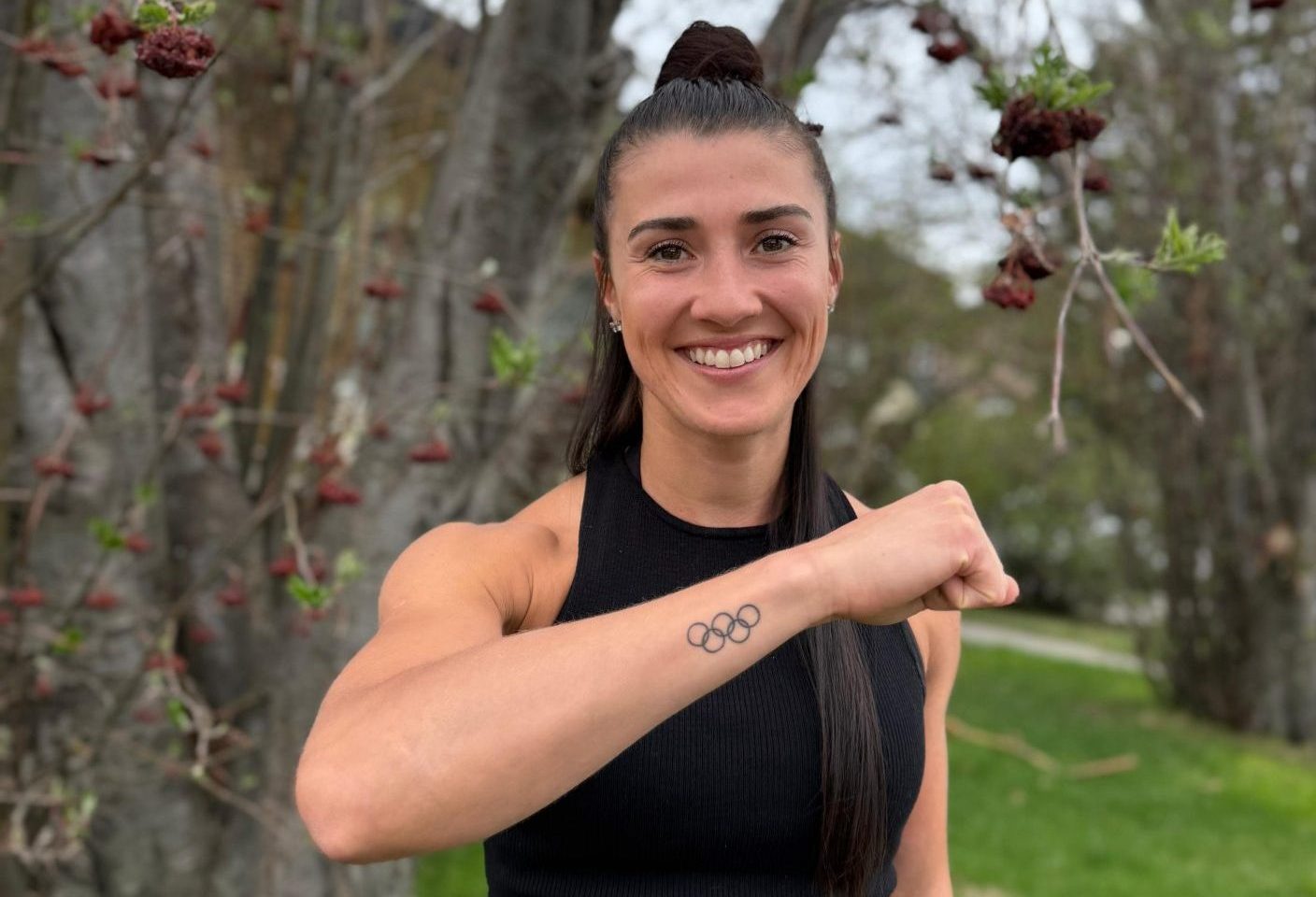
Nicole Silveira (at top) got hers on vacation in Mexico. The Brazilian skeleton racer had wanted the rings for three years, ever since competing in the 2022 Beijing Games, but she’d been on Accutane, which ruled out tattoos during treatment and for months afterward.
“That waiting period made it more intentional,” she tells FOS. When she finally sat for the rings, she knew what she wanted: simple, classic black ink on the outside of her wrist, “somewhere that felt powerful but personal.”
Her wife, Belgian skeleton racer and fellow Olympian Kim Meylemans, was with her that day and got a different tattoo. Meylemans’s first two Olympic experiences hadn’t been positive enough to want them etched on her body.
But after a meaningful Milan-Cortina Games, where Meylemans took sixth in her event, Silveira says she’s coming around. “It’s not just about competing at the Olympics,” she says. “It’s about everything it took to become the person capable of standing there. And for me, that’s something worth carrying forever.”
Shannon-Ogbnai Abeda, an Eritrean Canadian Alpine skier who in 2018 became Eritrea’s first Winter Olympian, spent two years deliberating before getting his tattoo. He didn’t think his debut had gone well enough to justify the ink, he tells FOS, “but I didn’t know if I’d be going back to another Olympics, so I decided to get it done.”
The rings were his first tattoo, but below them on his forearm, he also added a line from Fight Club: “It’s only after we’ve lost everything that we’re free to do anything.” In the eight years it took to qualify for PyeongChang, he’d lost friends, drained his savings, and overhauled his life to chase a single goal.
In 2023, he went back to add the official logos of PyeongChang and Beijing on his inner bicep. After competing in his third Olympics in Milan, he’s weighing the next addition. “It shows that I earned my place,” he says. “I can always look at it and be like, yeah, I accomplished my dream—not once, but three times.”
Former Olympic sprinter Ashleigh Nelson waited a full 15 years to get her rings after her debut at the 2008 Summer Olympics in Beijing. Nelson, who now competes as a bobsledder for Team GB, reflected on the delay in a 2024 video. She’d held off because she never felt her previous results matched her potential, but while waiting for Achilles surgery, clarity hit. “I realized that even if I never got to compete again post-surgery, I am enough,” she said. “So shout-out to all my Olympians, don’t wait 15 years to celebrate yourself.”
Ponomarenko’s new tattoo from Milan—all black, shaded from dark to light so you can still see where the rings overlap—is on his bicep. It’s a daily reminder of the years it took to get there and of the responsibility of carrying the Games’ message forward. “I found the Olympics extremely life-changing,” he says. “I now have to carry myself differently—to represent not just myself but all Olympians.”
![[Subscription Customers Only] Jun 15, 2025; Seattle, Washington, USA; Botafogo owner John Textor inside the stadium before the match during a group stage match of the 2025 FIFA Club World Cup at Lumen Field.](https://frontofficesports.com/wp-content/uploads/2026/02/USATSI_26465842_168416386_lowres-scaled.jpg?quality=100&w=1024)