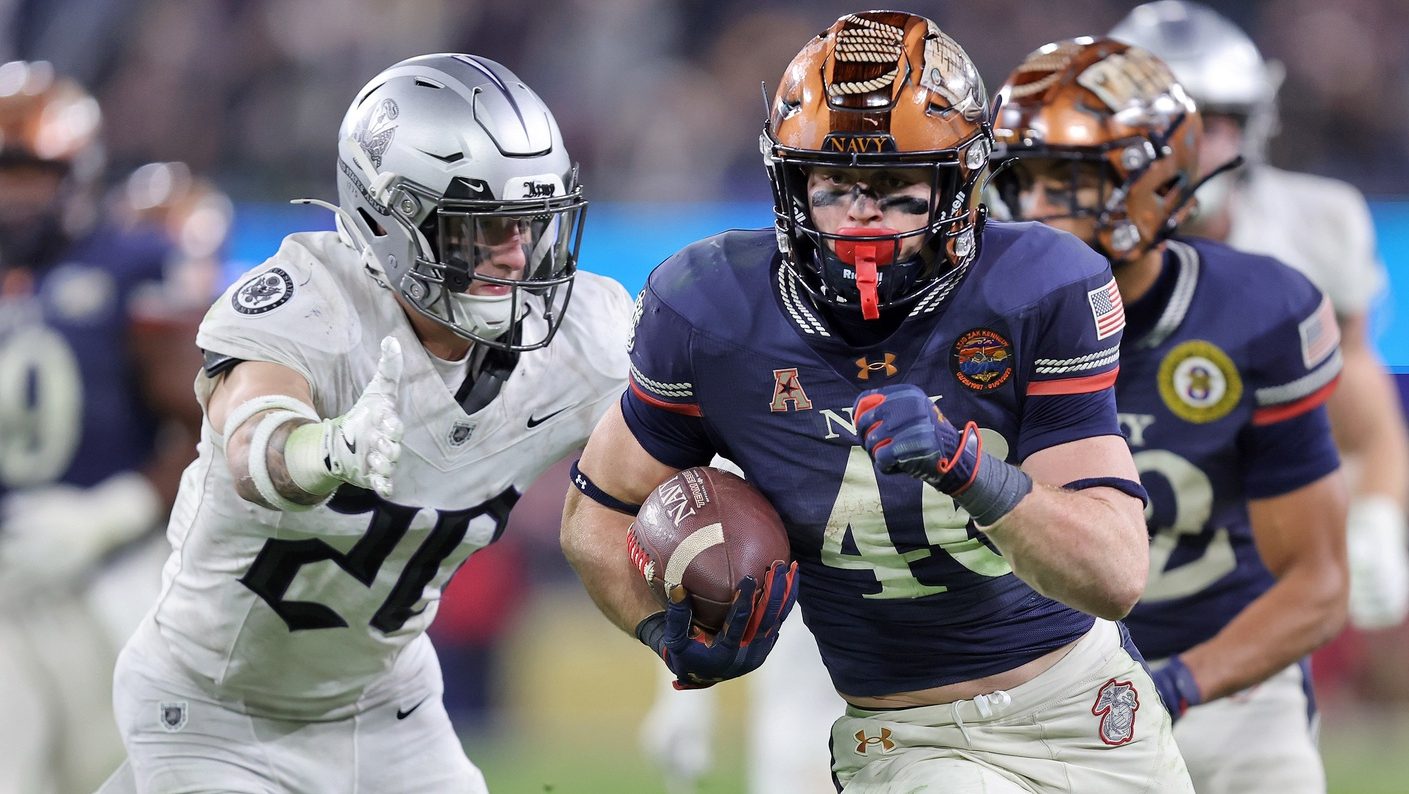
If the College Football Playoff expands beyond 12 teams, it could cut into the weekend currently reserved for the Army-Navy football game.
Though the situation remains hypothetical, officials at both service academies are weighing contingency plans for the future of “America’s game.” It’s a complex conundrum for the service academies, who have to pick a date and time that allows them to participate in the postseason while also preserving the business value of the 100-year-old matchup.
“It’s not just a game that fits into a four-hour window,” Navy athletic director Michael Kelly told Front Office Sports on Wednesday. “It’s how the whole puzzle comes together.”
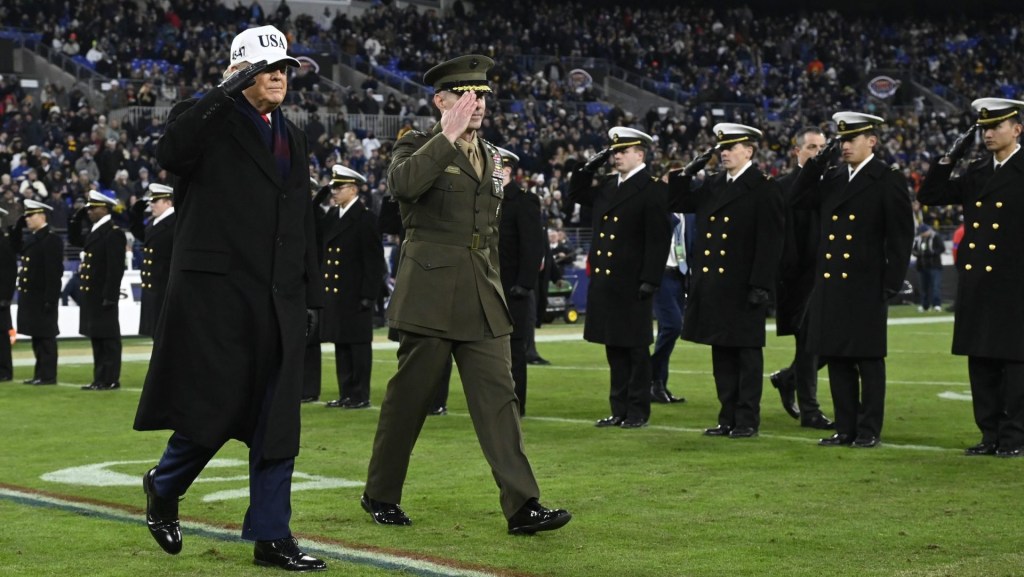
The game currently takes place on the second Saturday in December, one week before the 12-team CFP commences, and is the only FBS football game played that day. CBS owns the media rights to the game, which is considered a huge moneymaker for both academies, generating millions each year while serving as an important recruiting tool. Not to mention, it’s a historic tradition.
But if the CFP expands to 16 or 24 teams, the format could cut into the weekend previously reserved for the matchup, jeopardizing not just the event’s financial success but also the logistics for each team to potentially compete in the postseason.
At best, the Army-Navy game may find itself competing on the same weekend as an early round of the CFP. At worst, the academies could be forced to choose between participating in the playoff or in one of sports’ most storied rivalries.
The ongoing debate was spotlighted earlier this week when Army coach Jeff Monken told The Athletic he was in favor of moving the game to Thanksgiving Day or one of the other days that weekend. In this scenario, Army-Navy would become one of many rivalry games during “rivalry week,” which also features matchups like Michigan-Ohio State. Monken did, however, suggest a four-hour exclusive television window for the matchup during that weekend.
Monken said the change would free up another weekend to start the CFP earlier and end it sooner. He added it could potentially be helpful for both Army and Navy’s attempts to secure CFP bids.
Speaking to FOS on Wednesday, Army athletic director Tom Theodorakis did not specifically endorse any one concept. But he noted the list of priorities the game has to help both academies accomplish.
“We need to be able to compete for conference championships. We need to be able to play the game on the biggest stage possible and we need to be able to tell this story to America,” he said. “And also, when it permits, have the ability to play in the College Football Playoff.”
Kelly, for his part, told The Capital Gazette earlier this week he was not in favor of Monken’s idea—mostly for business reasons. He reiterated that position to FOS on Wednesday.
“My challenge with the Thanksgiving Day proposal is more toward the realities of the success of the game in it of itself,” the Navy AD said.
Kelly noted a concern that the game would lose valuable sponsorship opportunities without exclusivity, as well as television viewership and attendance (especially among service academy members who would normally be home on a much-needed Thanksgiving holiday). He also voiced skepticism that an exclusive window would be possible, given the high number of rivalry college football games played that weekend and the NFL Thanksgiving crossover.
If expansion comes to pass, there are other potential solutions that have been floated, including the possibility of giving Army and/or Navy a first-round bye so they could play their rivalry game during the CFP first round instead. But though Kelly and Theodorakis converse weekly (about issues far beyond the game itself), they have not yet settled on a specific path forward.
American Commissioner Tim Pernetti—whose conference includes both the Midshipmen and the Cadets—has not issued a public position on the future of the game beyond reiterating its importance. In December, he told The Capital Gazette: “The Army-Navy game is a national treasure where the true commitment of our future leaders is on display. We will do whatever it takes to protect and defend it.”
Meanwhile, President Donald Trump has offered his own solution: a political mandate. In January, Trump said he would draft an executive order requiring television executives to reserve a four-hour exclusive window on the second Saturday of December each year for the Army-Navy football game. However, no executive order has been publicly presented; a White House spokesperson did not respond to a request for comment.
The CFP has not indicated any interest in cutting into the Army-Navy window. As a retired Air Force Lieutenant General and former Air Force Academy superintendent, CFP executive director Rich Clark is more than familiar with the game’s history and importance. In the wake of Trump’s comments in January, Clark said he had seen and understood the president’s position.
For now, expansion—which remains in the hands of SEC commissioner Greg Sankey and Big Ten Commissioner Tony Petitti—will not take place this year. Talks for a potential expanded playoff in 2027 are expected to resume during this offseason.