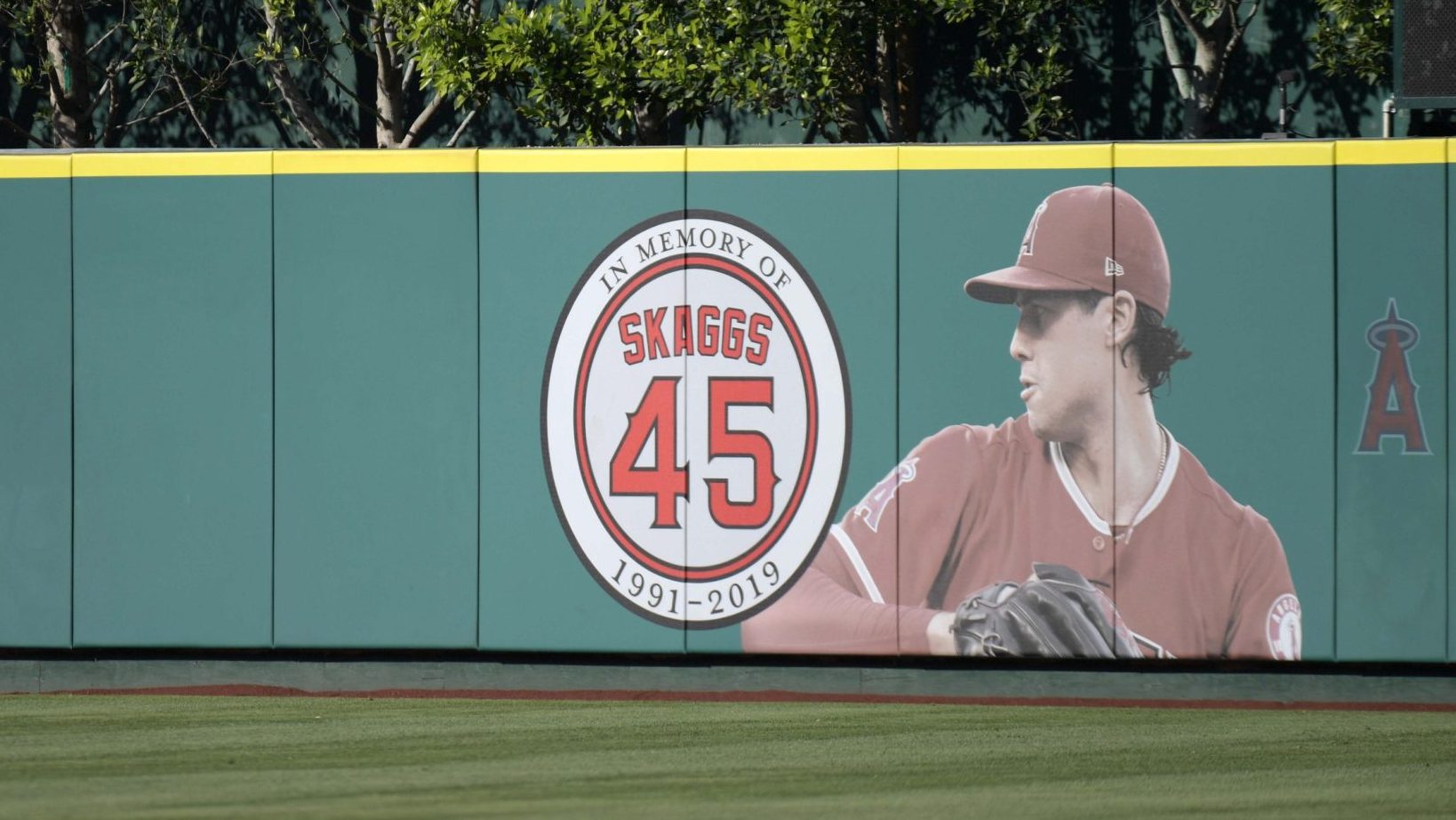
The family of deceased former MLB pitcher Tyler Skaggs has agreed to settle longstanding litigation that alleged the Angels played a role in his 2019 death.
The deal was reached as a more than two-month trial was winding down; the jury had begun to deliberate earlier this week. Terms of the settlement were not disclosed. Both the team and family confirmed the settlement in statements Friday afternoon.
Prior to the settlement, the jury was intending to award over $100 million to the Skaggs family, the jury foreperson said, according to the Los Angeles Times.
“The death of Tyler Skaggs remains a tragedy, and this trial sheds light on the dangers of opioid use and the devastating effects it can have,” the Angels said. “Throughout the course of court proceedings, both parties searched for a path to a mutually agreed upon resolution and a confidential settlement has been reached.”
Skaggs was 27 years old when his body was discovered in a Texas hotel room ahead of an away game against the Rangers on July 1, 2019. Investigators found pills, including one that when tested revealed it contained traces of fentanyl.
“This trial exposed the truth and we hope Major League Baseball will now do its part in holding the Angels accountable,” the family said. “While nothing can bring Tyler back, we will continue to honor his memory.”
Eric Kay, former communications director for the Angels, was accused by the federal government of being responsible for Skaggs’ death, and was charged in 2020 with conspiracy to distribute a mixture containing detectable amounts of fentanyl. In 2022, Kay was sentenced to 22 years in federal prison.
In 2021—in between Kay being charged and sentenced—Skaggs’ family launched a civil lawsuit against the Angels in California state court, alleging the team held responsibility for what happened. In addition to wrongful death, the suit claimed the team was negligent in retaining and supervising Kay, who had distributed pills to players, including Skaggs.
A representative for MLB declined to comment.
MLB tweaked its “drugs of abuse” policy after Skaggs died. Before 2020, there had been no random testing for opiates and other recreational drugs; now, players are tested, but the results lead to potential treatment. Before minor league players unionized and signed a collective bargaining agreement in 2023, MLB unilaterally administered the testing program; now, it’s a joint program and players can appeal any discipline.
MLB commissioner Rob Manfred declined to comment on the trial last month during media availability at the owners meeting. “One thing I learned from that brief but painful period of time that I practiced law, commenting based on press reports on transcripts is not a smart idea,” Manfred said, according to a transcript of his comments.