Want more from Front Office Sports
in your search results?
The Dubai Championships have turned into a showcase of the WTA’s scheduling dilemma.
As of the quarterfinals of the WTA 1000 tournament, 23 players have withdrawn or retired, including four top-10 players. The latest dropout was 2026 Australian Open champion Elena Rybakina, who retired in the third set of her round of 16 match against Antonia Ružić on Wednesday.
The event’s main draw featured 56 players, including 43 who automatically qualified based on their rankings.
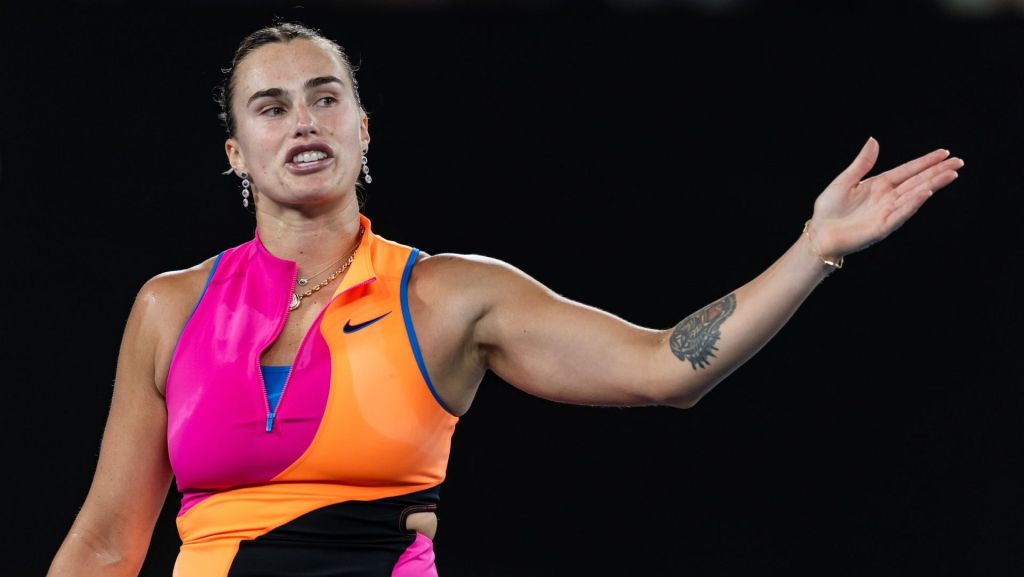
Women’s and men’s pros have been complaining about the sport’s grueling calendar for years. In January, world No. 1 Aryna Sabalenka, who dropped out of the Dubai Championships on Friday, said she had planned to miss some events this year after what she described as an “insane” tennis calendar.
“The rules are quite tricky with mandatory events, but I’m still skipping a couple events to protect my body,” Sabalenka said.
The WTA’s top-ranked players are essentially required to play 20 tournaments per year: the four Grand Slams, ten WTA 1000 events, and six WTA 500 events. There are exactly 10 WTA 1000 events, making them all mandatory.
But some stars appear to have found a loophole.
Players can withdraw from a tournament if they are on site and complete a WTA Medical Information Form with the tour’s medical staff. They can also retire in the middle of the tournament, and will then meet with the tournament’s medical staff at the site to assess the injury or illness.
Sabalenka withdrew Friday due to what she termed a right hip injury. No. 2 Iga Świątek’s official reason for skipping was a “change of schedule.” No. 10 Victoria Mboko withdrew Monday, days after losing at the final of the Qatar Open, another WTA 1000 event, due to a right elbow injury.
The withdrawals have frustrated Dubai tournament director Salah Tahlk, who told The National that there should be “harsher punishments” for withdrawals, including docking ranking points. At the moment, withdrawals will score zero rankings points for tournaments missed.
In an effort to address scheduling issues, the WTA announced Tuesday the creation of the Tour Architecture Council, a 13-person panel led by world No. 5 Jessica Pegula.
“There has been a clear sentiment across the Tour that the current calendar does not feel sustainable for players given the physical, professional, and personal pressures of competing at the highest level,” WTA Tour chair Valerie Camillo wrote in the announcement letter sent to players and tournament officials.
World no. 4 Coco Gauff, who advanced to the quarterfinals in Dubai on Wednesday, said she doesn’t believe players should be docked points for missing tournaments.
“For this point in the schedule, I think it’s hard to play all the tournaments now that they’re two weeks. I think the ask of players are becoming more and more and more,” Gauff said.
“I do understand the tournament side. They obviously want the players there. In the past I think top players have always come to Doha and Dubai. This draw has historically been a tough draw. … I don’t think it’s fair for players to get docked points. I think, if anything, we should have an optional 1000 like the men do with Monte-Carlo. I think that’s a little bit harsh in my opinion.”
The Dubai Championships end on Feb. 21. The next two WTA 1000 tournaments will be the Sunshine Double, both held in the U.S.
The BNP Paribas Open, also known as the Indian Wells Open, starts March 4 in California. The Miami Open starts on March 17.
Download the FOS App
The business of sports, in your pocket.



Scan the QR code to get the app now.