Want more from Front Office Sports
in your search results?
Ole Miss quarterback Trinidad Chambliss will be able to return next year to Ole Miss.
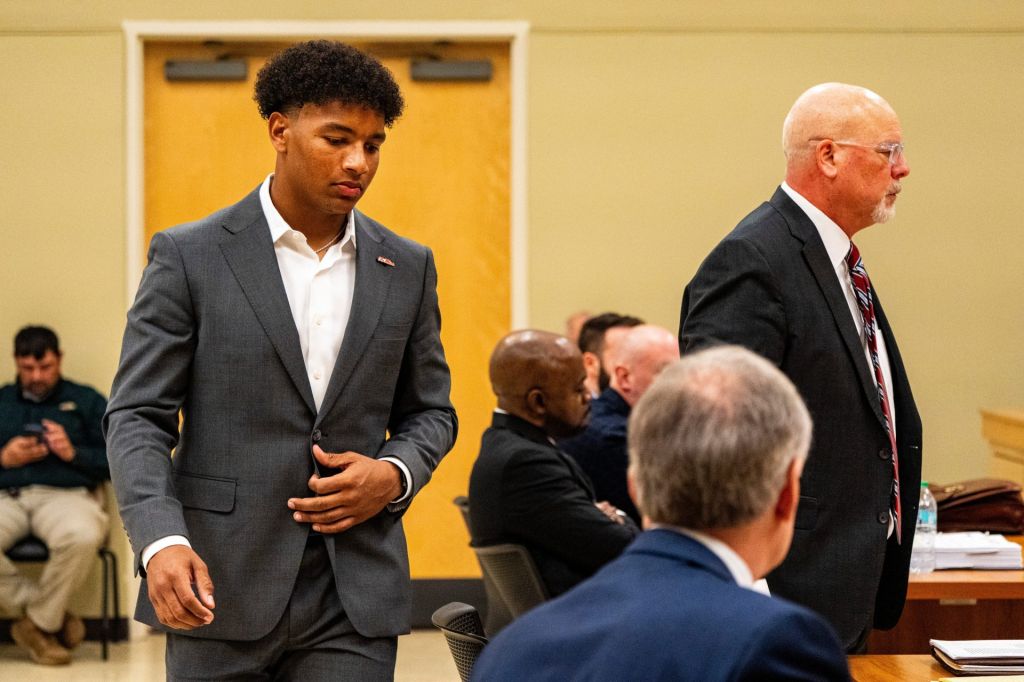
On Thursday, Mississippi state judge Robert Whitwell granted Chambliss’s request for a preliminary injunction as part of a lawsuit challenging the NCAA’s decision not to allow him to play in 2026-27. Whitwell issued the decision allowing Chambliss to suit up for the Rebels next year shortly after the conclusion of an hourslong hearing at Calhoun County courthouse in Pittsboro, Miss.
In a lengthy decision that he spent nearly an hour reading in the courtroom Thursday evening, Whitwell tore down virtually every single point the NCAA attempted to make. He said the NCAA “ignored” the evidence provided regarding Chambliss’s medical situation that prevented him from playing in 2022. “It would appear that Trinidad Chambliss satisfied the requirements” of the waiver he requested, Whitwell said. He even went so far as to call several of the statements the NCAA had made publicly about Chambliss’s situation “false and misleading,” and that it “fell short in its mission to foster the well-being” of athletes.
The NCAA “acted in bad faith by denying [Chambliss] an additional year of eligibility,” Whitwell said.
Whitwell also threatened to consider holding the NCAA’s lawyers in contempt of court, as they left before the decision was read.
Chambliss’s case, first filed last month in Mississippi state court, didn’t necessarily challenge any of the NCAA’s core eligibility rules. Instead, it argued that the NCAA had incorrectly applied its rules to Chambliss’s situation by not granting him a waiver given medical issues he suffered that kept him from playing two full seasons of college football. The complaint argued the NCAA did so in bad faith, and said Chambliss would suffer “irreparable harm” if he didn’t get the chance to play in 2026-27. Chambliss was represented by prominent college sports attorney Tom Mars, as well as Mississippi-based attorney William Liston.
Chambliss’s career began in 2021 at Division II program Ferris State, where he redshirted after “medical and physical incapacity” due to complications related to the Epstein-Barr virus/mononucleosis and COVID-19, which prevented him from playing, the lawsuit says. He didn’t play in 2022, either, as a result of complications related to these issues. During the hearing Thursday, Chambliss said he was told by Ferris State officials that he would medically redshirt for the 2022 season, which was key given that this is the lost season he’s trying to regain in 2026-27.
Also during the hearing, Chambliss detailed sleepless nights, fatigue, constant sickness, and pain he described as “torture” during his illness. Chambliss played in 2023 and 2024 for Ferris State, and finally got his tonsils removed in December 2024, after which he said his symptoms subsided. He then transferred to Ole Miss—where he led the Rebels on a historic run in the College Football Playoff.
Chambliss filed a request for a waiver with the NCAA to play another year in October 2025, but the NCAA told an Ole Miss employee that his waiver would be denied, according to the complaint. Chambliss has appealed, with his attorneys filing multiple requests and extra evidence to the NCAA to no avail. In fact, in the middle of the hearing, reports surfaced saying the NCAA denied a request for reconsideration—but the decision was moot after Whitwell made his ruling.
Chambliss said during the hearing that if he doesn’t get the chance to continue playing in 2026-27, he will lose out on lucrative NIL (name, image, and likeness) opportunities, revenue-sharing opportunities, and the ability to improve his NFL Draft stock. These details were key to potentially proving that Chambliss would suffer “irreparable harm” if he didn’t get the chance to play next year.
However, the NCAA’s lawyers tried to discount this, arguing the lawsuit was about where Chambliss would play football next year, rather than if he would play at all (given he’s an NFL prospect). In fact, NCAA lawyers argued the NCAA and schools would face their own irreparable harm if Chambliss were granted an injunction, given the precedent it would set. “It will change the face of college football because the people who make the decision are no longer the ones who are tasked with making the decision,” NCAA attorney Doug Minor said.
Minor also argued that the NCAA had acted with the information it had at the time, and could not be considered to have made the decision in bad faith.
Whitwell on Thursday, in disagreeing with the NCAA’s arguments, said “the NCAA will continue with business as usual and suffer no immediate harm.”
The decision marks another loss for the NCAA.
The governing body has faced a flood of eligibility lawsuits challenging various rules since quarterback Diego Pavia was successfully granted another year at Vanderbilt through a 2024 lawsuit. Minor addressed this in his closing arguments, saying: “Other athletes saw [Pavia] go to court and get a ruling that was contrary to the decision of the NCAA and said, ‘I’m going to do it too.'”
The NCAA had a winning record against lawsuits filed in federal court arguing eligibility rules and decisions violated antitrust laws. But lawyers have since found a potentially winning path in state court, arguing the NCAA’s actions constituted a breach of contract. The NCAA prevailed in one case that took this route—that of Alabama men’s basketball player Charles Bediako—earlier this week. But the legal strategy appeared to work in Chambliss’s case, even though Whitwell called Bediako’s situation a “totally factually different case” from Chambliss’s.
Chambliss is expected to stay at Ole Miss for next season. He said Thursday he has been offered a revenue-sharing and NIL deal with Ole Miss and the Grove Collective.
Meanwhile, the NCAA will continue fighting eligibility lawsuits including the case of Tennessee quarterback Joey Aguilar, which will be heard Friday.
In response to Whitwell’s decision, the NCAA in a statement said, “This decision in a state court illustrates the impossible situation created by differing court decisions that serve to undermine rules agreed to by the same NCAA members who later challenge them in court. We will continue to defend the NCAA’s eligibility rules against repeated attempts to rob future generations of the opportunity to compete in college and experience the life-changing opportunities only college sports can create. The NCAA and its member schools are making changes to deliver more benefits to student-athletes, but the patchwork of state laws and inconsistent, conflicting court decisions make partnering with Congress essential to provide stability for current and future college athletes.”
Download the FOS App
The business of sports, in your pocket.



Scan the QR code to get the app now.