NBC Sports didn’t get the viewership bump it was hoping for from Super Bowl LX, but already is all but guaranteed a significant audience increase from the 2026 Winter Olympics.
After five days of competition from Italy, NBC said that its U.S. coverage is averaging 26.5 million viewers across the broadcast network, the Peacock streaming service, other NBCUniversal digital platforms, and Versant’s CNBC and USA Network. That’s a 93% increase from the comparable period in the 2022 Winter Olympics in Beijing and represents the most-watched Winter Games at this point since the 2014 Games in Sochi, Russia.
Sunday night’s primetime coverage averaged 42 million viewers, also marking the most-watched individual Winter Games broadcast in 12 years.
Additionally, Peacock has already generated 5.3 billion minutes of Winter Olympics consumption, 36% higher than the 2022 Winter Olympics in full and more than twice that of all of the 2018 Winter Olympics in PyeongChang, South Korea.
The robust audience numbers coming out of the Olympics counter a 2% decline in Super Bowl LX viewership, and help advance what has already been a major corporate priority for NBC Sports and corporate parent Comcast.
Viewership Factors
There are three primary forces that help explain the historic lift in Olympic viewership that is now unfolding.
The first is the time zone difference. Milan is six hours ahead of the U.S. East Coast, and nine hours ahead of the U.S. West Coast. That more than halves the spread from the 2022 and 2018 Winter Olympics, which were 13 hours and 14 hours ahead of the U.S. East Coast, respectively, and made it much more difficult for American viewers to watch live competition.
The second key factor is that NBC has solidified its overall Olympics strategy that emphasizes live coverage of every sport across numerous linear and streaming platforms throughout each day, culminating in a well-produced, storytelling-driven nightly program in primetime. That same approach was deployed for the 2024 Summer Olympics in Paris, driving an 82% viewership increase.
The third element is the arrival of Nielsen’s Big Data + Panel measurement process, which brings in millions of additional data points from set-top boxes and smart TVs and provides a fuller view of the viewership landscape.
Meanwhile, NBC executives lauded a series of technological enhancements in the coverage, including those from drone cameras, that have provided a new level of immersiveness.
“That game-changing technology is really combined with unprecedented access that we’ve gained to the American athletes, and it’s given us such rich storytelling moments,” said NBC Olympics executive producer and president of programming Molly Solomon. “We’ve captured scenes that have never been seen before in the Olympics.”
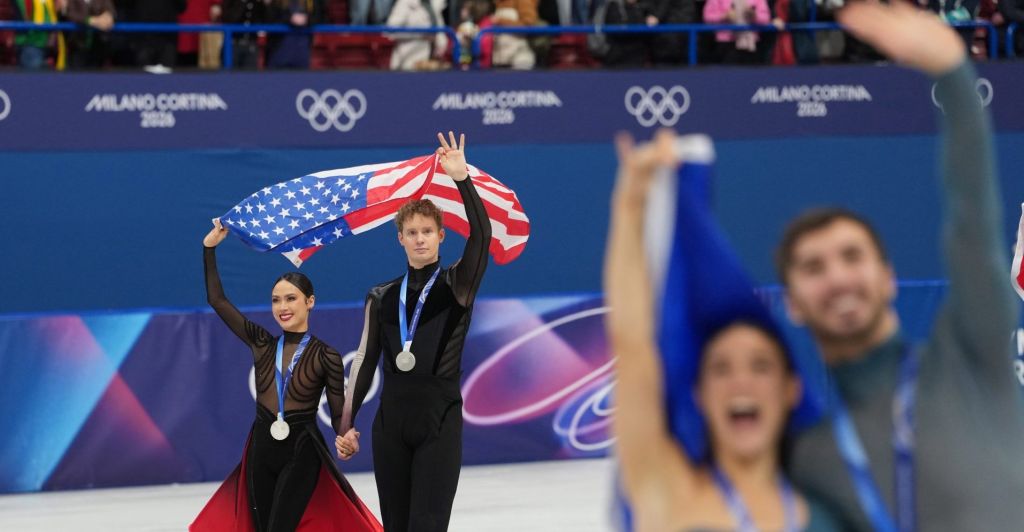
More bullish viewership results are expected as key draws such as men’s ice hockey and several parts of the figure skating competition enter the heart of their schedules in the coming days. The U.S. team is off to a strong start in the medal count, and as of Thursday morning, was tied for third in golds with four and tied for second in overall medals with 13.
Comcast has also burnished its Olympics presentation to its own cable customers, adding several features, including a customizable multiview and personalized highlights—elements designed in part to help stem the decline in subscribers.