Want more from Front Office Sports
in your search results?
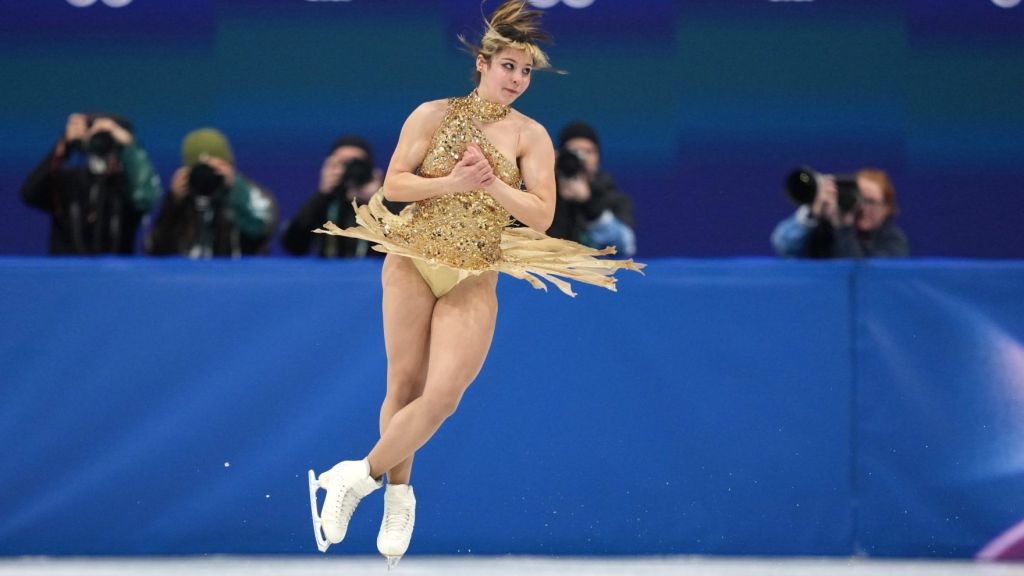
Figure skater Amber Glenn won a gold medal on Sunday in the team skate, competing to the same music she has for years.
That day, the artist behind Glenn’s song, “The Return,” took to social media. “So just found out an Olympic figure skater used one of my songs without permission for their routine,” posted Seb McKinnon, whose stage name is CLANN. “It aired all over the world… what? Is that usual practice for the olympics?”
McKinnon said in a since-deleted subsequent post: “The deal I have with my label is that I alone can give the ok to license my music.”
Glenn and McKinnon were able to resolve the issue before she would need to use the song again; the skater said there had been a “hiccup” in the music rights process, and both artists showed support for the other. “I’m very honoured that Amber chose my music for her routine, won gold no less!” McKinnon posted.
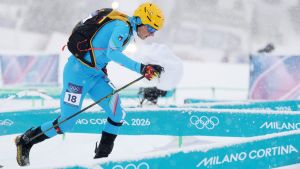
Glenn’s music debacle had a happy ending, but she’s part of a growing group of skaters at the Milan Cortina Games who have dealt with music licensing issues:
- Tomàs-Llorenç Guarino Sabaté of Spain gained attention in the week leading up to the Olympics after learning his medley from the Minions franchise was not cleared. Sabaté had said he had submitted all of his music to an ISU-approved third-party vendor in August and competed with it all season. He got all four songs cleared by Friday and skated to them in his short program Tuesday.
- Katerina Mrazkova and Daniel Mrazek of Czechia partially used AI-generated music this season, which is permitted. But their chosen song blatantly ripped off lyrics from “You Get What You Give” by New Radicals. The duo skated to different AI-generated lyrics in the rhythm dance Monday.
- Marie-Jade Lauriault and Romain Le Gac of Canada had to change their rhythm dance routine from Prince to Tom Jones after learning in December they couldn’t get clearance.
- Petr Gumennik, a Russian competing as a neutral athlete, changed his short program two days before the event after he was unable to get permission to use music from the film Perfume: The Story of a Murderer.
- Loena Hendrickx of Belgium chose a new Celine Dion song because her team worried her first selection, which had been made for Deadpool 2, might cause a copyright issue. She slightly modified her program used last month at the European championships.
Music licensing has been an issue at the Olympics in recent years for artistic sports like figure skating, gymnastics, artistic swimming, and cheerleading. The sport’s governing body, the International Skating Union, made the switch in 2014 to allow music with lyrics to be used, and has gone all in on trying to make the sport more modern and attract new fans by dictating this year’s Olympic rhythm dance must use music from the 1990s. Before 2014, only classical music was used, which is often in the public domain.
Copyright law is complex, and there are different hoops for athletes to jump through when selecting music that can be played in a venue, streamed on a broadcast, or recorded. Plus, countries define and enforce copyright laws differently, which can open up challenges between competitions or with a global event like the Olympics.
In 2022, a band quickly sued U.S. skaters Alexa Knierim and Brandon Frazier, U.S. Figure Skating, and NBCUniversal Media for using their cover of “House of the Rising Sun” at the Beijing Olympics. The suit was settled out of court.
“The ISU recognizes that copyright clearances can represent a challenge across all artistic sports,” an ISU spokesperson said in a statement. “This is a long-standing issue. In recent years, increased awareness of the importance of rights clearances has brought increased attention to the use of copyright-protected music in a sporting context. Skaters are among those responsible for clearances and licensing, including for AI-generated and derivative works. The ISU is committed to supporting the creative freedom of skaters.”
There are a couple of different avenues for skaters to get music approved, one of which is the third-party vendor ClicknClear, which can give athletes instant licenses from music in its catalog. But even that dynamic is confusing: The ISU said in a recent statement that it “does not have a contractual relationship” with the platform, while ClicknClear’s founder and CEO, Chantal Epp, told Sportico that her company signed a multiyear agreement with the governing body in 2024.
While the spotlight is on figure skating at these Olympics, the issue could bleed into other artistic sports at the L.A. Games in 2028, especially given infringement fines in the U.S. can be higher than in Europe.
Download the FOS App
The business of sports, in your pocket.



Scan the QR code to get the app now.