When Bad Bunny and Green Day were announced as Super Bowl LX performers, many assumed the Big Game was poised to become a political football in the culture wars.
After all, Bad Bunny just declared “ICE Out” at the Grammy Awards last weekend. Green Day front-man Billie Joe Armstrong—a prominent critic of U.S. President Donald Trump—urged ICE agents to quit their “shitty ass jobs” during a pregame event.
But the competing shows between the NFL’s Bad Bunny/Green Day and Turning Point USA’s Kid Rock almost entirely avoided mentioning Trump and his administration, with Bad Bunny’s political statements focusing more on the history of Puerto Rico and the Americas. Here’s the surprise. There have been far more controversial statements coming across the ocean in Italy during the Winter Olympics.
With the Minnesota shooting deaths of Renee Good and Alex Pretti by ICE agents fresh in their minds, several Team USA athletes have made provocative comments about representing a country led by Trump.
“I think it brings up mixed emotions to represent the U.S. right now, I think. It’s a little hard,” said U.S. Olympic skier Hunter Hess. “There’s obviously a lot going on that I’m not the biggest fan of, and I think a lot of people aren’t.”
As for competing under the red, white, and blue symbol of Old Glory, Hess didn’t exactly stand up and salute. “If it aligns with my moral values, I feel like I’m representing it,” he said. “But just because I’m wearing the flag doesn’t mean that I represent everything that’s going on in the U.S.”
It doesn’t take much to provoke Trump. Hess’s comments drew a strong reaction from the president, who ripped the skier on his Truth Social site Sunday.
“U.S. Olympic Skier, Hunter Hess, a real Loser, says he doesn’t represent his Country in the current Winter Olympics,” declared Trump. “If that’s the case, he shouldn’t have tried out for the Team, and it’s too bad he’s on it. Very hard to root for someone like this. MAKE AMERICA GREAT AGAIN!”
Trump lashed out only a few days after the sight of U.S. Vice President JD Vance and Second Lady Usha Vance waving small American flags generated a “smattering of jeers and boos” at the opening ceremony in Milan. (NBC Sports denied reports it edited out the booing from U.S. coverage.)
Meanwhile, British skier Gus Kenworthy—who spent most of his life in America—also bashed Trump’s immigration policies. The snowboarder posted a picture to Instagram that appears to show him urinating “Fuck ICE” in the snow. Kenworthy says he’s since received death threats and social media ill wishes that he breaks his neck in the halfpipe.
What’s going on?
Despite recent events, the Olympics have always been a more natural place for sports and politics to collide, despite several policies meant to restrict political expression at the Games. Rule 50 of the Olympic charter reads in part: “No kind of demonstration or political, religious or racial propaganda is permitted in any Olympic sites, venues or other areas.”
Athletes are, however, allowed to speak their mind at podiums, and some take it further. Ukrainian skeleton racer Vladyslav Heraskevych is seeking permission to wear a helmet with images of six athletes killed in Russian strikes.
Up until the Colin Kaepernick–inspired national anthem protests nearly a decade ago, those types of displays were rare in the NFL, the most fiercely patriotic American sports league. Pro football’s muscular masculinity annually reached an apex at the Super Bowl with the B-2 bomber flyovers, military color guards, and the televised renditions of “America the Beautiful” and “The Star-Spangled Banner.”
The Olympic Games, on the other hand, have been intrinsically entwined with politics and protest for decades.
Back in 1936, Nazi leader Adolf Hitler hosted the Berlin Games to try to prove the myth of Aryan supremacy—only to be embarrassed by Black American star Jesse Owens winning four gold medals on the world stage. During the Mexico City Games in 1968, American sprinters Tommie Smith and John Carlos made history giving the Black Power salute on the awards podium. In 1980, U.S. President Jimmy Carter boycotted the Moscow Summer Olympics to protest the Soviet Union’s invasion of Afghanistan. Those are just a few of many examples.
In short, the admonition to “shut up and play” doesn’t apply to big-time sports anymore—if it ever did. There’s too much media coverage, too much social media, too much Left vs. Right polarization. The NFL is probably the last sports entity powerful enough to convince Bad Bunny and Green Day to shut up and sing. But the Shield is not out of the woods yet. TPUSA spokesman Andrew Kolvet announced on Fox News the nonprofit is planning another alternative Super Bowl show next year. Other than the Super Bowl, “no politics” will increasingly be the exception rather than the rule.
Just ask the U.S. Olympians who can run but can’t hide from domestic political controversies roiling Americans thousands of miles away. Many of the athletes competing for Team USA in Italy—including star skiers Lindsey Vonn and Jessie Diggins—are from Minnesota.
Even a clubhouse for athletes and their guests jointly hosted by USA Hockey, US Speedskating, and U.S. Figure Skating changed its name from “Ice House” to “Winter House.” The federations said the name change was aimed at keeping it a “private space free of distractions.”
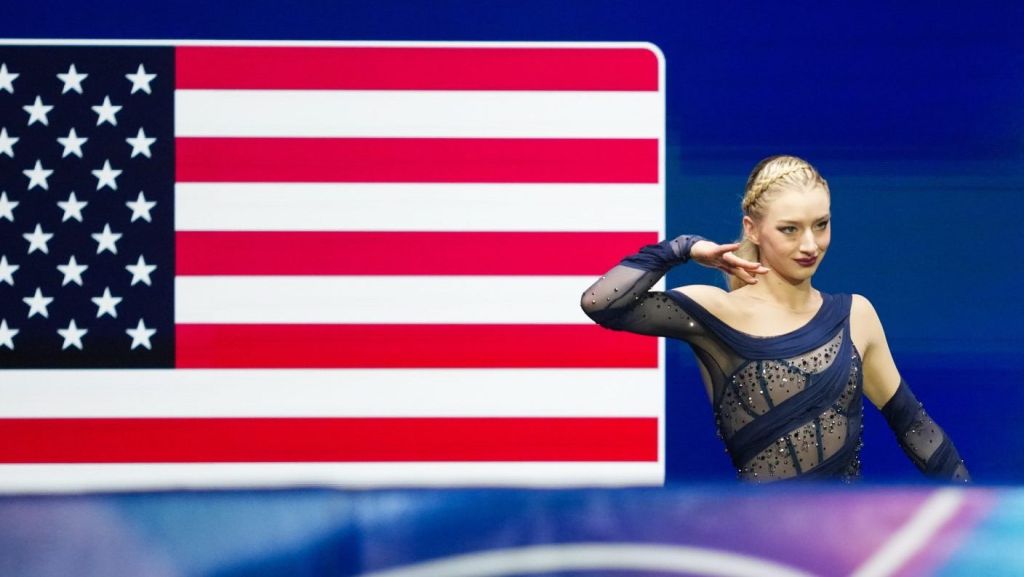
American figure skater Amber Glenn, who won gold in the figure skating team event along with “Quad God” Ilia Malinin, said the move was “wise” and that “It’s unfortunate that the term ICE isn’t something we can embrace because of what’s happening and the implications of what some individuals are doing.”
As Glenn wrote on Instagram on Saturday: “When I chose to utilize one of the amazing things about the United States of America (freedom of speech) to convey how I feel as an athlete competing for Team USA in a troubling time for many Americans, I am now receiving a scary amount of hate/threats for simply using my voice when asked about how I feel. I did anticipate this, but I am disappointed by it.”