Want more from Front Office Sports
in your search results?
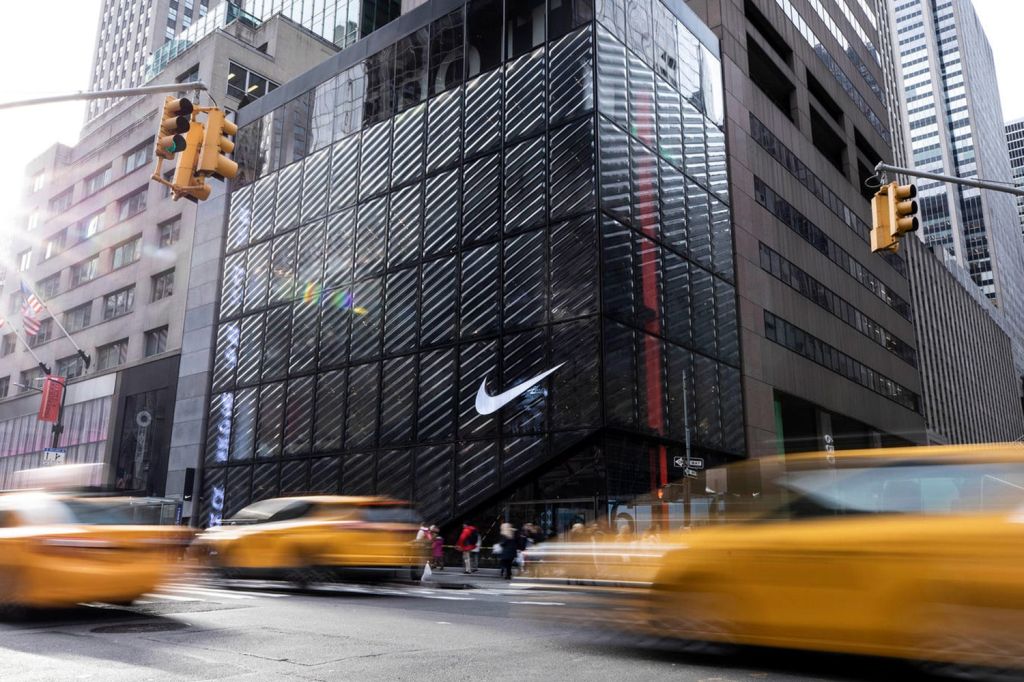
Nike is being investigated by the federal government over allegations it committed “systemic” race discrimination against white workers, including through its diversity, equity, and inclusion programs.
The U.S. Equal Employment Opportunity Commission announced Wednesday it has filed an enforcement action to force Nike to produce information. The agency alleges that the sneaker giant discriminated against white employees—incluidng passing them over for promotions, choosing them for layoffs, and failing to select them for leadership development and other career development programs.
The EEOC—a federal agency that investigates and enforces laws prohibiting workplace discrimination—says it issued a subpoena seeking to compel Nike to turn over information dating as far back as 2018. It sought details about how Nike tracked and used employee race and ethnicity data, the decision-making process behind how it set executive pay, and information about 16 programs that “allegedly provided race-restricted mentoring, leadership, or career development opportunities.”
“When the company failed to produce all the information sought by the subpoena, the agency filed an enforcement action in federal court,” Wednesday’s statement said. A copy of the enforcement action was not available, and the EEOC did not immediately respond to an email.
In a statement to Front Office Sports, a Nike spokesperson said: “This feels like a surprising and unusual escalation. We have had extensive, good-faith participation in an EEOC inquiry into our personnel practices, programs, and decisions and have had ongoing efforts to provide information and engage constructively with the agency. We have shared thousands of pages of information and detailed written responses to the EEOC’s inquiry and are in the process of providing additional information.”
President Donald Trump has made it a point to target DEI initiatives at companies, including issuing two executive orders last January, one called “Ending Radical and Wasteful Government DEI Programs and Preferencing” and another called “Ending Illegal Discrimination and Restoring Merit-Based Opportunity.” Those orders have been contested in federal court.
Nike still has a section of its website outlining the company’s DEI policy, which says “our strength comes from the different viewpoints, personalities and talents” of employees spread across the world. It says the company aims to “reflect the diversity of our marketplace in everything we do,” and “cultivate a culture where everyone feels like they belong.”
Andrea Lucas, who Trump designated as chair of the EEOC in November, has made clear that policing discrimination against whites is one of her priorities. In a video posted to social media Dec. 17, she said “the EEOC is committed to identifying, attacking, and eliminating ALL race and sex discrimination — including against white male employees and applicants.”
Conservative law firm America First Legal, which was cofounded by White House advisor Stephen Miller, filed a federal civil rights complaint with the EEOC against Nike in 2024. The firm claimed Nike violated the Civil Rights Act of 1964, including by using numerical quotas for hiring, training and promotion; specifically, it pointed to Nike’s aim of having a 50% female workforce by last year, including 45% in leadership positions.
Nike, which claims it is in the “middle innings” of a large-scale turnaround, has faced a bumpy road of late. Although its fiscal second-quarter beat analyst projections, its net income of $792 million was down 32% from the year before. Its stock is down over 16% over the last year, and late last month it announced it is cutting another 775 employees, mainly at distribution centers in Tennessee and Mississippi, as it looks to increase automation in many of its processes. Those cuts were in addition to a workforce cut of more than 2% announced nearly two years ago. Nike still has more than 77,000 employees.
This is not the first enforcement action over DEI policies filed by the EEOC since Trump returned to office. In November, it took aim at Milwaukee-based financial services company Northwestern Mutual, saying an employee had filed a discrimination charge against the company. It claimed that starting around 2020, Northwestern Mutual began focusing on “providing additional support and opportunities for women and people of color.”
Download the FOS App
The business of sports, in your pocket.



Scan the QR code to get the app now.