Want more from Front Office Sports
in your search results?
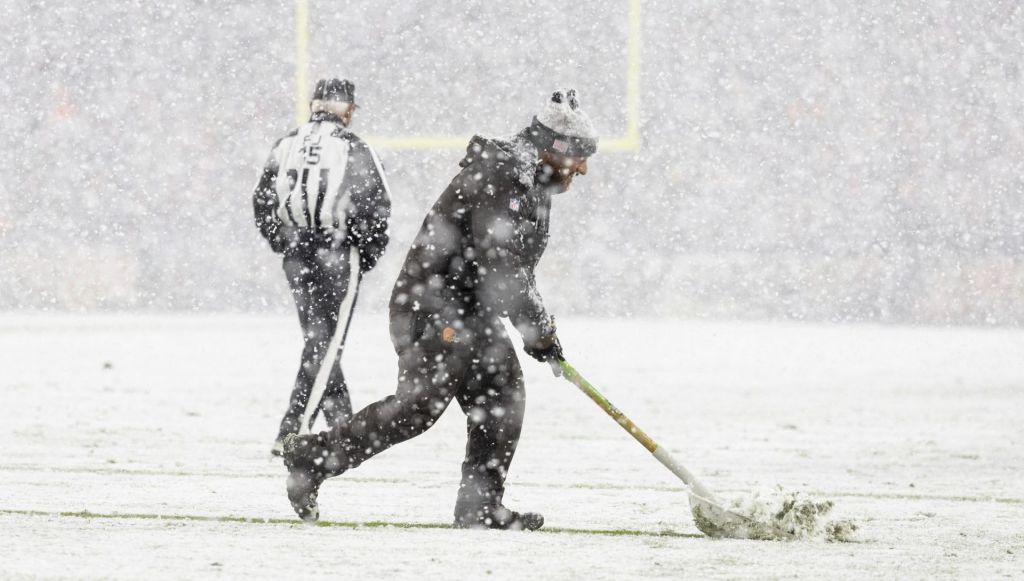
A massive winter storm hitting much of the U.S. this weekend is already causing large-scale impacts across the sports world.
A still-growing collection of teams, conferences, and leagues has canceled or postponed events in the wake of the forthcoming Winter Storm Fern. The weather system, spanning more than 2,000 miles in a path from New Mexico to New England, is expected to affect more than 200 million people. While much of the South could experience crippling levels of ice, some other areas are predicted to receive more than two feet of snow. Several states have preemptively declared a state of emergency.
Among the sports-related moves from the storm so far:
- MLB’s Rangers canceled their Fan Fest, scheduled for Saturday at Globe Life Field, as well as Winter Warm-up Week stops on Friday and Sunday.
- The American Athletic Conference changed its schedules for a series of men’s and women’s basketball games, with several weekend contests in particular moved to Friday, before the full impact of the storm.
- The Sun Belt Conference changed the schedule for a set of its women’s basketball games, beginning with a scheduled Marshall-Southern Miss matchup Thursday.
- Hundreds of individual colleges and high schools similarly shifted men’s and women’s basketball games scheduled for this weekend, as well as for smaller Olympic sports.
Viewership Impact
While weather-related disruptions are still amassing across sports, Sunday’s conference championship games in the NFL are comparatively safe. Neither Denver, the site of the AFC title game between the Broncos and Patriots, nor Seattle, the locale for the NFC championship between the Rams and Seahawks, is in the pathway for Winter Storm Fern.
It’s quite possible, though, that more fans being snowed or iced in will help boost viewership on CBS and Fox, respectively, for those title games. That’s, of course, provided that the increased tune-in isn’t countered by large-scale power outages from the storm that would obviously cut into television usage.
The NFL has history around this, though, as prior storms and cold snaps have previously helped spike television audiences. In 2010, the Super Bowl surpassed the 100 million mark in average viewership for the first time, reaching 106.5 million for Super Bowl XLIV between the Colts and Saints. That audience set a U.S. television record—all right after a major blizzard, termed at the time as “Snowmageddon,” hit the densely populated Northeast U.S.
Aside from the weather, the NFL this season is in the midst of a banner season for viewership with a series of milestones achieved during the regular season, in the wild-card round, the divisional round, and on streaming.
Download the FOS App
The business of sports, in your pocket.



Scan the QR code to get the app now.