MIAMI — This time last year, Unrivaled was a hotbed for all WNBA free-agency activity.
It was the first time in the history of WNBA free agency that a contingent of that many star free agents were all under the same roof. Coaches and GMs from every WNBA franchise flocked to South Beach for meetings with players to try to win them over. Meanwhile, players under contract were putting in their own recruitment work.
Two of the biggest moves of 2025 WNBA free agency—the Mercury’s acquisitions of Satou Sabally and Alyssa Thomas—were born out of discussions at Unrivaled.
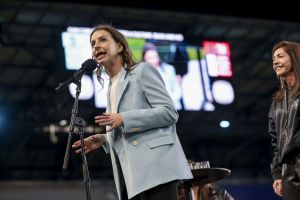
The circumstances are drastically different as Unrivaled’s second year begins just as free agency—which would have begun with qualifying offers being sent out as early as next week—has been fully grounded due to delays in CBA negotiations. The deadline is 11:59 p.m. ET on Jan. 9 for the union and WNBA to either ratify a new CBA or agree to a third extension; but on Thursday, WNBPA VP Breanna Stewart said neither would happen. Instead, negotiations are expected to enter a period of status quo.
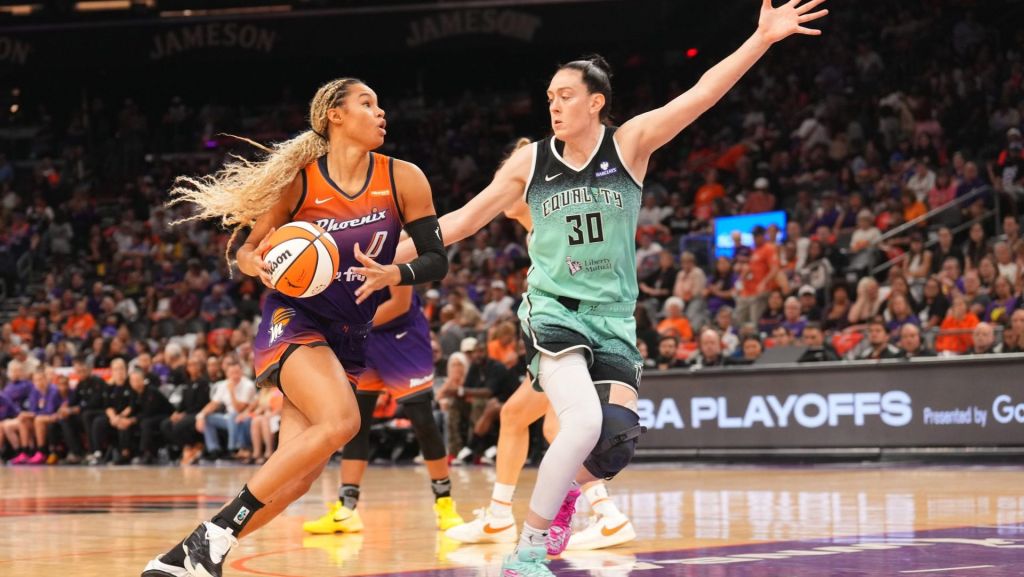
“It’s really not recruiting,” Phoenix Mercury guard-forward Kahleah Copper said of the free-agency discussions that have taken place so far. “Yesterday after practice we just sat in the locker room and talked general free agency, where we thought people would go, what teams we thought would break up, what people are chasing, what are you looking for. … We all kind of play GM with each other.”
Outside of those on rookie-scale contracts, almost all WNBA players will be unrestricted free agents as soon as the ink dries on a new CBA. This waterfall of available players is the result of the anticipation that the WNBPA would opt out of the 2020 CBA in the fall of 2024.
“You know generally what a team looks like when you’re signing to it,” Fever guard Lexie Hull said. “Now they’re going to be saying ‘so and so is really interested. They’re likely going to come.’ But you have no idea.”
Where Negotiations Stand
The WNBPA’s latest proposal, sent more than two weeks ago, includes an ask for roughly 30% of the league’s gross revenue and a salary cap around $10.5 million. The WNBA has not yet countered that proposal. The league believes that proposal will result in $700 million in losses for the WNBA over the course of the CBA, according to a report from ESPN.
The league’s last proposal from December offers players about 70% of the WNBA’s net revenue, which sources familiar with negotiations believe comes out to less than 15% of total league revenue. This proposal includes a salary cap of $5 million and max salaries of more than $1.3 million after revenue-sharing is factored in.
Stewart said on Sarah Spain’s Good Game podcast that she’s hopeful a deal will get done by Feb. 1.
In the meantime, entering a period of status quo will mean that both sides can continue negotiations while maintaining the conditions of the current CBA. In this scenario a work stoppage in the form of a lockout, initiated by the owners, and a strike, initiated by the players, could occur without advance notice. Sources on both sides have communicated there is no threat of an immediate work stoppage and negotiations will continue “in good faith.”
Next Steps After a New CBA
If Stewart’s hope for a deal within the next three weeks comes to fruition, that will leave the WNBA with roughly two and a half months to complete free agency and an expansion draft for the Portland Fire and Toronto Tempo.
Last year’s expansion draft for the Golden State Valkyries was held in December. Free agency ran from Jan. 11 to Feb. 1, and the WNBA draft took place on April 14.
The league has also proposed an earlier start date, which means this window could be cut even shorter depending on what both sides agree to in negotiations.
“Things are going to be late because we’re just stuck,” Stewart said. “But is it going to be so late that many people don’t make moves? Maybe people sign one-year deals, and then they’ll do free agency the following year because it’s not as fresh.”
The WNBA has never missed games due to a work stoppage in its nearly three-decade history. The closest the league came was in 2003. Both sides were still negotiating in early April, when the league threatened to cancel the season if no agreement was reached by April 18. As a result, the WNBA draft and preseason games were delayed.